
By Sabahat Ali · Link building expert since 2009 · 668+ clients served
AI won’t build your links for you. But it will cut the manual work by 60-70% so you can focus on what matters: relationships and quality placements.
I’ve integrated ChatGPT and AI tools into our link building workflow across 668+ client campaigns. This guide covers the 11 specific ways I use AI daily, with real prompts and screenshots you can copy right now.
KEY STATISTICS
- 60%+ of SEO professionals use AI tools in their workflow [SEMrush, 2024]
- AI can reduce manual link prospecting time by up to 70% [Backlinko, 2024]
- 80% of webmasters who respond to outreach demand payment for placements [Our data, 100K+ emails]
- 57.1% of link builders see ranking results within 1-3 months [Editorial.Link, 2025]
11 Ways I Use ChatGPT and AI for Link Building
1. Keyword Research and Topic Generation
To attract natural links, you need content around topics that industry peers want to reference. ChatGPT accelerates finding these linkable angles.
Prompt for keyword research: “Act as an SEO strategist. List 5 low-competition, high-value keywords for ‘link building’ that major publications haven’t covered well.”
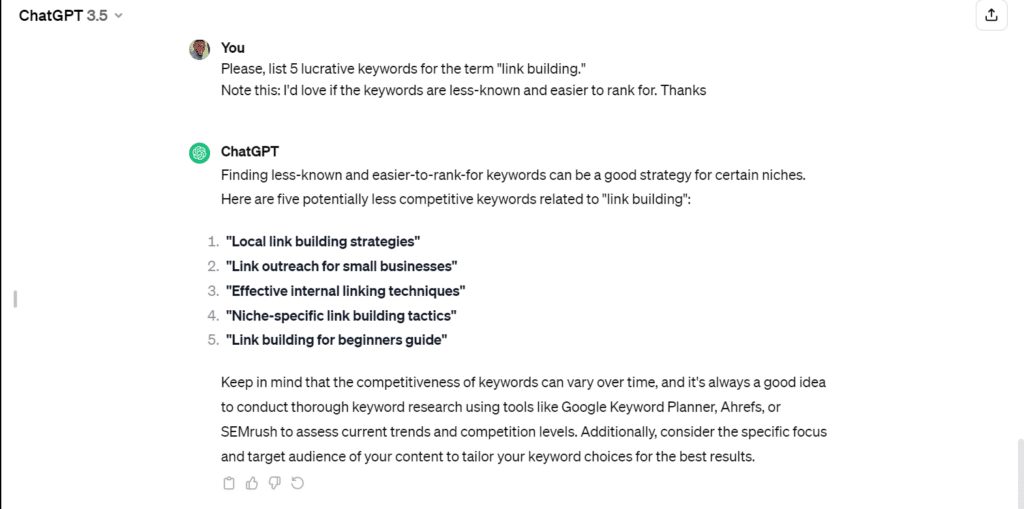
Topic generation: Go beyond generic keywords. Ask ChatGPT for specific angles tailored to your niche.
“I target the home maintenance niche. Generate 5 unique topic ideas for link outreach that would attract links from home improvement bloggers.”
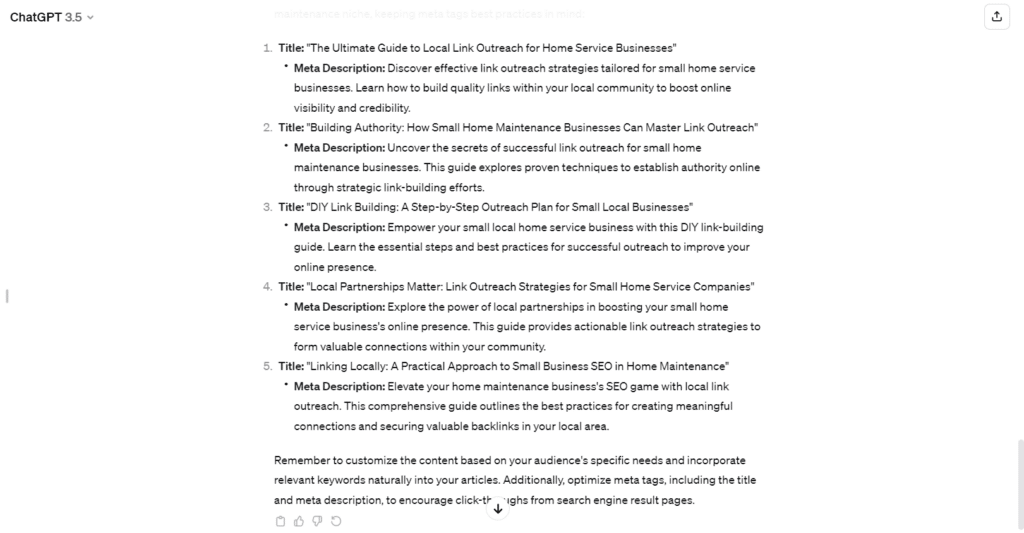
For keyword research tools, see our guide on how to add keywords to a website.
2. Content Outlining and Creation
Use AI to draft comprehensive outlines, then write the content yourself or refine the AI output. The key is using AI as a starting point, not the final product.
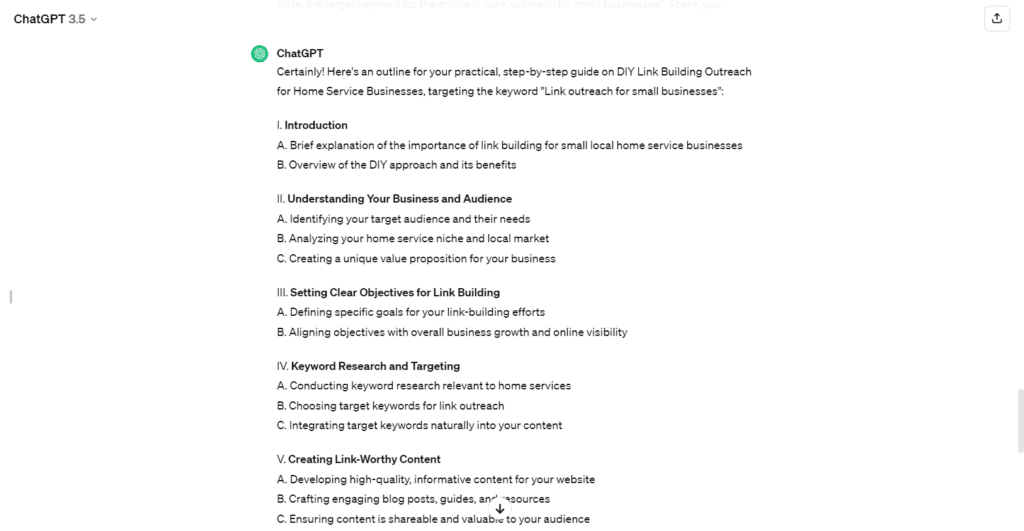
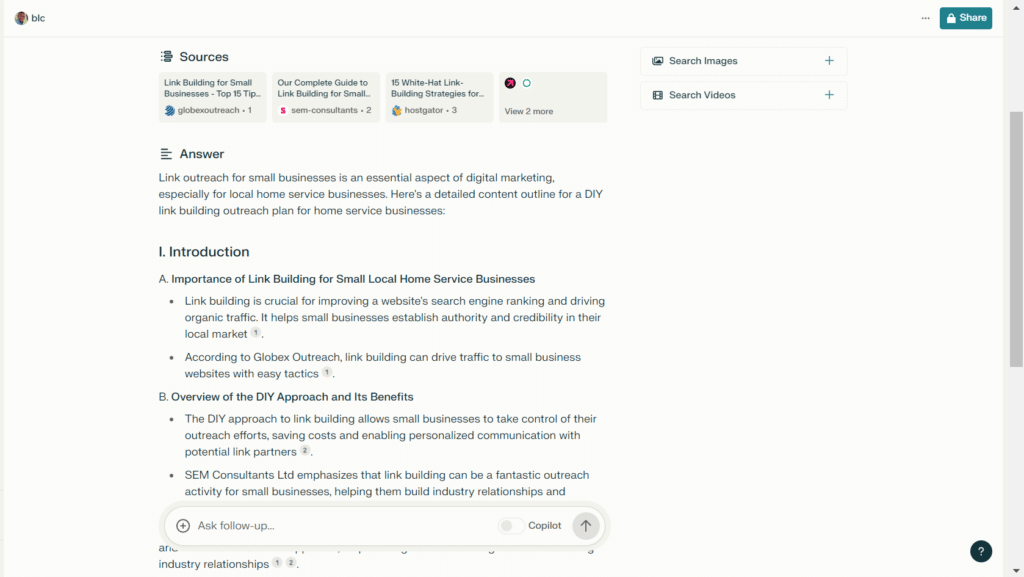
For writing best practices, see our SEO-friendly blog post guide.
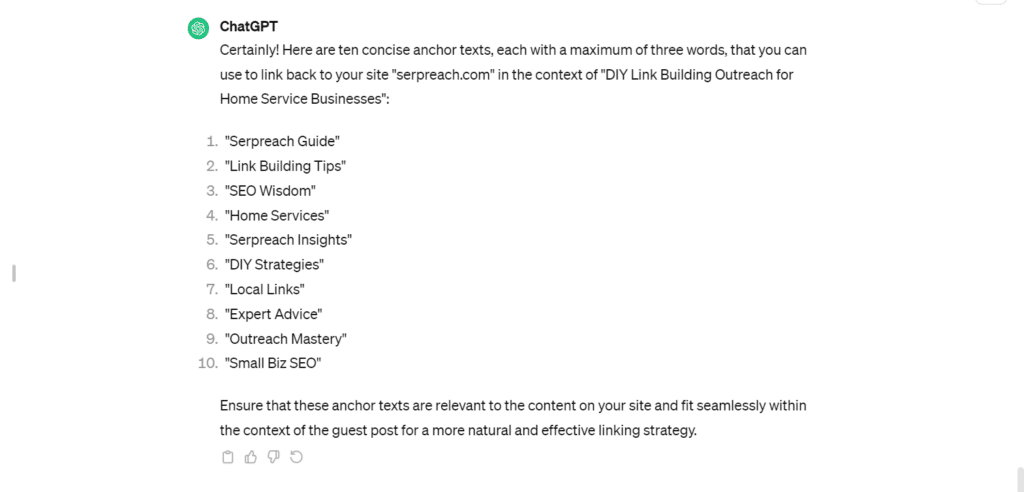
3. Anchor Text Ideas
Natural anchor text distribution is critical. Ask ChatGPT to generate variations that avoid over-optimization.
“Generate 10 natural anchor text variations for a link pointing to a page about ‘niche edits.’ Include branded, generic, and partial-match variations.”
4. Infographic Link Building
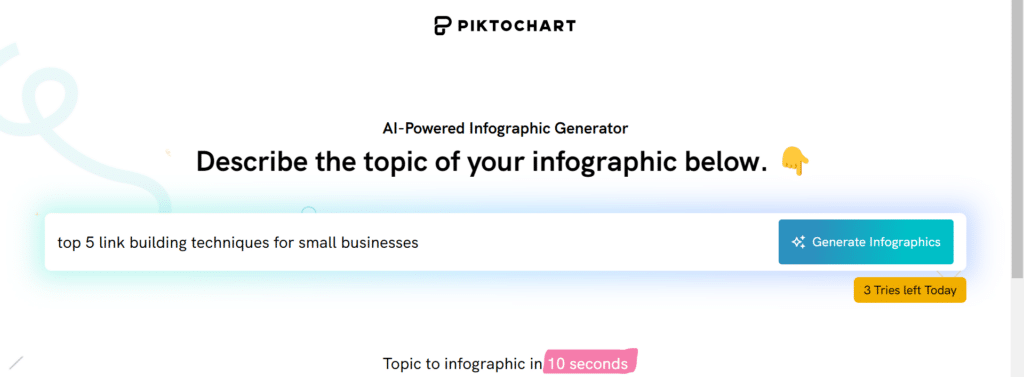
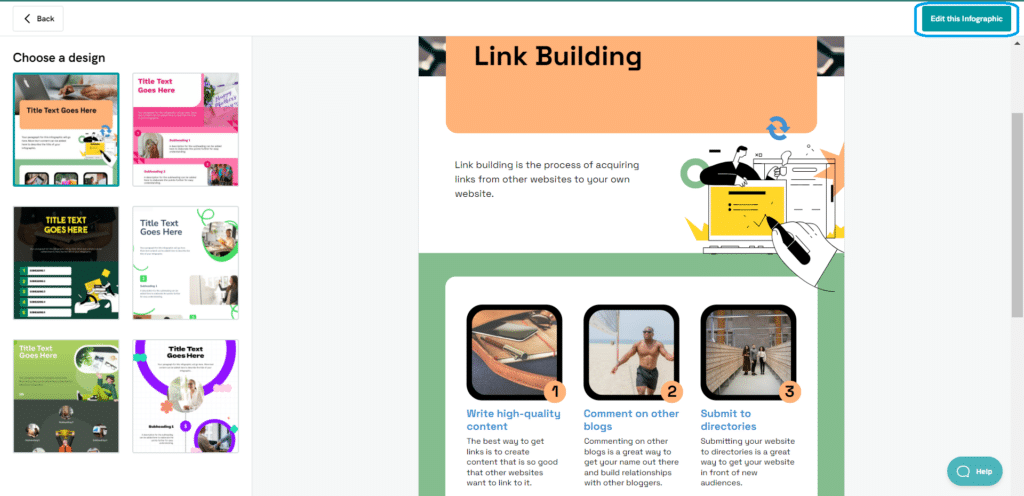
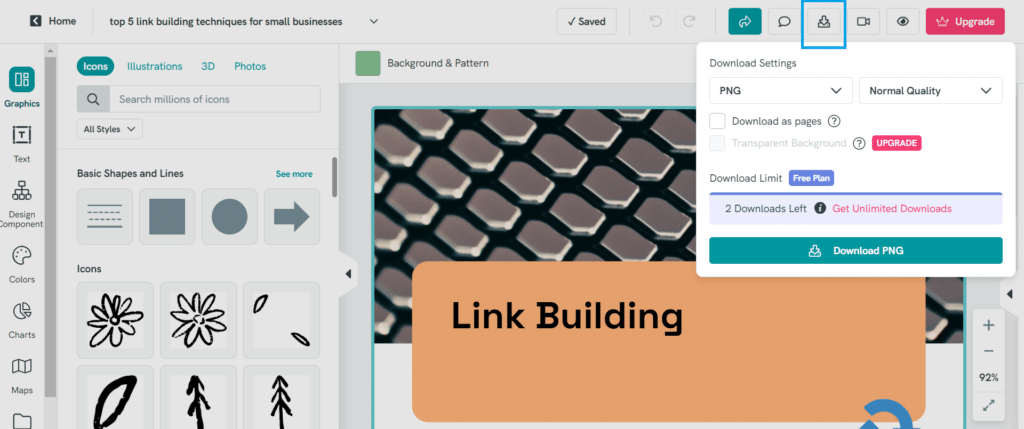
AI design tools like Canva AI and Visme can create data-driven infographics that attract links. Use ChatGPT to structure the data points, then generate the visual.
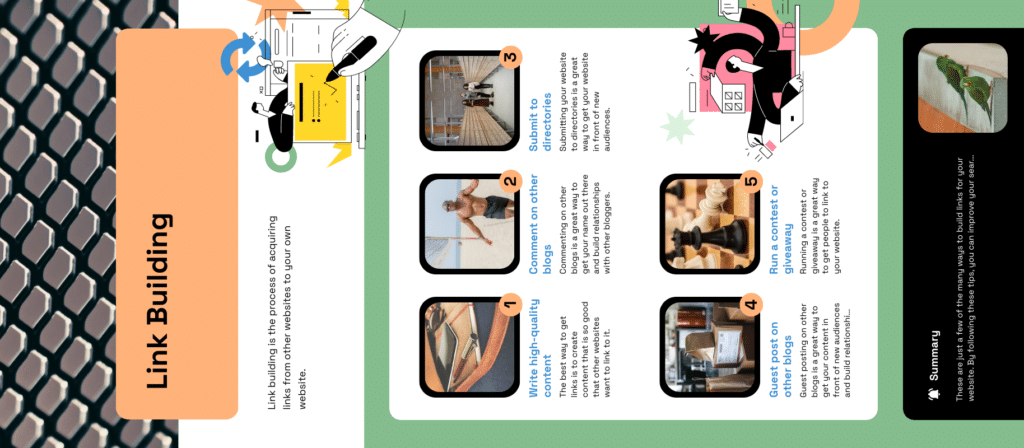
For more on this strategy, read our infographic links guide.
5. Guest Post Prospecting
ChatGPT can identify guest posting opportunities and draft personalized pitches in minutes.
“Find 10 websites in the digital marketing niche that accept guest posts and have DR 40+. Format as a table with site name, topic focus, and submission URL.”
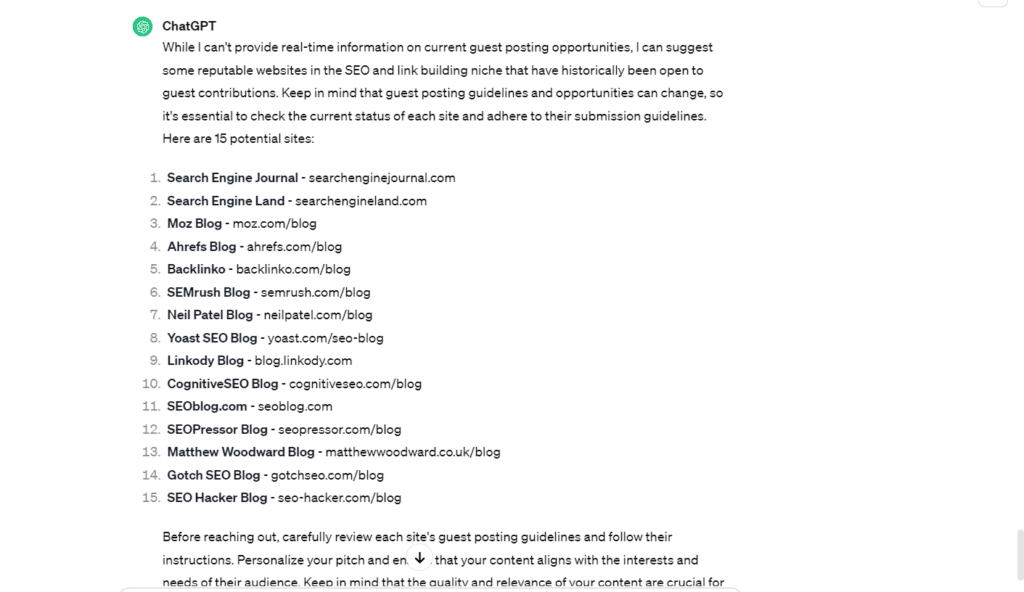
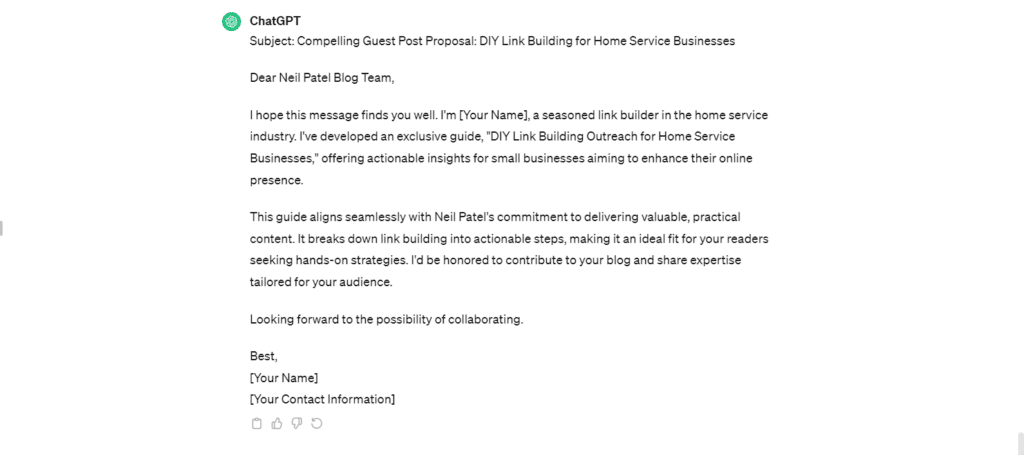
For more on guest posting, see our guest post opportunities guide.
6. Resource Page Link Building
Use ChatGPT to find resource pages and directories relevant to your niche.
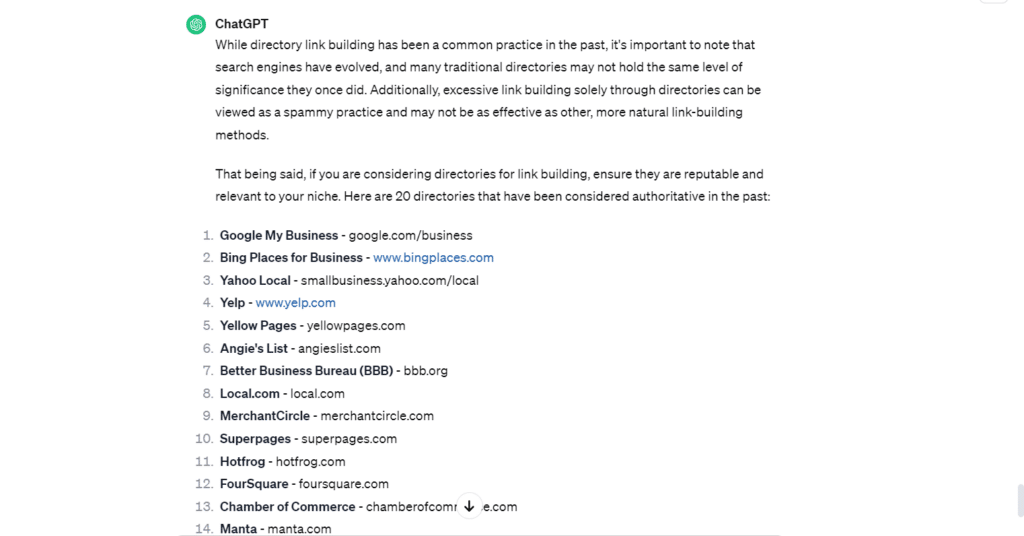
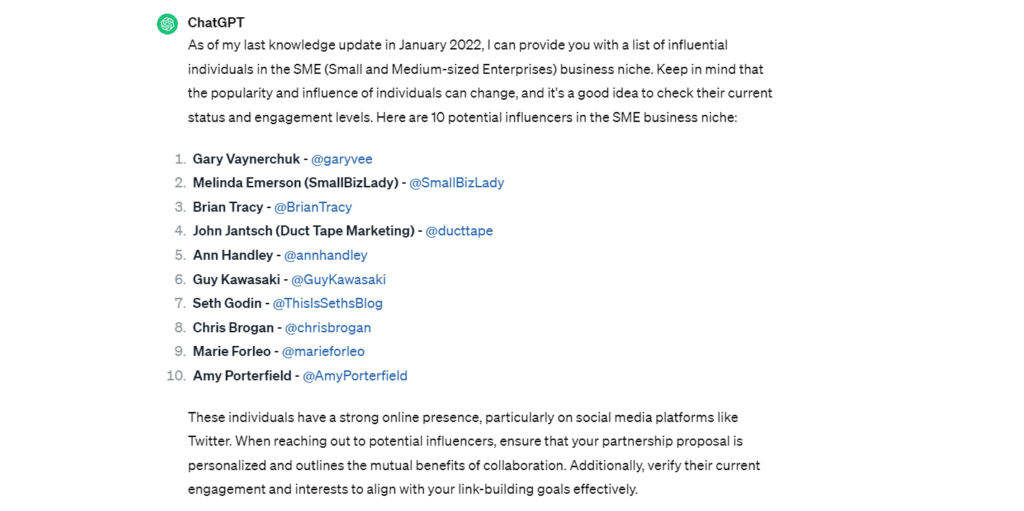
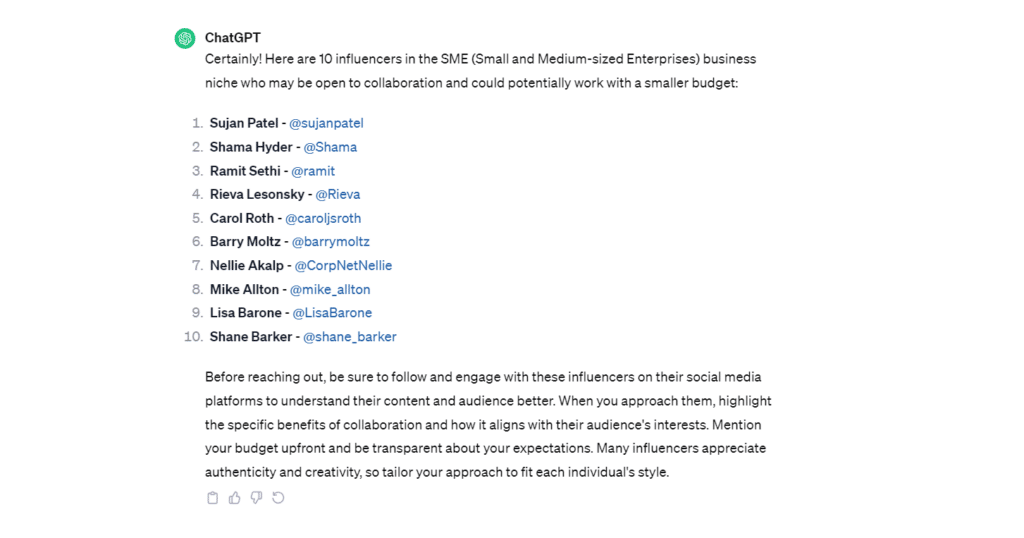
7. Influencer Link Building
AI helps identify relevant influencers who might link to your content or collaborate on content pieces.
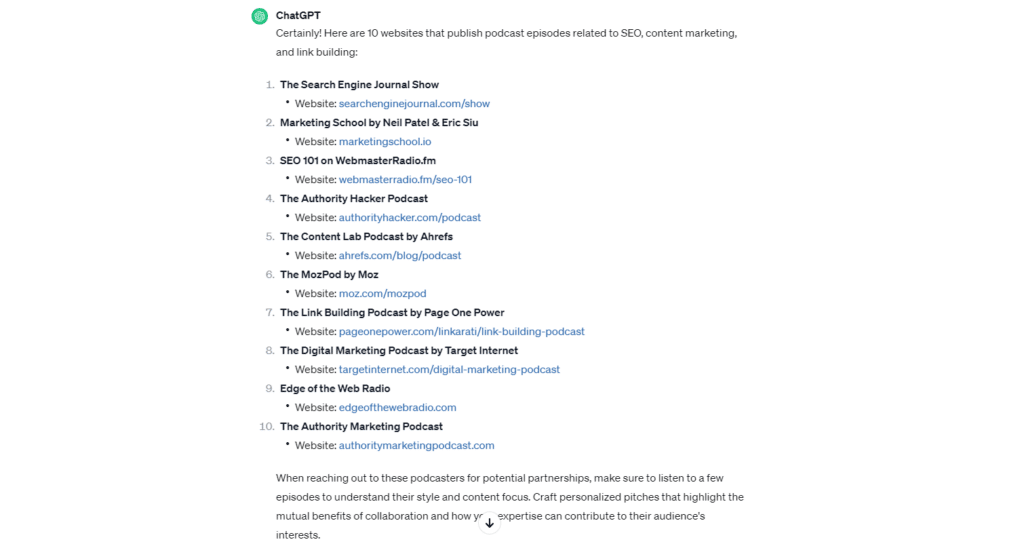
8. Podcast Link Building
Podcast show notes include links to guests’ websites. Use ChatGPT to find relevant podcasts and craft your pitch.
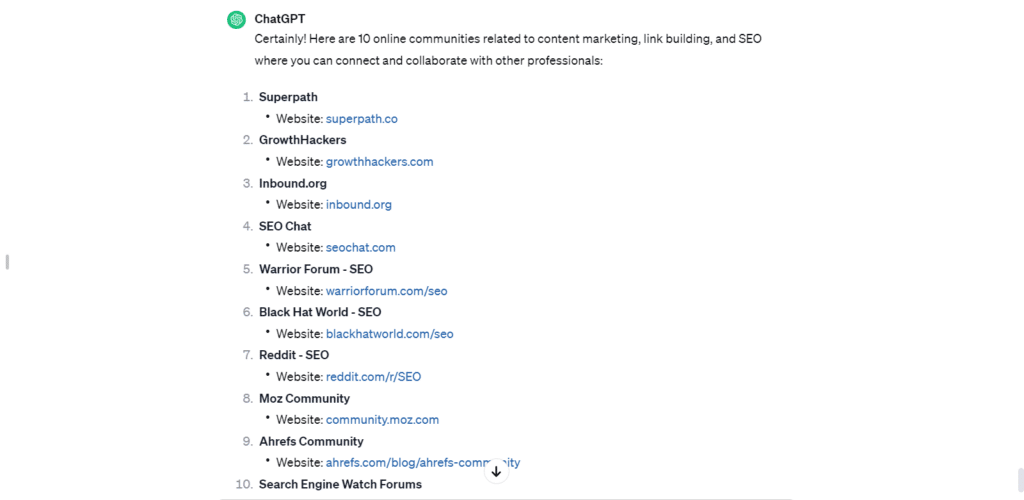
9. Online Forums and Communities
Find niche communities where you can contribute expertise and build authority. ChatGPT identifies the right platforms.
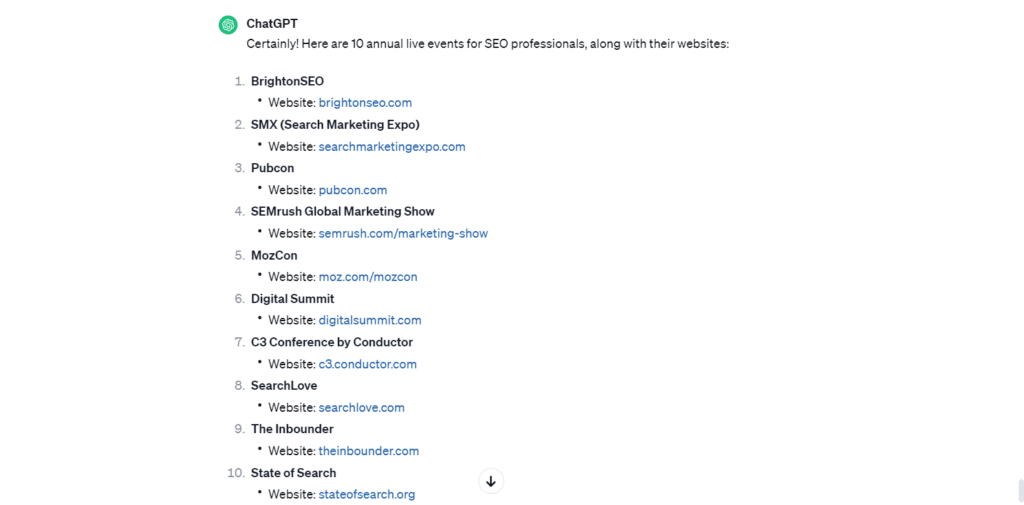
10. Find and Categorize Link Prospects
This is where AI saves the most time. Feed ChatGPT a list of potential link targets and ask it to categorize by relevance, authority, and contact approach.
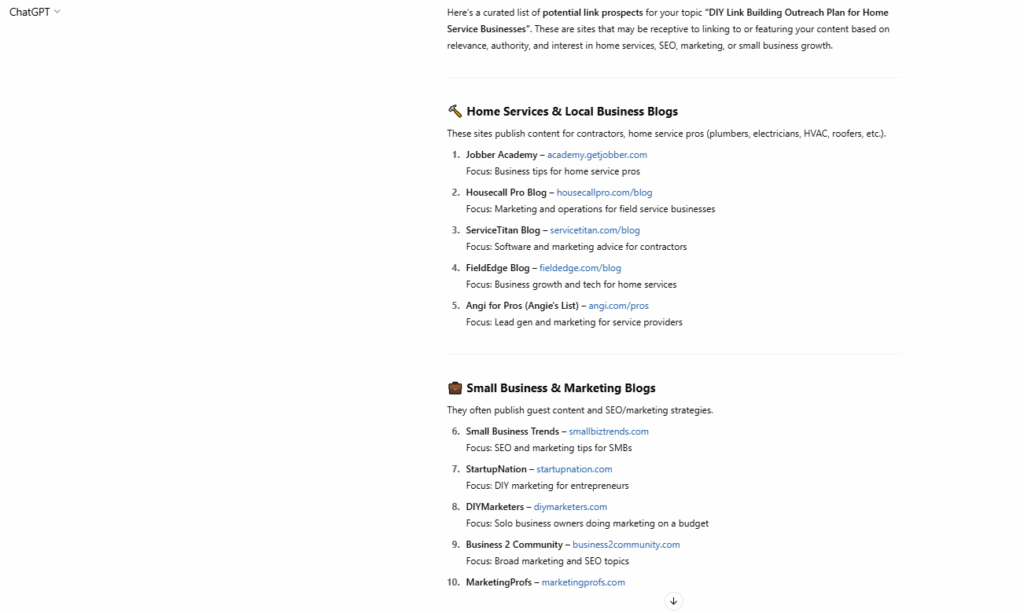
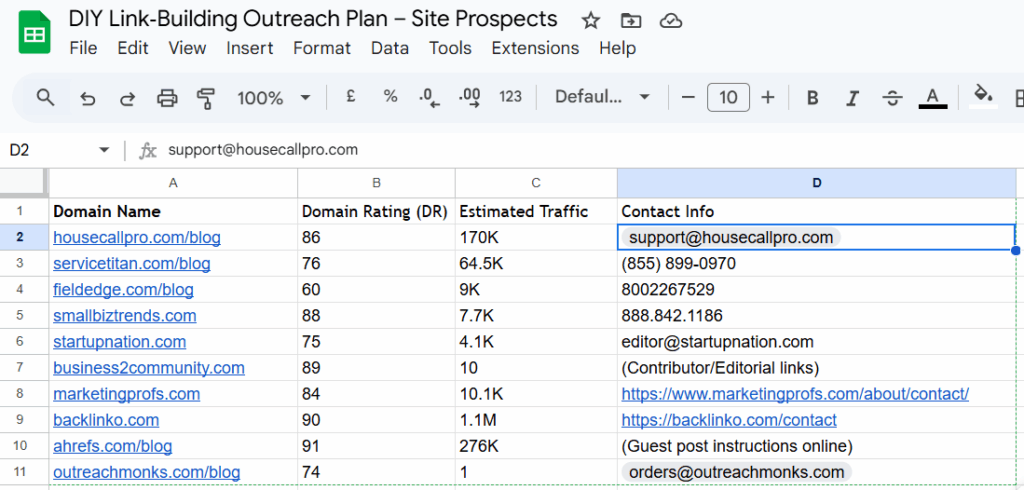
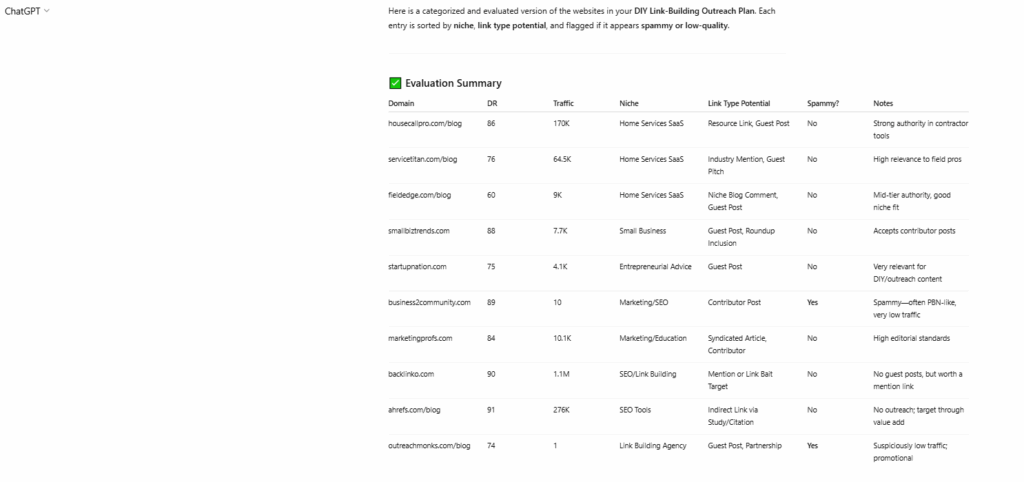
11. Monitor Competing Pages with AI
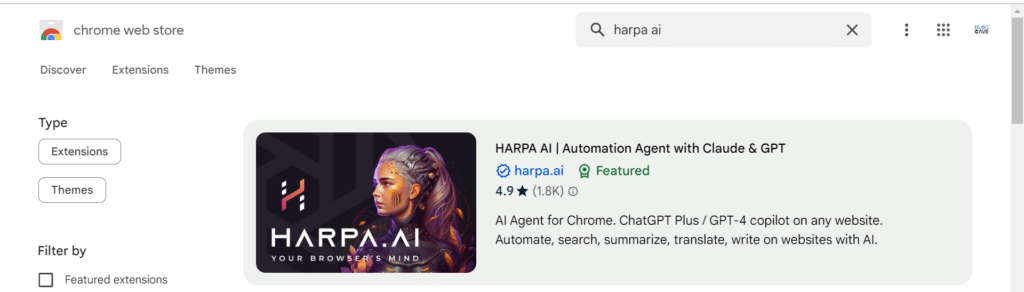
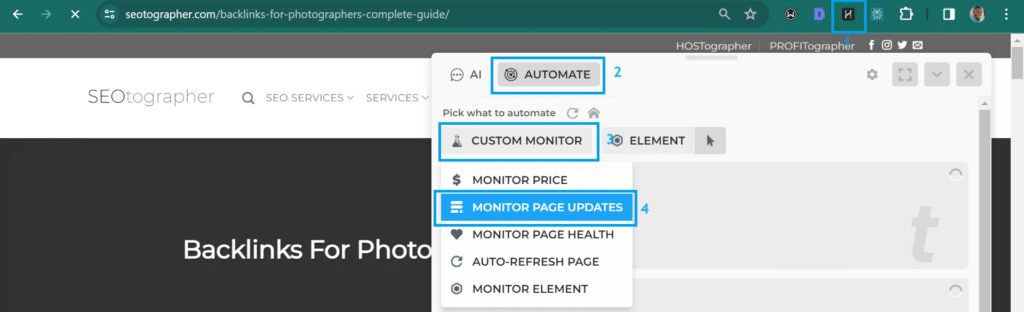
Use browser extensions like HARPA AI to track changes on competitor pages. When competitors update their content, you know it’s time to update yours.
Real-World Case Studies: AI in SEO at Scale
How are the biggest companies actually using AI for content and link building?
Zapier: 5.8M Monthly Visits from Programmatic AI Content
Zapier built 50,000+ integration landing pages using programmatic content generation, driving 5.8 million monthly organic visits [Ahrefs case study]. Each page is auto-generated from integration data but includes unique human-written descriptions from app owners. They quadrupled organic traffic from 1.19M to nearly 5M in three years [Salt Agency].
Lesson: AI-assisted content at scale works when each page provides genuine utility and targets a specific user intent.
Bankrate: 125K Monthly Visits from AI-Written Articles
Bankrate published hundreds of AI-generated finance explainer articles, each reviewed and fact-checked by human subject matter experts. These pages generate approximately 125,000 organic visits monthly [Kevin Indig / Ahrefs traffic data].
Lesson: AI drafts + human expert editing works in YMYL niches when backed by strong domain authority (Bankrate DR 91).
Ahrefs: AI Content Grows 5% Faster
Ahrefs’ own research found that websites using AI content saw a median year-over-year organic growth rate of 29.08%, compared to 24.21% for sites without AI content [Ahrefs, 2025]. A separate study found 74.2% of newly created web pages in April 2025 contained AI-generated content [Ahrefs, 900K pages analyzed].
Lesson: AI content performs competitively but the 5% edge comes from speed and scale, not quality superiority.
HubSpot: A Cautionary Tale
HubSpot’s organic traffic dropped 75% in two years, from 24.4M to 6.1M monthly visits [Alphametic]. The cause wasn’t AI content but Google’s AI Overviews summarizing the informational, top-of-funnel content HubSpot relied on. Zero-click searches climbed from 56% to 69% of queries.
Lesson: AI tools help create content, but the content strategy itself must adapt to an AI-search environment. Informational content alone is no longer enough.
3 Limitations of AI for Link Building
AI Can’t Do the Actual Outreach
AI drafts emails. It doesn’t build relationships. The outreach itself still requires a human who understands context, timing, and follow-up. From our 100,000+ outreach emails, we know that personalization and persistence matter more than any template.
AI Can’t Find Broken Links Reliably
ChatGPT can’t crawl the web in real-time. For broken link building, you still need tools like Ahrefs or Screaming Frog that actually check HTTP status codes.
AI Can’t Track Rankings Accurately
LLMs don’t have access to real-time SERP data. For rank tracking, use dedicated tools like Ahrefs, SEMrush, or Google Search Console.
Bottom Line
AI is a force multiplier for link building, not a replacement. Use it for research, ideation, prospect categorization, and content drafting. Keep the human element for outreach, relationship building, and quality control.
For the complete link building process, see our 20-point checklist. For pricing on managed campaigns, check our link building pricing guide.
Disclosure
SERPreach uses AI tools in our internal link building workflow. We also offer managed niche edit and guest posting services. This guide covers AI applications objectively.
References
- SEMrush. (2024). State of SEO Report. semrush.com
- Backlinko. (2024). AI in SEO: Statistics and Trends. backlinko.com
- Editorial.Link. (2025). Link Building Survey 2025. editorial.link/link-building-survey
- Ahrefs. Zapier SEO Case Study. ahrefs.com
- Salt Agency. How Zapier Quadrupled Organic Growth. salt.agency
- Kevin Indig. How Well Does AI Content Perform in SEO? kevin-indig.com
- Ahrefs. (2025). Websites Using AI Content Grow 5% Faster. ahrefs.com
- Ahrefs. (2025). 74% of New Webpages Include AI Content (900K Pages). ahrefs.com
- Alphametic. Unpacking HubSpot’s SEO Crash: Blog Traffic Drop and AI Overviews. alphametic.com

