
By Sabahat Ali – Link building expert since 2009 – 668+ clients served
KEY STATISTICS
- 48.6% rate digital PR as the #1 most effective link building tactic [Editorial.Link, 518 experts]
- 89.2% of specialists see positive ranking effects within 1-6 months [Outreach Monks]
- 84.6% of SEOs say link relevance is the top quality factor [Editorial.Link]
- Prospects with prior positive interactions are 5x more likely to respond [LinkBuilder.com]
- 65% of SEOs use AI tools for prospecting and personalization [DemandSage]
- 80% of webmasters who respond demand payment [Our data, 100K+ emails]
To identify the most effective link building strategies for 2026, I analyzed the workflows of top-performing link building specialists. This guide distills those findings into actionable tactics designed to boost your search rankings and domain authority through high-quality backlink acquisition.
Note: Access our resource library at the end of this article to master these techniques.
11 Strategies Link Building Specialists Use in 2026
What are link building strategies? Link building strategies are deliberate actions taken by a link building specialist to acquire hyperlinks from third-party websites to their own. In 2026, these strategies prioritize EE-A-T and relevance, focusing on high-quality content, digital PR, and relationship-based outreach to improve organic search rankings and domain authority.
- Blog news articles
- Personalized outreach
- Strategic content marketing
- Systematic & creative guest posting
- Press release (PR) with HARO & X
- Reactive PR
- Contemporary broken link building (BLB)
- Brand mentions
- Leverage competitors’ backlinks
- Creating linkable assets
- Infographics & custom image link building
- Authority Hacker. (2025). 755 Link Builder Survey. authorityhacker.com
- Editorial.Link. (2025). 518 Expert Survey. editorial.link
- Outreach Monks. Link Building Statistics. outreachmonks.com
- LinkBuilder.com. (2026). Link Building Trends & Predictions. linkbuilder.com
- DemandSage. (2026). 46 Link Building Statistics. demandsage.com
- OutreachMama. Professional Services Case Study. outreachmama.com
- Coalition Technologies. Link Building Strategies 2025. coalitiontechnologies.com
- Tanot Solutions. Link Building Case Study. tanotsolutions.com
Strategic Comparison: Choosing Your Approach
| Strategy Type | Best For | Effort Level | Primary Benefit |
|---|---|---|---|
| Digital PR (HARO/Reactive) | Authority | High | High-tier media links |
| Broken Link Building | Quick Wins | Medium | Reciprocal value |
| Linkable Assets | Passive Growth | High | Long-term scalability |
1. Blog news articles
In April, Ahrefs capitalized on a drop in HubSpot’s traffic, reporting the news first using their own data tools. This exclusive coverage trended for a week, resulting in a massive influx of editorial backlinks as other blogs cited Ahrefs as the primary source.
By publishing industry-specific news or trending events, you position your site as a high-authority source. This “white hat” approach attracts organic links from bloggers and journalists looking for verified data and original reporting.
2. Personalized outreach
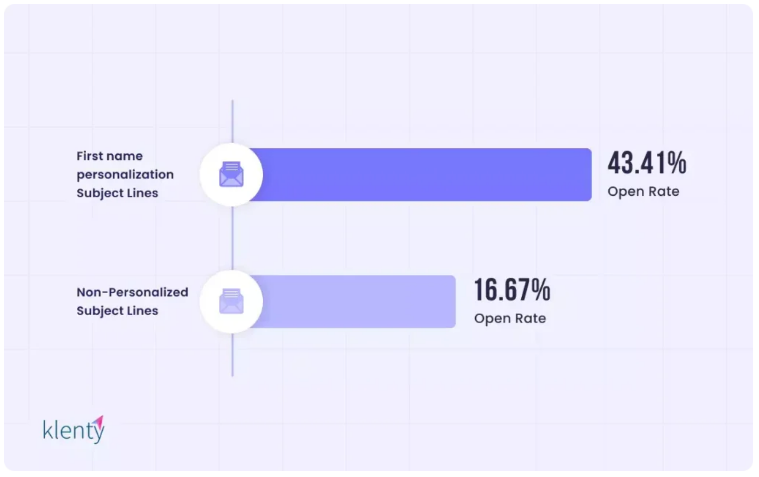
Generic outreach is a fast track to the spam folder. Modern link building specialists focus on hyper-personalization to break through the noise. Simple additions, such as the recipient’s name in the subject line, can increase response rates by up to 43%.
Key Data:
- Personalized subject lines yield a 43.41% open rate.
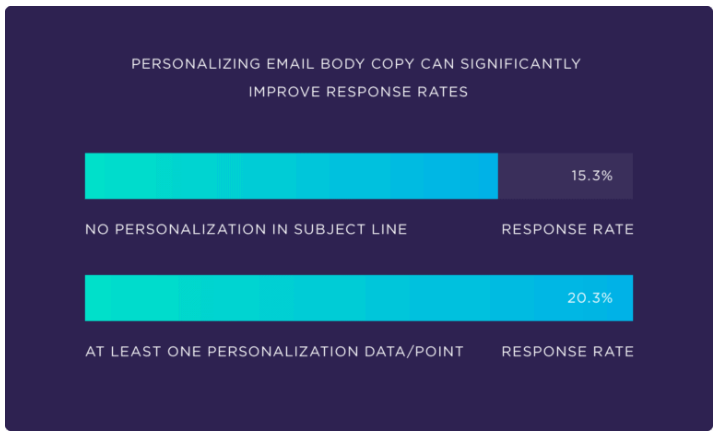
According to Brian Dean of Backlinko, personalizing the email body copy makes a response 32.7% more likely.
Interactive Asset: The “Hook & Value” Outreach Template
Subject: Question about [Topic] on [Site_Name]
Hi [Name],
I was reading your piece on [Topic] and loved your point about [Specific Detail]. I actually just finished a deep-dive study on [Related Topic] that includes [Original Data/Visual]. Given your interest in [Topic], I thought this might be a great resource for your readers. Let me know if you’d like to take a look!
Best, [Your Name]
3. Strategic content marketing
Content marketing remains the foundation of all successful link building strategies. As Shelly Fagin (Credit Karma) notes, high-quality content that satisfies search intent naturally earns citations and referral traffic.
Case Study: The Statistics Roundup
Problem: An e-commerce brand struggled to earn links in a saturated niche.
Solution: Levi Olmstead (Whatfix) implemented a statistics roundup strategy, compiling scattered industry data into a single, authoritative resource.
Result: The brand earned 300+ white hat links from reputable sites looking for quick stats to cite.
My take:
Don’t just aggregate data—curate it. Adding your own unique analysis to statistical roundups increases the “linkability” of the asset.
4. Systematic & creative guest posting
Guest posting usage increased by 5% recently, but Google’s ability to detect “low-value” guest posts has also evolved. Success now requires a systematic approach focused on audience utility rather than just link placement.
Avoid “write for us” footprints. Instead, use topic-based prospecting. Find sites already ranking for your target keywords and pitch content that fills a specific gap in their current coverage.
My take:
Diversify your guest content: deep-dive guides, infographics, and video summaries often get approved faster than generic articles.
5. Press release (PR) with HARO & X
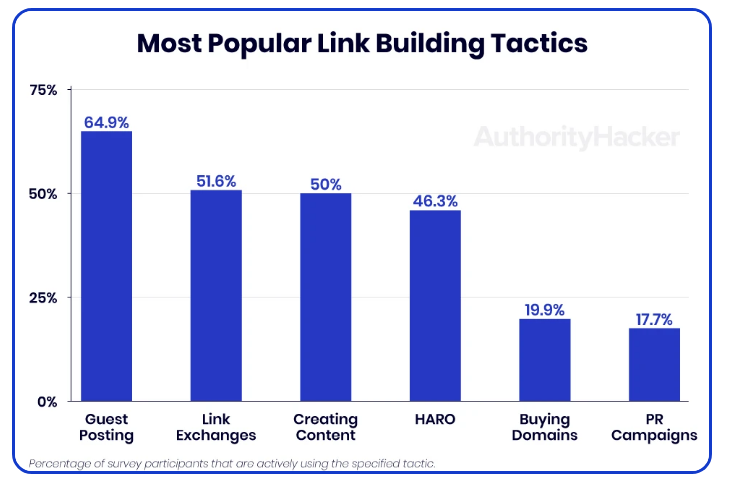
HARO (now Connectively) remains the 4th most popular tactic used by link building specialists. It allows small businesses to earn mentions in tier-1 publications like Forbes or Fortune without a dedicated PR firm.
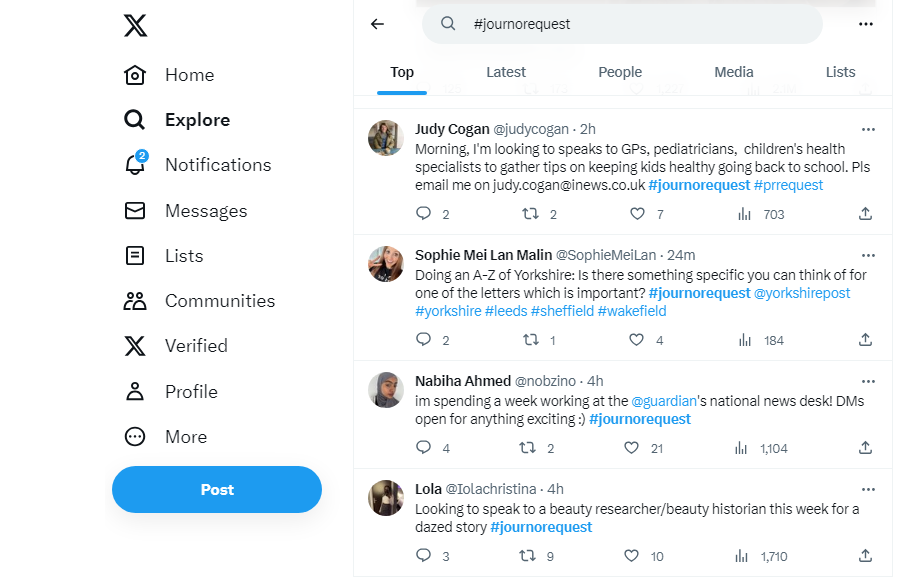
To beat the rising competition on HARO, leverage X (Twitter). Monitor the #journorequest hashtag to find journalists needing immediate expert quotes. This real-time interaction often leads to faster link acquisition than email pitches.
6. Reactive PR
Reactive PR involves providing expert commentary on breaking news. When a new regulation or health study is released, journalists need immediate insights from doctors, lawyers, or industry experts.
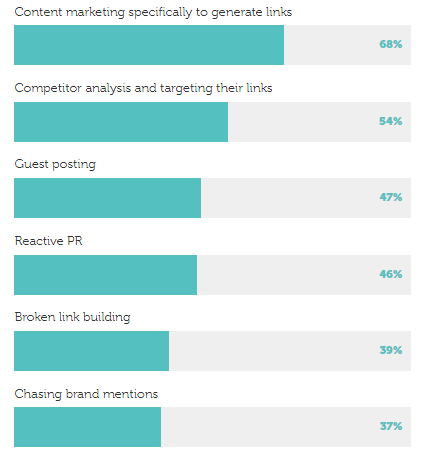
By monitoring news cycles and offering rapid-response quotes, you can earn high-authority backlinks while establishing your brand as a thought leader in your space.
7. Contemporary broken link building (BLB)
Traditional BLB targets 404 pages, but contemporary BLB targets repurposed domains. Many authoritative sites still link to domains that have expired or been bought and turned into low-quality blogs.
The Pro Framework:
- Identify expired/repurposed sites in your niche.
- Crawl their backlink profiles to find high-authority pages still linking to them.
- Reach out to the author: “Hey, I noticed you’re linking to [Expired Site], which is now [Repurposed Junk]. I have a fresh, updated guide on that topic here if you’d like to swap the link.”
8. Brand mentions
Claiming unlinked brand mentions is one of the highest-ROI link building strategies because the author already knows your brand. Use Google Alerts to monitor your company name and reach out politely to request a clickable link whenever you are mentioned without one.
9. Leverage competitors’ backlinks
Competitor analysis reveals the exact “link map” for your industry. If a site links to three of your competitors, they are highly likely to link to you if you provide superior value.
Execution Steps:
- Use Ahrefs/Semrush to export competitor backlink profiles.
- Filter for “Dofollow” links with a DR of 40+.
- Identify “niche-adjacent” targets that don’t compete directly but share the same audience.
10. Creating linkable assets
Linkable assets are high-value pieces of content designed specifically to earn links. These include:
- Original Research: Backlinko’s study of 11.8M search results earned 5,000+ backlinks.
- Resource Pages: Compiling tools or statistics can generate 100+ links annually with zero outreach.
- Free Tools: Calculators, checklists, or automated templates provide ongoing utility that users naturally reference.
11. Infographics & custom image link building
Infographics remain a powerful medium for link acquisition. Beyond social sharing, custom images can be leveraged via “Image Prospecting.”
By hosting images on Flickr or Unsplash under Creative Commons, you can track who uses your visuals and request a proper backlink attribution. This method can secure multiple high-DA backlinks monthly with minimal ongoing effort.
Implement Link Building Strategies with Precision
Success in 2026 requires a diversified portfolio. Don’t rely on a single tactic; instead, test multiple link building strategies on a small scale to see what resonates in your specific niche. Analyze your results, refine your outreach, and scale what works.
Would you like to contribute your own results to this article? Get in touch with your case studies and insights.
For pricing, see our link building pricing guide. For beginners, start with our 20-point checklist.
What Results Do Specialists Actually Get?
Law firm case study: A personalized backlink campaign doubled a law firm’s domain rating within 2 months and increased organic traffic by over 50% [OutreachMama].
Ecommerce redirect fix: One mid-sized ecommerce company discovered 67% of their backlinks pointed to discontinued product pages. After redirecting those links and updating content strategy, organic visibility increased 43% within 3 months [Coalition Technologies].
Statistics page outreach: A targeted campaign sent 515 emails, achieved a 17.55% reply rate and 5.71% conversion rate, resulting in 27 high-quality backlinks [Tanot Solutions].
From our own experience: Across 668+ campaigns, specialists who spend 2+ weeks engaging with prospects before pitching consistently outperform cold outreach by 3-5x. The best results come from relationship building, not email volume.
Disclosure
SERPreach is a link building agency using many of these strategies daily.

