
By Sabahat Ali – Link building expert since 2009 – 668+ clients served
KEY STATISTICS
- 68% of customers start brand interaction with a Google search [Neil Patel]
- 648% increase in first-page rankings through ORM + SEO campaign [Thrive Agency]
- 53.3% of all website traffic comes from organic search [BrightEdge]
- 80% of webmasters who respond to outreach demand payment [Our data, 100K+ emails]
What people find on Google about your business may affect your brand reputation. It may even decide if they will visit your website or not.
And one negative article or review ranking on the first page can cost your business. Your brand’s credibility, sales, and trust are on the line.
Why?
91% of consumers read online reviews before buying. And three out of four users never go past page one of Google results.
That means they can lose trust in your brand if they see negative reviews too often or can’t find you on the first page.
So, why does effective SEO and link building for reputation management matter?
It helps you take back control. You can use it to fight against negative content trying to shape your brand perception. Then you can use SEO strategies and effective content marketing to promote positive content and your positive brand image.
This article will show you how. Keep reading to learn more.
Strengthen your brand’s reputation with strategic link building
Link building plays a central role in improving your brand’s reputation online. The more quality links pointing to you, the more trust Google and users assign to your business.
It also means that high-authority sources vouch for your brand. And as a result, negative content becomes harder to outrank your positive online presence narrative.
So, to strengthen your positive online image:
- Earn links from authoritative sites. Pitch to sites in your niche with your target audience. You can get links through guest articles, interviews, and insights shares. Each link acts as a credibility vote for your brand.
- Leverage digital PR and brand mentions. Use PR campaigns to generate news coverage, then turn those mentions into backlinks. You can also convert unlinked mentions into valuable links with simple outreach.
- Collaborate with niche partners. Doing this helps people see your brand in a new light. The brands you partner with bring you referral traffic. So, do sponsorships, feature in events, do expert roundups within your niche, etc.
- Diversify your backlink profile. Google and other search engines need to know that several online platforms trust your site. So, combine editorial links, resource links, and local citations.
- Optimizing titles, meta descriptions, and internal links with relevant keywords.
- Updating old pages with new valuable insights or media.
Strategic link building is more than a ranking tactic. It protects your reputation. This is why you must focus on reputation management seo and earning links that highlight your expertise, value, and reliability.
Next, see how SEO techniques can help you bury negative results and promote a positive narrative.
How to use SEO to bury negative Google search results
It’s simple:
Optimize every page on your website to control the story users see when they search your brand.
If not, these negative search results can become your brand identity. But with search engine optimization (SEO), you can fight against harmful search results.
Here are a few tips on how you can use SEO in this regard:
Focus on your strongest assets
If your web pages, articles, or press mentions are showing up in branded searches, improve their visibility by:
Doing these can also boost their authority quickly.
Create consistent, positive content
Publish content that positions your brand as trustworthy. For example, write about customer success stories, case studies, press releases, or insights.
But you must keep it steady. Frequent, relevant updates signal to Google that your brand is active and credible.
Use internal linking to boost positive pages
Link your high authority pages to new pages with positive reviews. For example, if your testimonial page has a lot of visitors, you can link your service page to it.
This internal network will strengthen the general authority of your brand. Beyond this, Google will make your positive content a priority over negative results.
Further reading: How to do internal link building.
Optimize your external profiles
LinkedIn, Medium, and review sites often rank on page one for branded searches. Optimize these profiles and your social media accounts with up-to-date information, branded keywords, and backlinks to your own site.
These platforms can easily outrank small sites publishing negative content.
Always track branded search terms
Use SEO monitoring tools like Google Alerts to find your brand name and related keywords in mentions.
I’ll show you how in a few easy steps:
- Go to Google Alerts.
- In this case, enter your brand name.
- Click the show option button to edit your preferences.
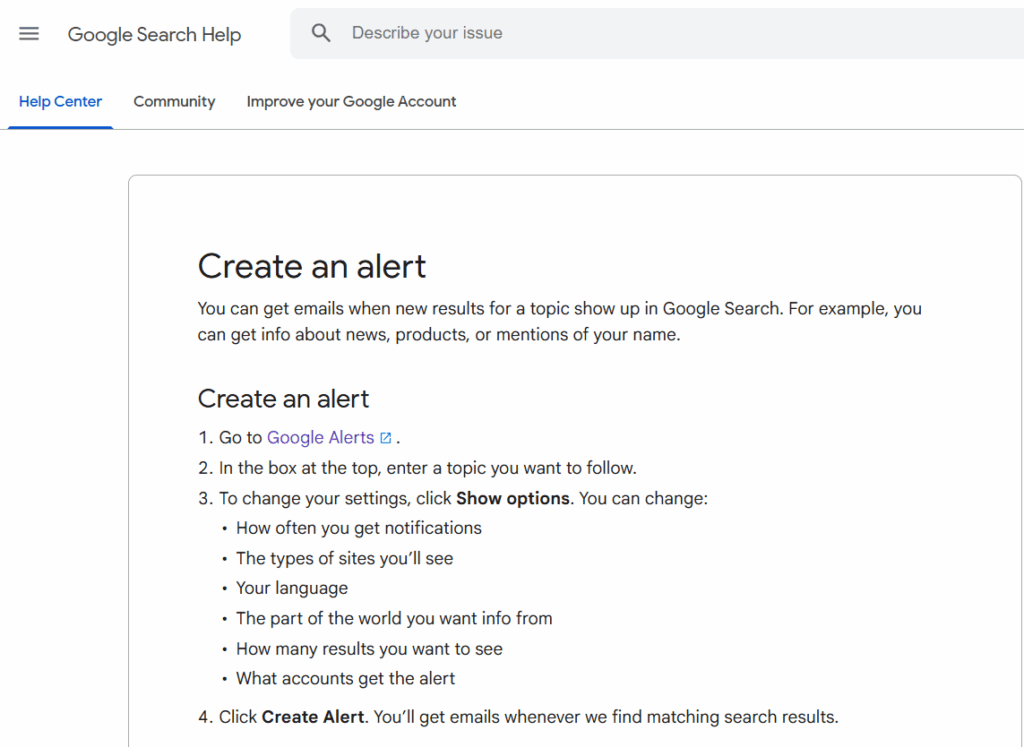
- Then, click Create alert. You’ll get an email whenever your brand is mentioned.
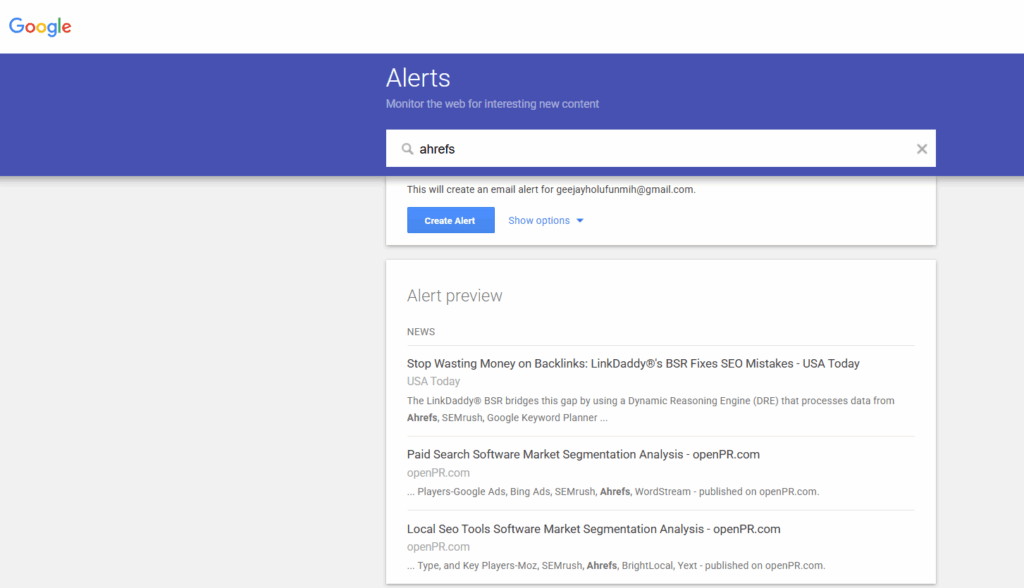
You can also edit or delete your alerts whenever you want.
Early detection allows you to respond or make corrections faster. You get to replace negative results with true and accurate narratives of your brand.
Conduct keyword research for reputation management
Keyword research helps you control how your brand appears in search results. It ensures you optimize for visibility. But beyond that, you get to defend your brand’s online reputation before it gets out of hand.
How?
Strategic keyword research reveals:
- The terms people use when searching for your brand.
- Where negative content might appear.
The following are practical steps to take:
Identify branded and reputation-sensitive keywords
Start by listing all your branded keywords. This includes your company name, product names, and variations. Then, expand the list with modifiers people might use when forming opinions, such as:
- [brand name] reviews
- [brand name] complaints
- [brand name] scam
- [brand name] refund policy
What about tools to find variation and negative keywords ranking in the top 20 results?
I’ll recommend Ahrefs, SEMrush, or Google Keyword Planner.
Create or optimize pages around these branded keywords
Create targeted and value-driven pages with the sole purpose of addressing sensitive keywords. For example, you can publish:
- A customer feedback or testimonial page to rank for “[brand name] reviews.”
- A detailed explainer that clarifies your brand policies if users search for “[brand name] complaints.”
These actions don’t deny negative claims. Instead, they provide transparent, SEO responses for users to know your side of the story.
Always check keyword trends to spot potential threats
Reputation issues often start small. A spike in searches for “is [brand name] legit?” could mean growing skepticism. Track these shifts monthly to react early.
When you notice new negative keyword trends, create content to tackle them before they gain traction.
Leverage local SEO to manage your reputation in local searches
Many businesses only focus on global results, which is a good thing. However, neglecting how local searches can affect your brand is not wise.
Your online reputation also lives in local searches, with potential customers trying to decide if they can trust you. A single negative feedback or outdated listing can discourage them and affect your company’s online reputation .
Thankfully, local SEO will help you take charge of what people see when they search for your brand in your area.
So the question is: How do local businesses leverage SEO?
Optimize your Google Business Profile
Your Google Business Profile (GBP) is often the first impression local users get.
- Go to Google Business Profile to get listed.
Note: You cannot claim a GBP listing if your business has no physical location.
- Fill out every detail and choose your business type. You can pick as many as apply to you.

- Add other required details: Your website, business category, address, location, and contact. Ensure all you add accurate business information across directories.
- Claim your Google business profile
- Then, start your verification. Add your phone number and provide recent photos and business updates. Use branded keywords naturally in your business description. Then wait for Google to verify your restaurant.
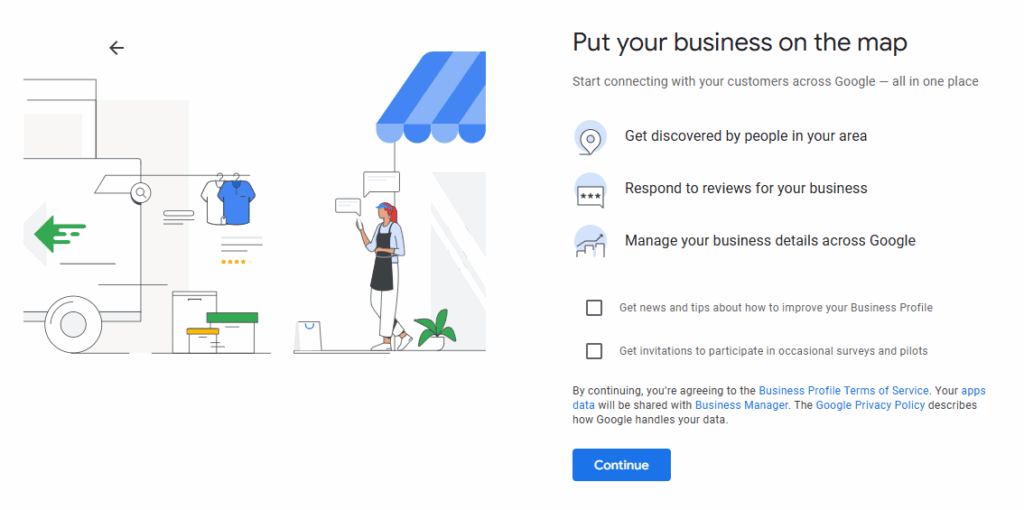
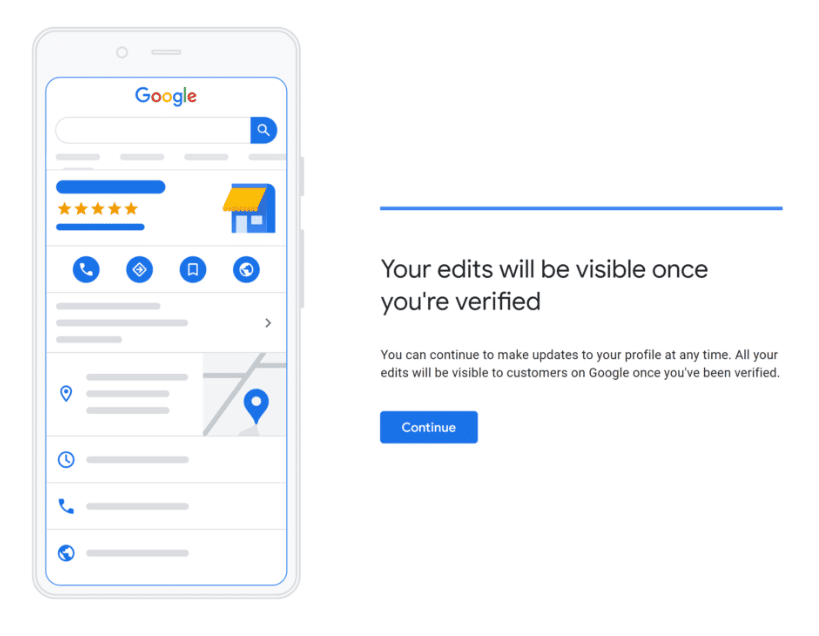
Remember to give professional responses to both positive and negative reviews. Doing so shows transparency and care. Profiles that stay active tend to rank higher and gain more trust.
Earn local backlinks and citations
Local backlink is your way forward – to gain local authority and credibility. You can earn links from community websites, event sponsors, or local news outlets.
For example:
Sponsor a local event or partner with local nonprofits to earn trusted mentions.
Also, you can submit your business to reputable local directories like Yelp, Bing Places, and the like. These industry-specific listings will reinforce your online presence.
Encourage and manage local reviews
Positive local reviews will influence potential buyers and impact your map rankings. So, after successful interactions, ask customers to leave feedback on Google or social media platforms.
If you receive negative Google reviews, respond as soon as you can and offer practical solutions. Consistent engagement shows users and search engines that you are reliable.
Combine these tips to dominate local searches and keep a strong positive reputation.
At this point, I have established how reviews and responding to them can affect your SEO efforts. Let me show you how to manage these reviews.
Manage online reviews and combat negative content strategically
How you handle online reviews and negative content about your brand matters. The goal is not to erase criticism but to manage it in a way that builds trust and supports your SEO strategy.
Turn reviews into reputation assets
Reviews are powerful signals for search engine rankings, especially for local and branded searches. Encourage satisfied customers to leave feedback. A steady flow of genuine reviews makes search engines and users believe you are credible.
And when you receive negative reviews, respond fast, stay professional, and show empathy. Avoid defensive replies; instead, focus on resolving the issue.
A thoughtful response improves customer perception and can even convert critics into advocates.
Pro tip: Create a “Customer Stories” or “Feedback Highlights” page on your website. Highlight positive experiences with schema markup for reviews. This will improve your brand visibility and click-through rates on SERPs (search engine results pages).
Suppress and outrank negative content
Not all reputation threats come from reviews; some are from third-party articles. Use SEO to counter these threats. You can:
- Publish new, optimized and engaging content. These include press releases, customer testimonials, or leadership interviews around branded keywords.
- Build quality backlinks to these positive pages to boost their authority.
- Leverage social media and PR to amplify new content and generate more engagement.
You can also contact the site owners publishing misleading content about your brand. Request that they make corrections, but only when you have credible evidence.
Finally, always track your branded search results. Early detection allows faster suppression of negative content before it gains traction.
Combine PR and link building to manage online reputation
Protecting your brand’s reputation doesn’t end. It is an ongoing effort. And brands that stay trusted treat SEO reputation management as a long-term strategy.
You should combine proactive PR, continuous link building, and monitoring for better results.
Use PR to strengthen your brand’s authority
Public relations and SEO work best when aligned. Use PR through credible mentions in news articles, podcasts, and interviews to control your narrative. Each feature positions your brand as an expert source. Plus, it often comes with high-quality backlinks that improve search visibility. To make this work:
- Build relationships with journalists, bloggers, and local news outlets in your niche.
- Create press releases for milestones, partnerships, or community involvement.
- Repurpose media coverage into blog posts or LinkedIn content to amplify its reach.
Maintain authority with consistent link building
Reputation fades without consistent reinforcement. Make earning backlinks from credible, relevant sources a consistent effort.
Even after you’ve resolved previous reputation issues:
- Contribute guest posts or expert opinions to reputable websites in your field.
- Collaborate with influencers on case studies or events that will generate natural links.
- Track unlinked brand mentions with tools like Ahrefs Content Explorer. Then, request that these sites link back to your brand.
Note: Check if they are relevant websites in your niche.
When consistent links point to you, Google sees your brand as relevant.
Watch your brand’s presence and search results
Set up tools like Google Alerts or Brand24 to track mentions of your brand, products, and executives. Review these weekly to detect changes in sentiment or new negative content.
Also, don’t forget to watch your keyword rankings and backlink quality. If new negative pages start appearing, respond fast.
Keep a proactive mindset
The most reputable brands don’t wait for crises; they expect them.
- Keep producing fresh, positive content
- Maintain your relationships with publishers, and
- Always engage with your audience.
How Link Building Drives Reputation Management Results
Brand Recovery — 0 to 30K Monthly Traffic: A brand dealing with negative search results implemented an integrated SEO and content strategy. Within 3 months traffic reached 1,400 monthly visitors, and it grew to 30,000+ steady organic traffic as positive content pushed down negative results [Search Engine Magazine, 2025].
648% First-Page Ranking Increase: An ORM campaign combining SEO, content creation, and strategic link building achieved a 648% increase in non-brand first-page Google rankings within 6 months. Organic search became the leading traffic source at 49% of all visitors, with 25,200+ download starts from organic search alone [Thrive Agency, 2025].
Why links matter for reputation: 68% of customers start their interaction with a brand through a Google search [Neil Patel, 2025]. When negative content ranks on page 1, quality backlinks to positive content pages are the most effective way to push it down. Each high-authority link to a positive page signals to Google that the positive content deserves to rank higher.
Start building a reputation that always outperforms the negatives today
Again, online reputation management strategy through SEO and link building is not a quick fix. You have to maintain consistent control over what your audience sees online.
How?
- Optimize your branded assets
- Earn authoritative backlinks
- Manage reviews proactively, and
- Publish high-quality content
Also, always check your branded keywords, review platforms, and backlinks. Address issues early and amplify positive narratives.
Sustain link-building and PR efforts even when no crisis exists. And if you don’t know where to start or need help building a content marketing strategy for strong backlinks, SERPReach is here to help.
For more, see our pricing guide, beginner checklist, and high authority backlinks guide.
Disclosure
SERPreach provides niche edit and guest posting services that support reputation management campaigns.
References
- BrightEdge. (2024). Organic Search Share of Traffic. brightedge.com
- Search Engine Magazine. (2025). Reputation Management SEO Case Studies. searchenginemagazine.com
- Thrive Agency. (2025). SEO and ORM Connection. thriveagency.com
- Neil Patel. (2025). Guide to Reputation Management. neilpatel.com

