
By Sabahat Ali · Link building expert since 2009 · 668+ clients served
Niche edits — also called link insertions or curated links — are backlinks placed into existing, already-indexed content. Instead of writing a new guest post, you negotiate a link placement on a page that already ranks and carries authority.
I’ve been building niche edits for clients since 2009. In that time, I’ve refined a repeatable process for finding quality prospects, evaluating their metrics, and landing placements that actually move rankings. This guide walks through exactly how I do it, with the real tools and filters I use daily.
KEY STATISTICS
- Average cost of a niche edit: $361.44 (see our pricing breakdown) [Ahrefs, 2022]
- Current pricing by DR tier: DR 20–40: $130–$220 | DR 40–60: $220–$400 | DR 60–80: $400–$700 | DR 80+: $700–$1,200+ [LinkBuildingHQ, 2026]
- 9.4% of SEO practitioners rank niche edits as their preferred tactic [Editorial.Link, 2025]
- 57.1% of link builders see ranking results within 1–3 months [Editorial.Link, 2025]
- Average acceptable cost for one high-quality backlink: $508.95 [Editorial.Link, 2025]
- Pages in Google’s top 10 have 3.8x more backlinks than lower pages [Backlinko, 2026]
How Do Niche Edits Work?
In SEO, there are many link-building strategies: broken link building, guest posting, resource page outreach, and HARO among them. While 64.9% of link builders use guest posting as their primary strategy [AIRA/Loopex, 2026], niche edits offer a distinct advantage: you’re placing links on pages that already have authority, traffic, and trust with Google.
A niche edit link goes into an existing blog post that’s already indexed. Unlike guest posts, you don’t create new content — you find a relevant, ranking article and negotiate a link placement within it.
The key requirement: your target post MUST already be indexed by Google. An indexed post is more likely to be ranking, trusted by Google, and able to pass link equity to your site.
That said, don’t get obsessed with link juice alone. Our main job in SEO is to drive relevant traffic that converts. Niche edits are one tool in that toolkit.
Are Niche Edits Safe?
Yes — when done through legitimate outreach. Niche edits built on real relationships with site owners are safe. A webmaster won’t insert a link into a ranking post unless they see genuine value for their readers.
That said, the industry perception is telling: 51.7% of link builders believe Google cannot effectively identify paid niche edits [Editorial.Link, 2025]. And 91.9% of SEOs believe their direct competitors are buying links [Editorial.Link, 2025]. The reality is that niche edits occupy a grey area — but when done with quality and relevance in mind, they remain a reliable strategy.
Do Link Insertions Still Work?
Undoubtedly. The data backs it up: 89.2% of SEOs see a ranking lift within 1–6 months of link acquisition [PressWhizz/Backlinko, 2026]. And 94% of link builders say quality matters more than quantity [PressWhizz, 2026] — which is exactly what well-executed niche edits deliver. On top of that, 73.2% of SEO professionals now believe backlinks directly influence AI search results [Editorial.Link, 2025], making quality link acquisition more relevant than ever.
To prove this with a real example, consider Nathan Gotch. Nathan spent over $20K on backlinks. After analyzing 34 URLs with at least 3 high-quality backlinks, the rankings and organic traffic of 24 URLs increased significantly.
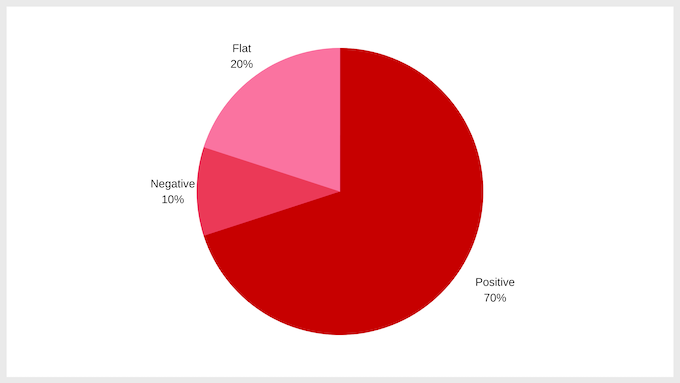
70% is a SOLID success score. Niche edit link building works — but only when done right.
Niche Edits vs. Guest Posts: A Direct Comparison
Both tactics earn backlinks, but they work differently. Here’s how they compare based on current industry data:
| Factor | Niche Edits | Guest Posts |
|---|---|---|
| What it is | Link placed in existing, indexed content | New article written and published on external site |
| Average cost | $130–$1,200+ depending on DR | $99–$500+ (content + placement) |
| Speed to index | Faster — page already indexed | Slower — new page needs indexing |
| Content control | Low — existing content, you choose anchor only | High — you write/approve the article |
| Link permanence | Variable — can be removed by site owner | More stable — your content lives on the page |
| Scalability | High — no content creation needed | Lower — each link requires a unique article |
| Risk level | Medium — 51.7% believe Google can’t detect paid niche edits [Editorial.Link, 2025] | Lower — appears more editorial/natural |
While 48.6% of SEO practitioners rate digital PR as the most effective link-building tactic and niche edits come in at 9.4% [Editorial.Link, 2025], the ranking impact of niche edits is often faster because you’re leveraging pages that Google already trusts.
Finding The Best Link Opportunities For Niche Edits – The Steps I Follow
When building link inserts, I prioritize 6 KEY metrics. In my experience, they determine how much value is transferred to your website.
1: Niche Relevancy of the Domain
The more RELEVANT a target is, the BETTER the link equity from niche edits. Relevant links give Google a strong ranking signal — if reputable websites in your niche link to your pages, it signals authority.
For example, if you sell CBD oil for dogs, get your link inserted on a pet’s website.
2: Ahrefs DR, RD, and Traffic
I often target these baselines — I’ve found that they pass more link value to my pages:
- DR = 20+
- RD = 100+
- Organic Traffic = 500+
Domain Rating (DR)
DR represents the backlink profile strength of a website on a scale of 0–100. The higher it is, the more authority that website can share with yours.
Our Data: Why DR Alone Misleads Niche Edit Buyers
We pulled Ahrefs data on 30 pages currently ranking for niche edit keywords (March 2026). The results surprised us.
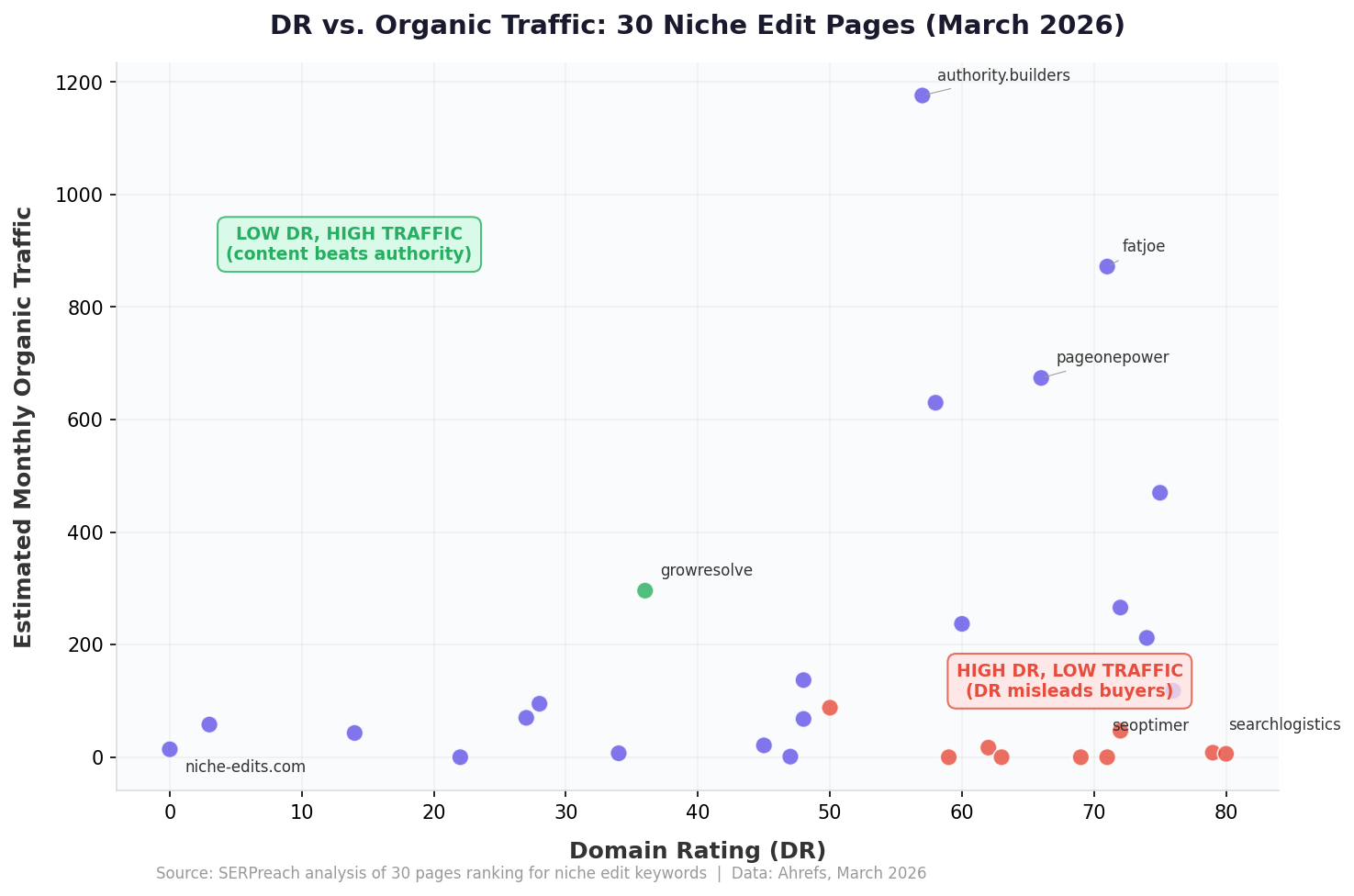
30% of pages with DR 50+ had under 100 monthly organic visits. That’s nearly a third of “high authority” pages that look great on paper but pull almost no real traffic.
The worst offenders: searchlogistics.com (DR 79, 8 visits) and seoptimer.com (DR 80, 6 visits). Both have strong domain authority. Neither page actually ranks for much.
On the flip side, authority.builders (DR 57) pulls 1,176 monthly visits from a single niche edits page. growresolve.com at DR 36 gets 296 visits. These pages punch well above their DR weight because the content is genuinely useful and ranks for multiple related keywords.
The takeaway is simple: if you’re vetting a niche edit opportunity by DR alone, you’re going to overpay for dead pages. Check the page’s actual organic traffic and keyword count before you spend a dollar.
Referring Domains (RD)
RD shows all the domains linking to a specific website. According to Ahrefs’ report, 90.63% of pages get no organic traffic without referring domains. RD is a big deal.
Traffic
Straightforward: the more traffic a domain receives, the higher its potential to share some. Even a nofollow link from a high-traffic site can have significant impact.
3. Domain’s Semrush Authority Score
Semrush Authority Score represents a website’s quality and SEO performance. The scale is 0–100, but you don’t need to target only the high end. Sites with 25+ scores will suffice.
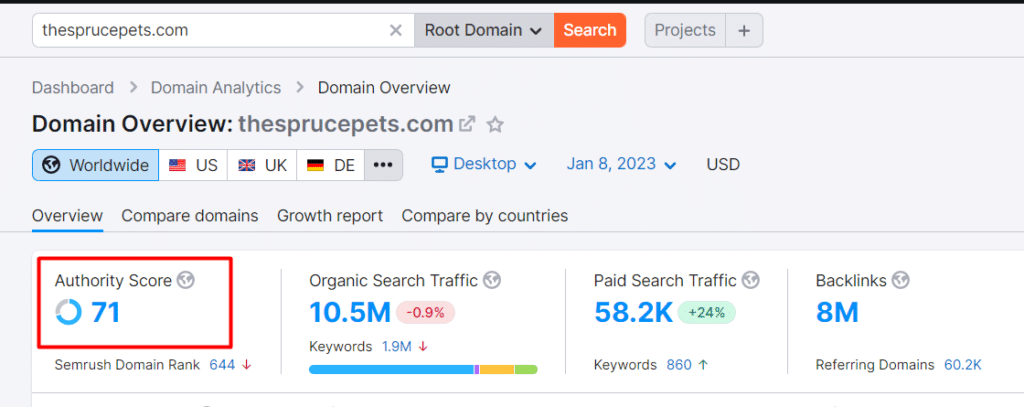
Note: you can use Moz to determine your prospect’s domain authority if you don’t fancy Semrush.
4: Niche Relevant Keyword in Post Title
Pick posts or pages with titles that contain keywords relevant to your anchor text or niche.
If you want a link for a page about “CBD oil for dogs,” the title of your target page should be something like:
- The benefits of CBD oil for dogs
- How to ease stress in dogs
The following post on thesprucepets.com is an ideal fit:
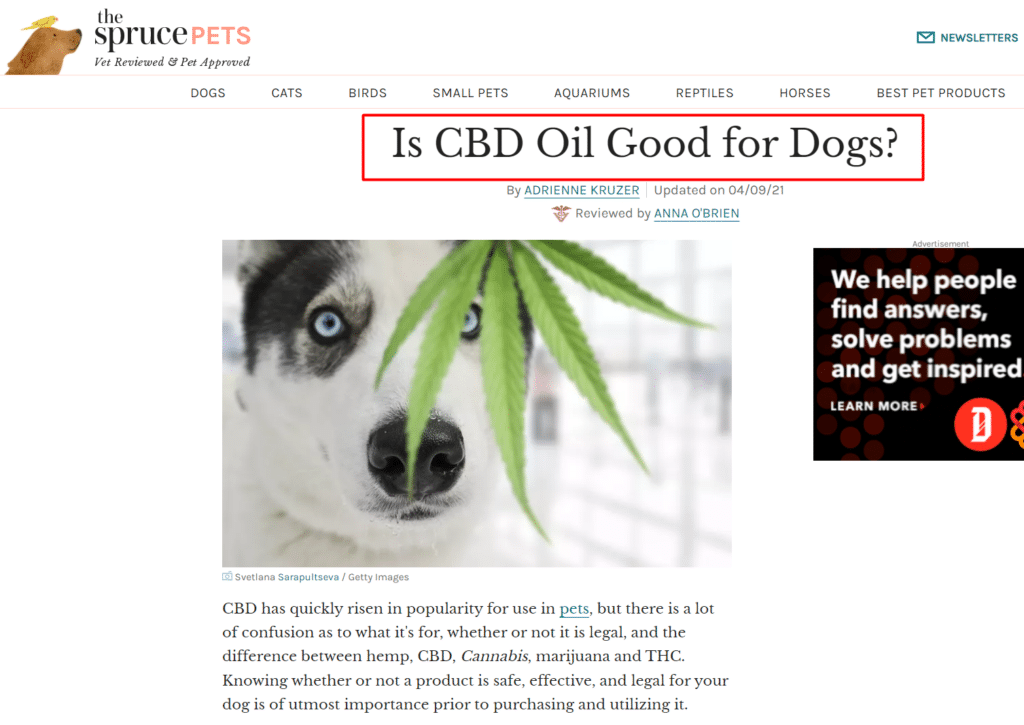
Choosing niche-relevant post titles provides credibility, topical authority, and backlink depth benefits.
Important Tip:
Use the keyword site: function to search for webpages having niche-relevant topics. For example, CBD site:thesprucepets.com.
5. The Ranking of A Post/Page on Google Against Your Niche Relevant Keywords
Check the position of your target post on Google search results. If it ranks high, it is an effective spot for your backlink.
A search on Ahrefs of the post “Is CBD oil good for dogs?” from thesprucepets.com shows the following results.
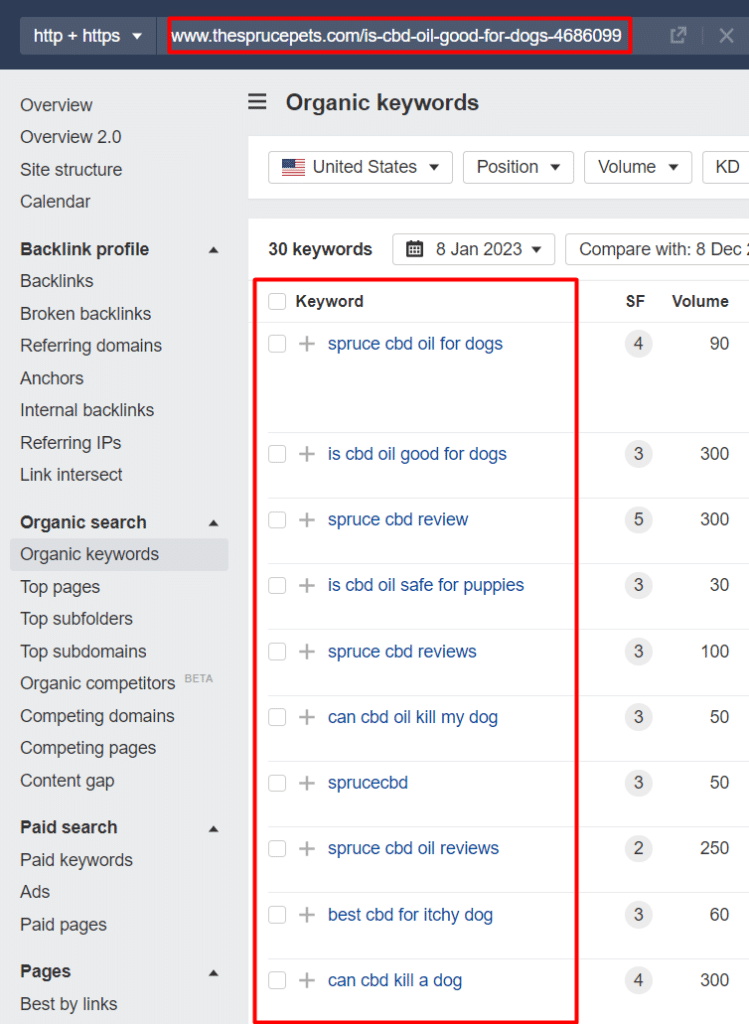
If there are multiple relevant search strings on the first page, it indicates an effective page for getting your niche edit link.
6. Ahrefs URL Rating (UR)
UR is like DR but focuses on a specific webpage. It considers internal and external (dofollow) links, and a 10+ UR is a good score.
This case study by Ahrefs reveals that UR is the most significant correlation factor for organic traffic and high rankings.
Overview of Website Quality Metrics
- ✅ Niche relevance
- ✅ Ahrefs DR of 20+
- ✅ Referring domains: 100+
- ✅ Ahrefs organic traffic: 1,000+
- ✅ Semrush Authority Score: 25+
- ✅ Niche-relevant keyword in post title
- ✅ Post ranks on Google for relevant keywords
- ✅ Ahrefs URL Rating: 10+
What Kind of Niche Edit Links to Avoid?
Not all backlinks are beneficial. Since 94% of link builders say quality matters more than quantity [PressWhizz, 2026], knowing what to avoid is just as important as knowing what to target.
I. Domains Penalized by Google
Domains with decreasing organic traffic graphs are likely penalized by Google — whether from spammy links, unnatural linking, sneaky redirects, or thin content.
For instance, look at this Ahrefs report for datafilehost.com. The site has impressive DR, referring domains, and organic traffic, but its organic traffic graph is declining over time.
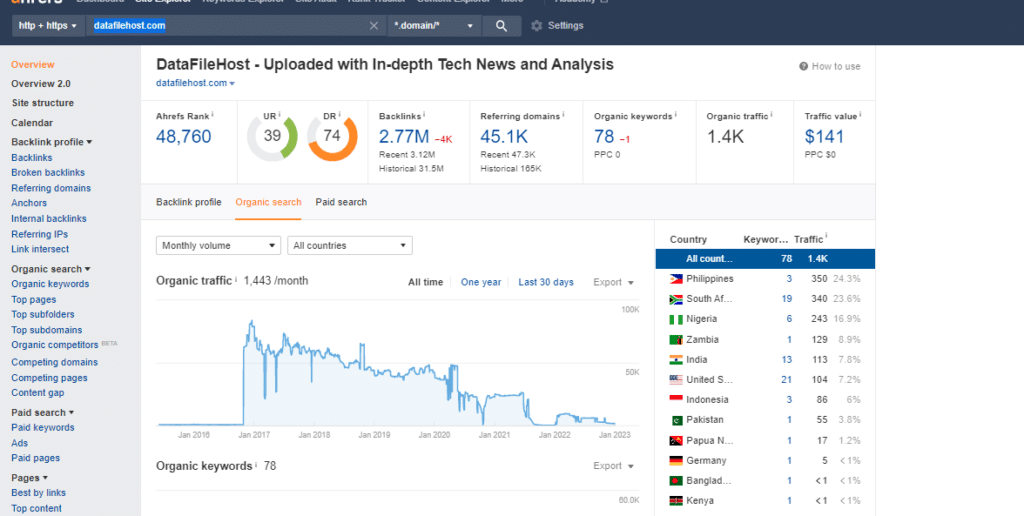
Getting a link from sites like this might help short-term, but long-term it will hurt your traffic and visibility. Avoid them.
II. Backlinks from Domains with Manipulated Organic Traffic
Sites using black-hat practices like CTR manipulation are a big NO. Look at this domain:
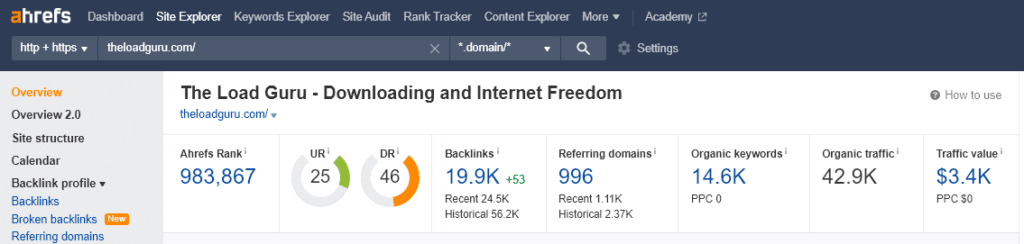
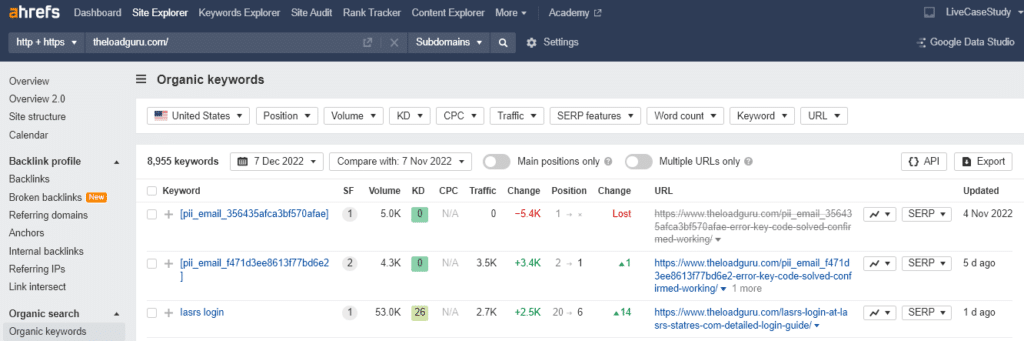
The site uses error codes or web logins (which most likely won’t have any CTR) to rank higher and manipulate organic traffic. Avoid getting links from such sites at all costs.
III. Backlinks from Domains with Irrelevant Geographic Traffic
If your target audience is the USA but the target domain’s organic traffic comes from non-US countries, skip it. Referral traffic with low conversion can signal spammy links to Google, hurting your domain authority.
IV. Domains with Overall Organic Traffic Below 500
From firsthand experience, sites with organic traffic under 500 are often PBNs. PBNs are spammy and regarded as black hat — keep them away from your site.
V. Posts with Many Outgoing Backlinks (OBL)
A niche edit from a page with too many outbound links is suspicious. Your site might come off as a PBN link buyer. Plus, pages with several OBLs dilute link equity — you’ll hardly get any juice from them.
Best OBL Scenario…
Target posts with 3 OBLs (max) to earn the most juice from your backlinks. If possible, stick to high-quality sites with 1 outbound link.
What Our Data Shows About Outgoing Links
We analyzed outgoing link counts across 25 niche edit pages to see if more outgoing links actually correlate with lower organic performance.
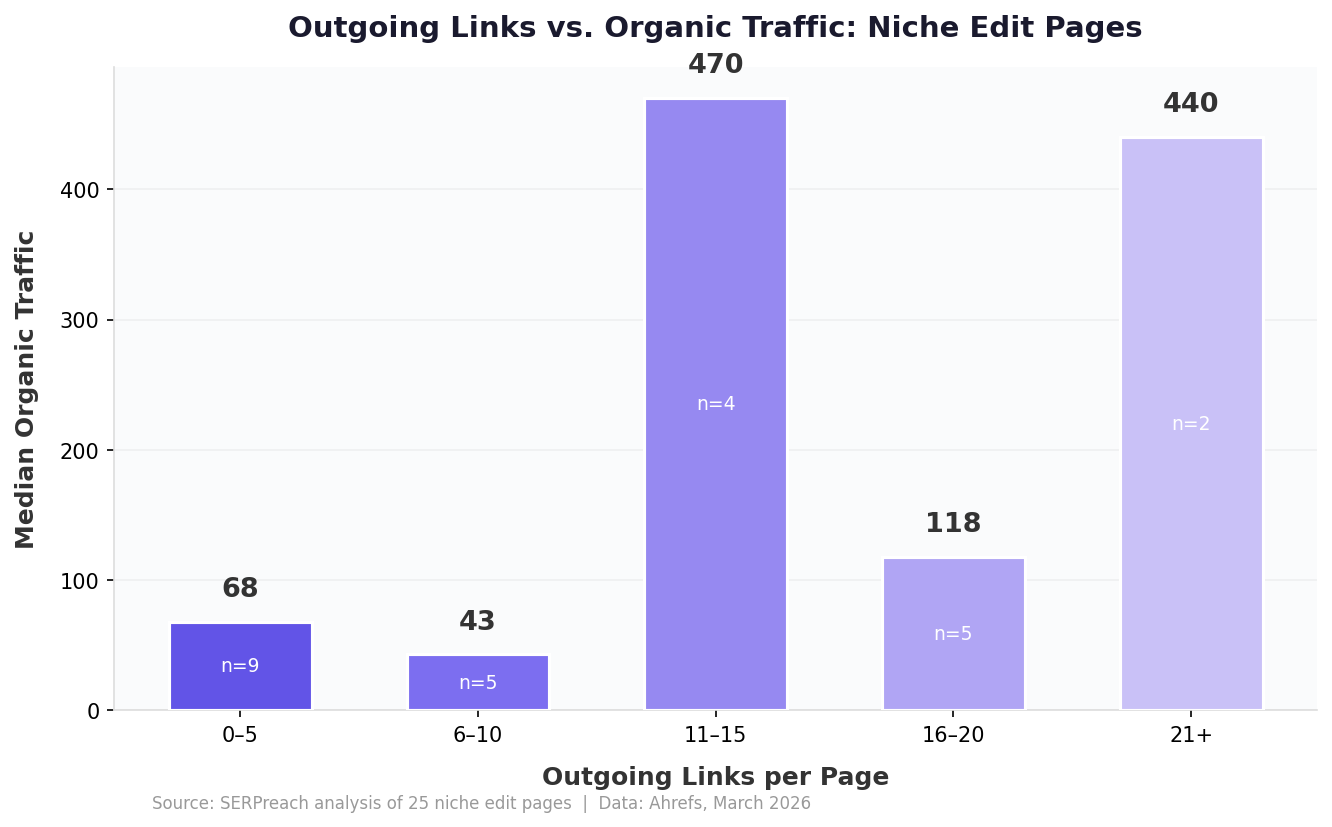
The data tells a more nuanced story than “fewer links = better.”
Pages with 0 to 5 outgoing links had a median of 68 monthly organic visits. Pages with 11 to 15 outgoing links actually performed best, with a median of 470 visits. The highest-traffic pages in our sample weren’t the ones hoarding link equity. They were the ones linking out to genuinely useful resources.
What hurt performance was the combination of high outgoing links AND low relevance. Pages with 20+ outgoing links that linked to random, unrelated sites performed poorly. But pages with 15 outgoing links to topically relevant sources (like Ahrefs, Moz, or industry blogs) did fine.
Bottom line: don’t reject a niche edit page just because it has 10 or 15 outgoing links. Look at WHERE those links point. If they link to quality, relevant sources, the page is probably well-maintained. If they link to casino sites and payday loans, run.
VI. Posts that are not Cached in Google in the Last 7 Days
If Google doesn’t cache a post within a week, avoid it. The post is probably low-quality or duplicate content.
Getting Niche Edits By Directly Outreaching Website Owners
Now for the practical part. Keep in mind that only 8.5% of cold emails result in a backlink [PressWhizz, 2026], so your prospecting and outreach quality matters enormously. Here’s my exact process:
Step #1: Determine Your Keywords
Identify the primary or seed keywords you want to get a link for. If you want a backlink for a page about “CBD oil for dogs,” then your keyword for the anchor text can be the same or something along those lines.
Step #2: Find Targets That Can Accept Your Link
My go-to tool is Ahrefs. Here’s how I use it:
- Head over to Ahrefs.com; sign up if you don’t have an account.
- Click “Content Explorer” from the top menu.

- Type your primary keyword into the search bar.
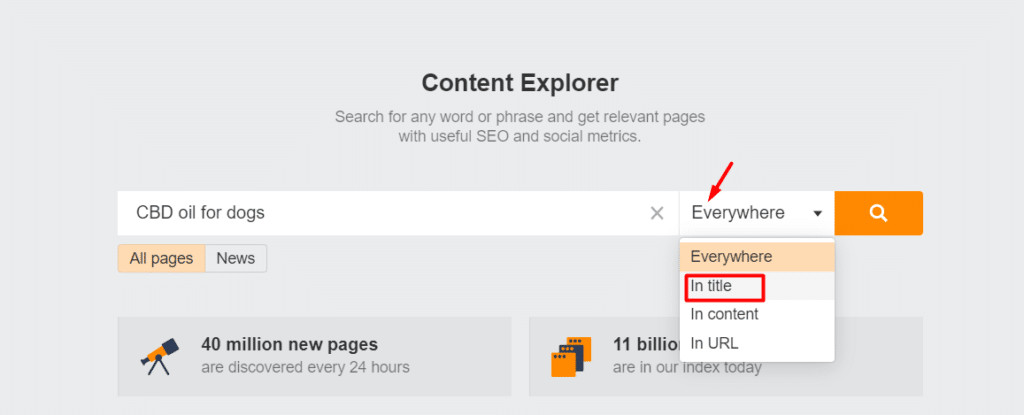
- Change the filter “Everywhere” to “In title,” as shown below.
- Once the results load, set the platform to “WordPress” and make the language “English.”
Note: If you want a backlink from a webpage in another language, choose accordingly.
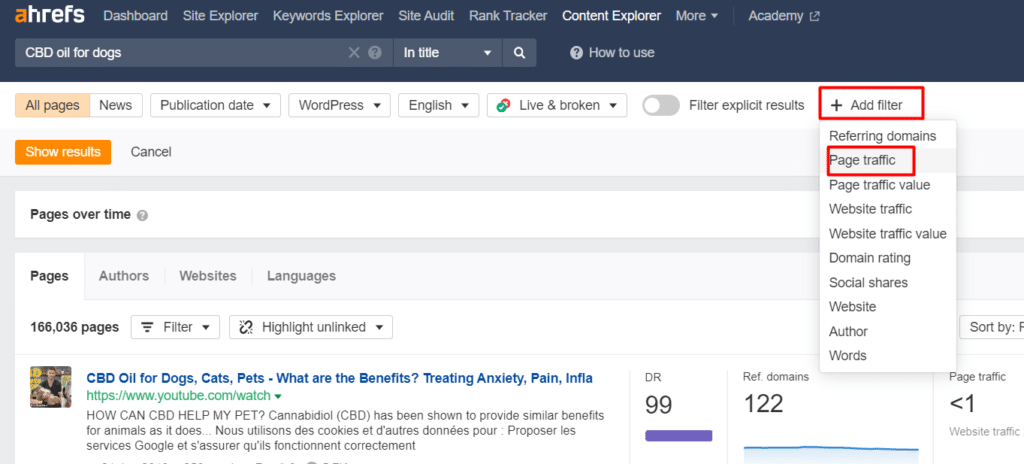
- Click the “Add Filter” button and add “Page traffic.” Set it to “From 1.”
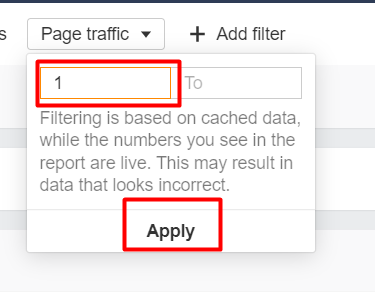
- Next, add an additional filter for “Website traffic.” Set it to “From 1000.”
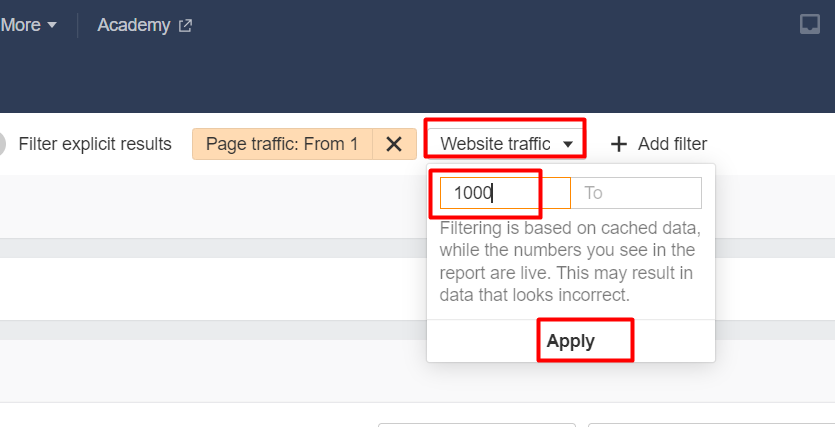
- Now, two more filters for “Domain Rating” and “Words.” Set them to “From 20” and “From 500” respectively.

Now, the results have been reduced from 166,036 to 210 pages.
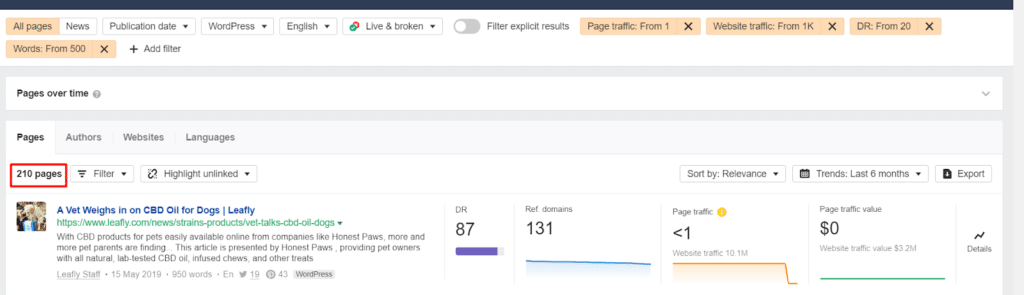
- Narrow the list further by adding more filters, as shown in the screenshot.
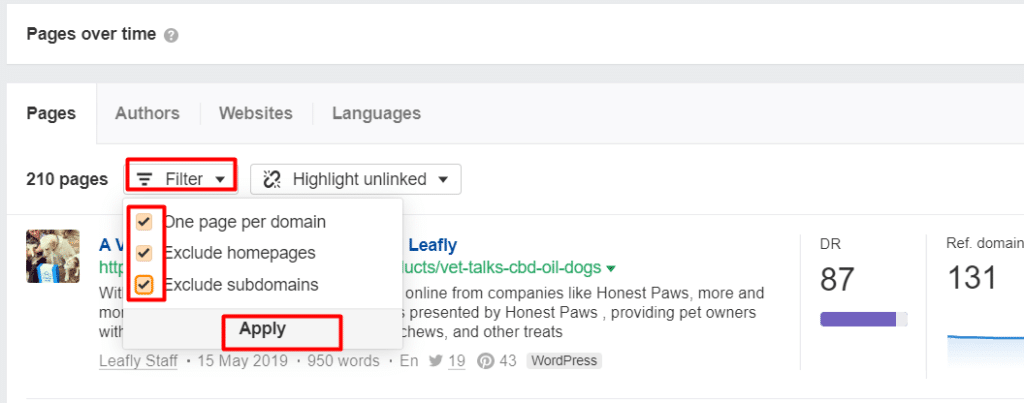
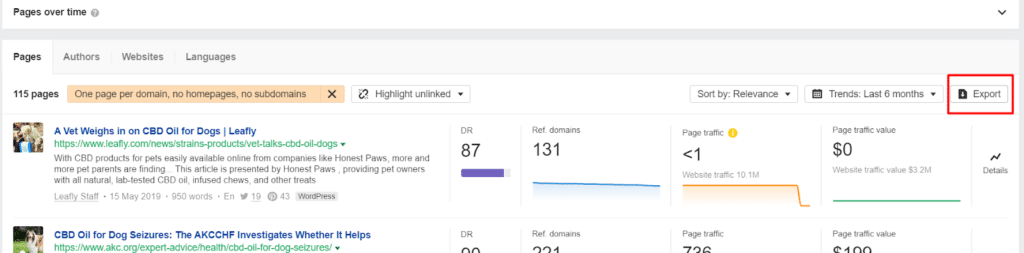
- Now you have a unique set of 115 potential posts for niche edits.
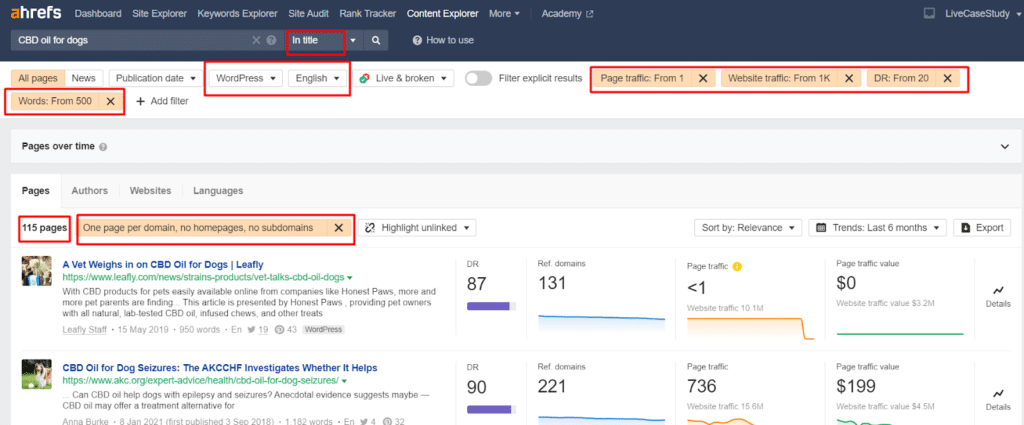
115 is still a lot. Fortunately, you can narrow it down further with steps 3 and 4.
Step #3 — Export the Results and Conduct a Batch Analysis of the URLs
Exporting the results is straightforward:
- Press the “Export” button at the top right corner of the page.
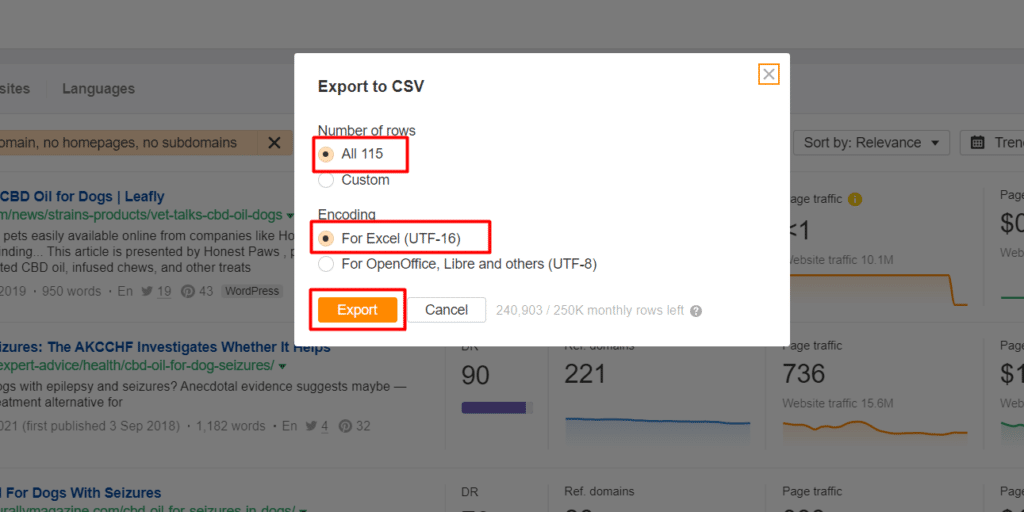
- Set the number of rows to “All 115,” encoding to “For Excel,” and then hit the Export button.
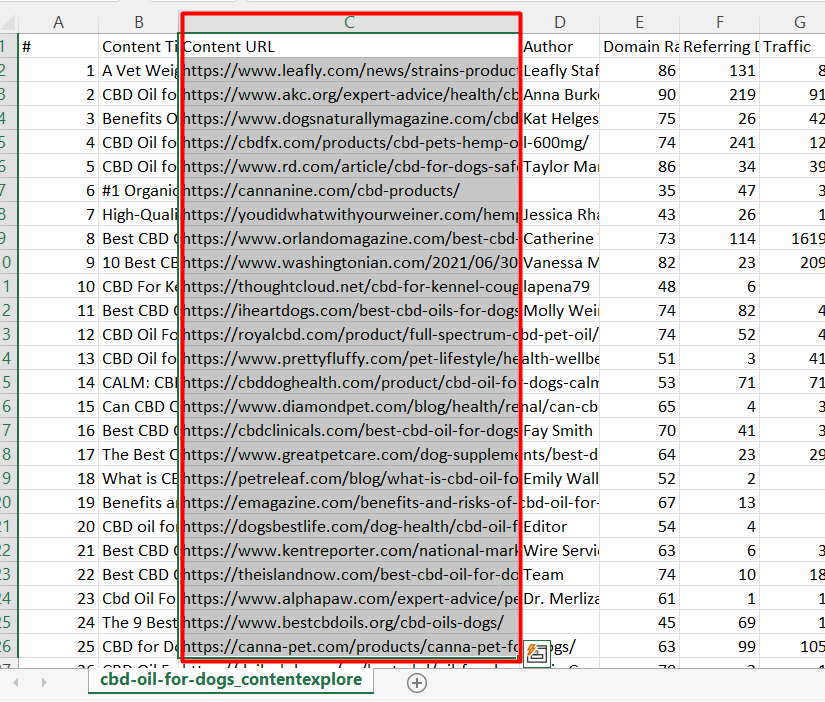
- Open the downloaded CSV file and copy all the URLs from the “Content URL” column.
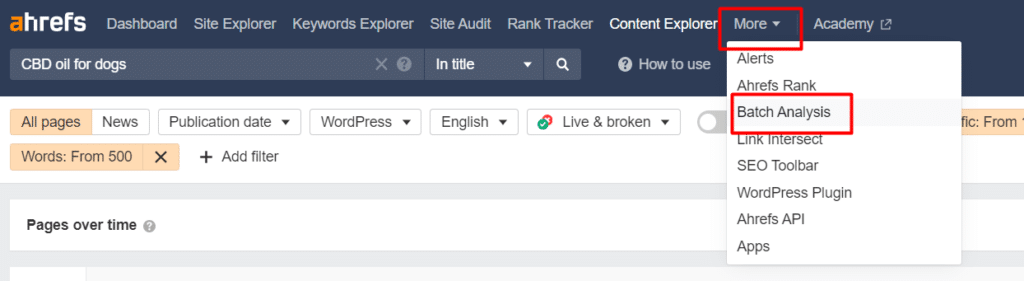
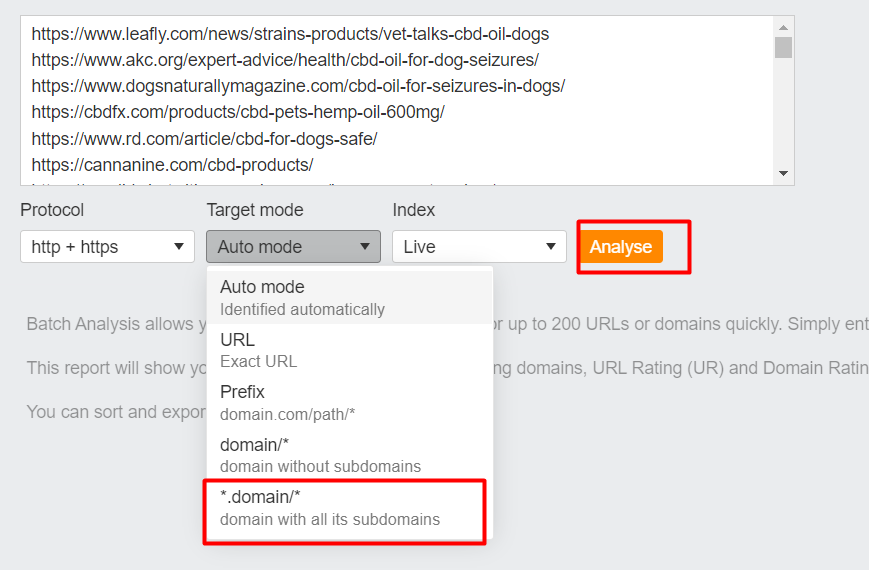
- Next, head over to the Ahrefs Batch Analysis tool.
- Paste the URLs there. Set the target mode to “Domain with all its domains” and hit “Analyze.”
Dealing with Batch Analysis Tool …
You can only add up to 200 URLs at a time in the Batch Analysis tool. If you have more than 200 URLs, you’ll have to split the list into a batch of 200 in each file, which you can later merge manually. For quick merge, use an online tool like merge-csv.com.
Step #4. Export the Results and Refine the List
Once the batch analysis is completed, export the file and follow these steps:
- Add filters “Linked Domains” and “Domain Rating.”
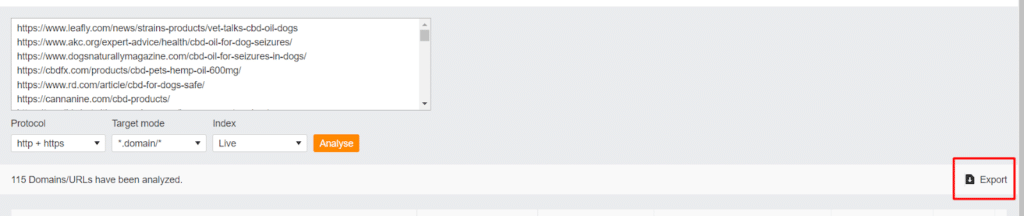
- After downloading the file, open it, and go to the “Linked Domains” column. Sort the results by “Largest to Smallest.”
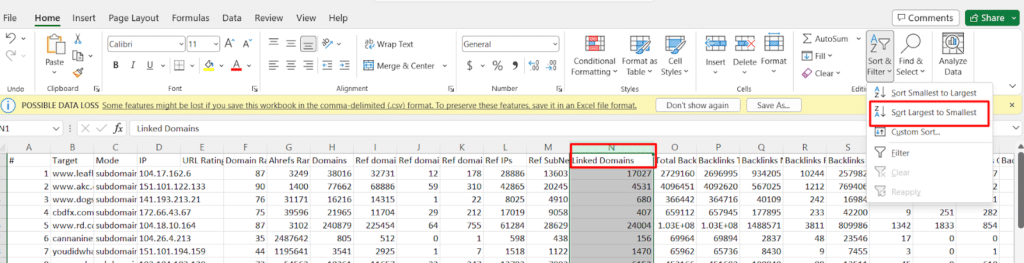
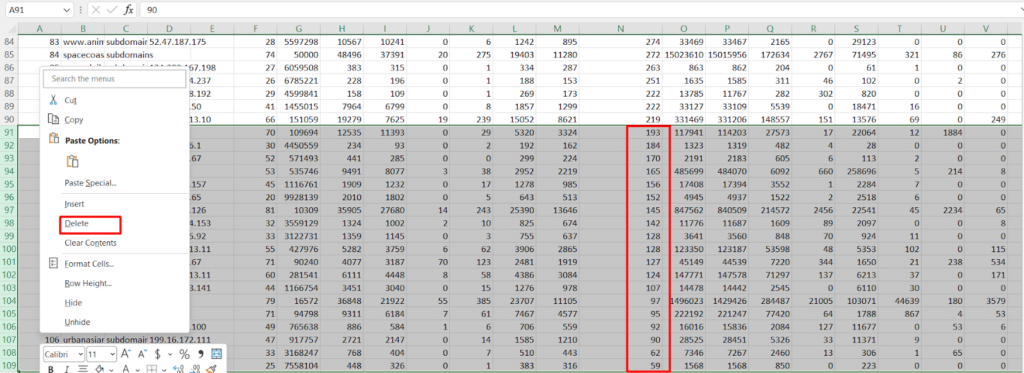
- Now, delete all URLs with less than 200 linked domains.
Pro Tip:
If a website links to several domains, the chances are they will link to your page too.
Lastly, go to the “Domain Rating” column. Sort it by “Largest to Smallest.” Then, delete all URLs with high DR, 60+.
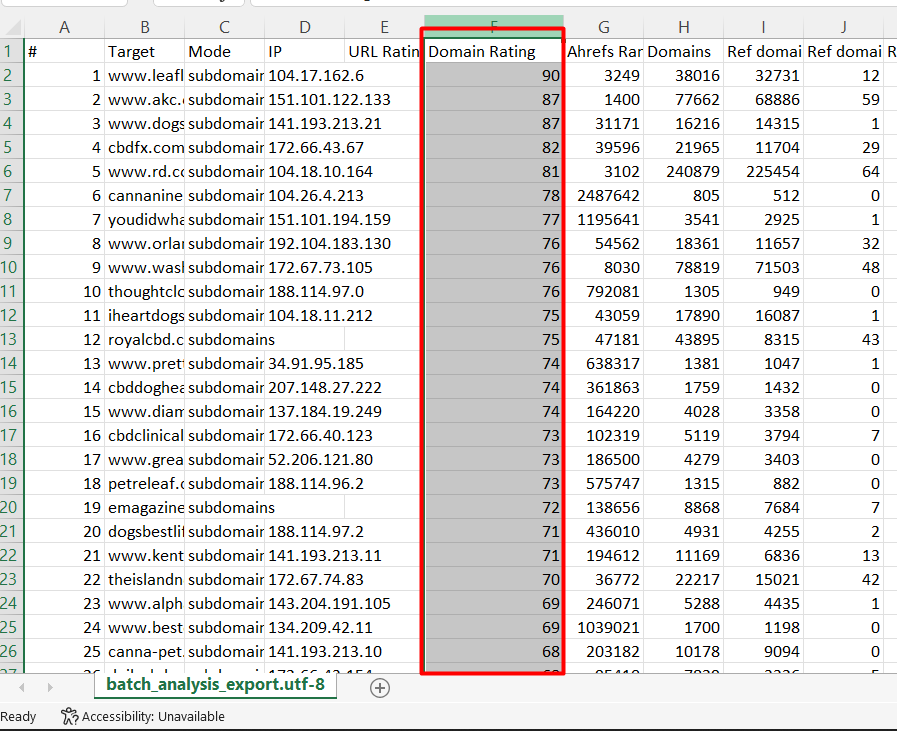
Note:
You may keep domains with high DR. But I usually neglect them because of their unresponsive behavior in the past.
Step #5. Reach Out to All the Remaining URLs
By now, you’ll have a refined list. It’s time for outreach.
You can use Buzzstream to simplify the outreach process. Whether you use a tool or do it manually, know that website owners will likely charge for link insertion — but you can always negotiate rates.
A heads-up: there is no “free link.” You’ll rarely get high-authority outbound links from relevant content for free.
Also, site owners might ask you to tweak the anchor text to make it natural. That’s a good sign — it means they care about their content quality.
Niche Edits Still Work When Done Right
Niche edits remain an effective link-building strategy for gaining contextual links and growing traffic. The data confirms it: 57.1% of link builders see ranking results within 1–3 months [Editorial.Link, 2025], and pages in Google’s top 10 have 3.8x more backlinks than lower-ranking pages [Backlinko, 2026]. Don’t neglect niche edits in your link-building campaigns — they are powerful links for boosting domain authority.
References
- Ahrefs (2022). “Link Building Survey: Marketplace Pricing Data.” ahrefs.com/blog
- LinkBuildingHQ (2026). “Niche Edit Pricing by Domain Rating Tier.” linkbuildinghq.com
- Editorial.Link (2025). “Link Building Statistics: Survey of 518 SEO Experts.” editorial.link
- Backlinko (2026). “Search Engine Ranking Factors Study.” backlinko.com
- AIRA/Loopex Digital (2026). “State of Link Building Report.” aira.net
- PressWhizz/Backlinko (2026). “Link Building Statistics.” backlinko.com
Need help building niche edit links?
If you don’t have time to run this process yourself, I can build links to your money pages. Spend your time closing deals and growing your business while we handle the niche edit link building and guest posting for you.

