
By Sabahat Ali – Link building expert since 2009 – 668+ clients served
KEY STATISTICS
- Full-time US link building specialist. A full-time SEO link building specialist in the US costs $53,000-$98,000 per year [Respona/ZipRecruiter]. Specialist salary: $53,000-$98,000/year [Respona / ZipRecruiter]
- Full in-house team costs avg $14,750/month ($177K/year) [Editorial.Link]
- 56% outsource at least part of link building; 44% fully in-house [Editorial.Link]
- Only 32% of link builders follow a documented, repeatable process [BuzzStream]
- Experienced builders (5+ years) produce 3.57x more links than beginners [Authority Hacker]
- Outsourcing costs $12K-$36K/year vs $60K+ in-house for equivalent output [SAASY Links]
Scaling high-quality backlink acquisition requires more than just effort; it requires a specialized link building team. This guide details the exact framework I used to assemble the team at SERPReach to deliver consistent, elite-level results.
Manual link building is not sustainable at scale. To move the needle on organic traffic and rankings, you must transition from a “one-person show” to a structured team environment. Whether you are an agency or an enterprise brand, building a team is the only way to secure high-authority placements without burnout.
In this guide, I will break down the three-step process for assembling a high-performance link building unit, covering roles, recruitment, and operational efficiency.
What you will learn:
- Identifying your specific team requirements.
- Comparing the “All-in-One” vs. “Decentralized” team models.
- Defining core roles: Prospectors, Vetters, and Outreach Managers.
- Sourcing and training elite talent.
Do you need an in-house team for link building?
A link building team is a specialized group of professionals—prospectors, vetters, and outreach managers—who execute backlink acquisition strategies at scale. Building this team involves choosing a decentralized model, creating rigorous SOPs, and hiring individuals with specific analytical and persuasive skill sets to ensure sustainable SEO growth.
Link building is the most labor-intensive pillar of SEO. It involves prospecting, vetting, and relationship management. For small businesses in low-competition niches, a full team is often unnecessary; a general marketer can usually handle directory listings or occasional guest posts.
You need a dedicated link building team if you:
- Compete in “YMYL” or high-difficulty industries.
- Need to secure 10+ high-authority (DR 60+) links monthly.
- Require a repeatable, predictable process for agency client delivery.
Models of building a team for links: Types, pros & cons
Selecting the right organizational structure is critical for efficiency. Most agencies choose between the “All-in-One” generalist approach or the “Decentralized” specialist approach.
Link Building Team Model Comparison
| Feature | All-in-One Model | Decentralized Model |
|---|---|---|
| Focus | One person handles the whole funnel. | Specialists for each stage. |
| Scalability | Low (Limited by individual bandwidth). | High (Easy to add specialized capacity). |
| Quality Control | Inconsistent (Varies by person). | Superior (Rigid vetting standards). |
| Management | Low touch. | Requires strong SOPs/Coordination. |
The all-in-one marketer model
In this model, every team member is a generalist. They find their own prospects, vet them, and send their own outreach emails. While this requires less management, it often leads to “jack of all trades, master of none” performance issues.
Experience matters enormously: link builders with 5+ years average 25 links per month, while beginners average just 7 — a 3.57x productivity gap [Authority Hacker, 755 surveyed].
Pros
- Minimal supervision required for senior hires.
- Lower initial coordination overhead.
Cons
- Inconsistent link quality across the team.
- Lack of synergy; team members work in silos.
- Difficult to optimize specific parts of the funnel (e.g., email open rates).
The decentralized model
This is the model used by top-tier agencies. Each member specializes in one part of the process—prospecting, vetting, or outreach. This specialization leads to higher efficiency and mastery over specific tools and tactics.
Pros
- Extreme efficiency and faster output.
- Lower long-term costs (hiring specialists is often cheaper than hiring “gurus”).
- Higher quality assurance.
Cons
- Requires robust Standard Operating Procedures (SOPs).
- Higher management effort to ensure smooth hand-offs between roles.
Which of the two models should you use?
Specialization is the key to scaling. Take Ahrefs as an example: they don’t have one person doing “content”; they have a blog squad, a video team, and data scientists.
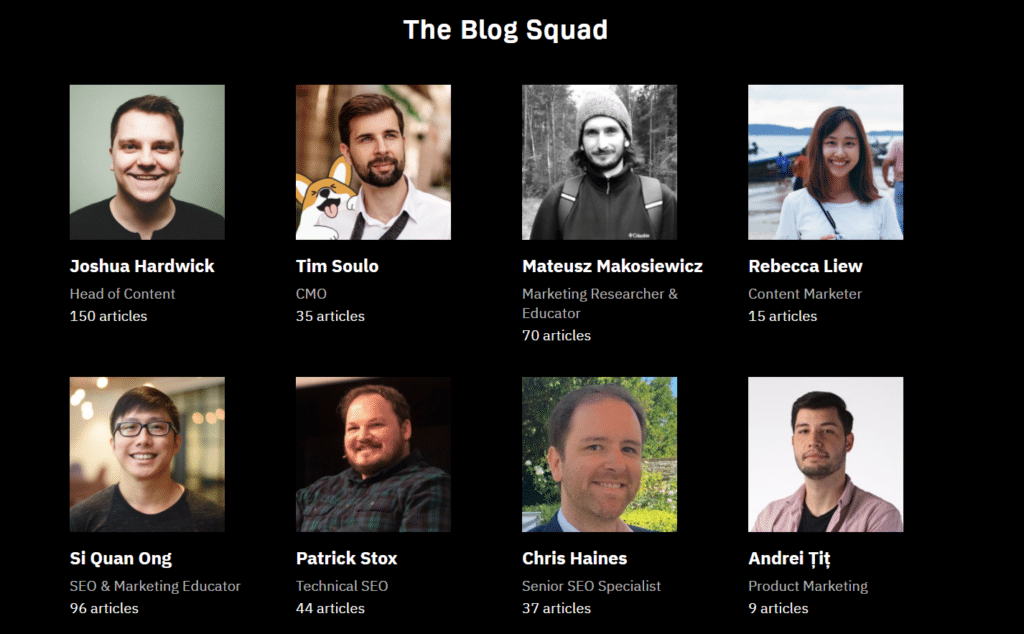
The decentralized model is superior because it allows individuals to focus on what they do best. At SERPReach, we adopted this model to ensure that our vetters never lose focus on link quality while our outreach managers focus entirely on relationship building.
How to assemble a decentralized link building team in 3 steps
- Define necessary roles and hierarchy.
- Develop comprehensive Video and Text SOPs.
- Hire based on trait-specific profiles and train through the funnel.
Decide who needs to be on your team
While large teams may have five or more distinct roles, you can start with a lean 3-person core:
1. Prospector
The “detective” of the team. They analyze competitor backlink profiles and identify linkable assets. They must be experts in Ahrefs or Semrush and understand the nuance of “search intent” for outreach targets.
2. Vetter
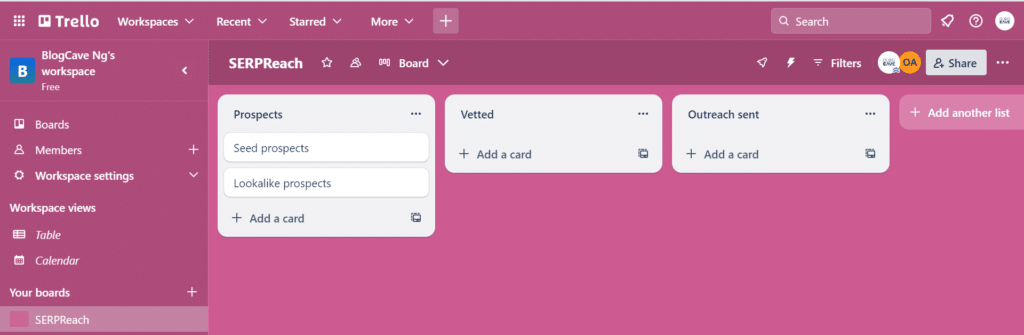
The “gatekeeper.” Their job is to ensure every potential link meets your quality standards (DR, Traffic, Niche Relevancy, etc.). They identify “seed prospects” (high priority) and “lookalike prospects” to help the team prioritize outreach efforts.
3. Outreach Manager
The “salesperson.” They are responsible for crafting pitches, following up, and nurturing long-term relationships with editors. They must be highly organized and persuasive.
Create SOPs for your link building strategies & processes
Standard Operating Procedures are the backbone of a link building team. Without them, your quality will fluctuate as you scale.
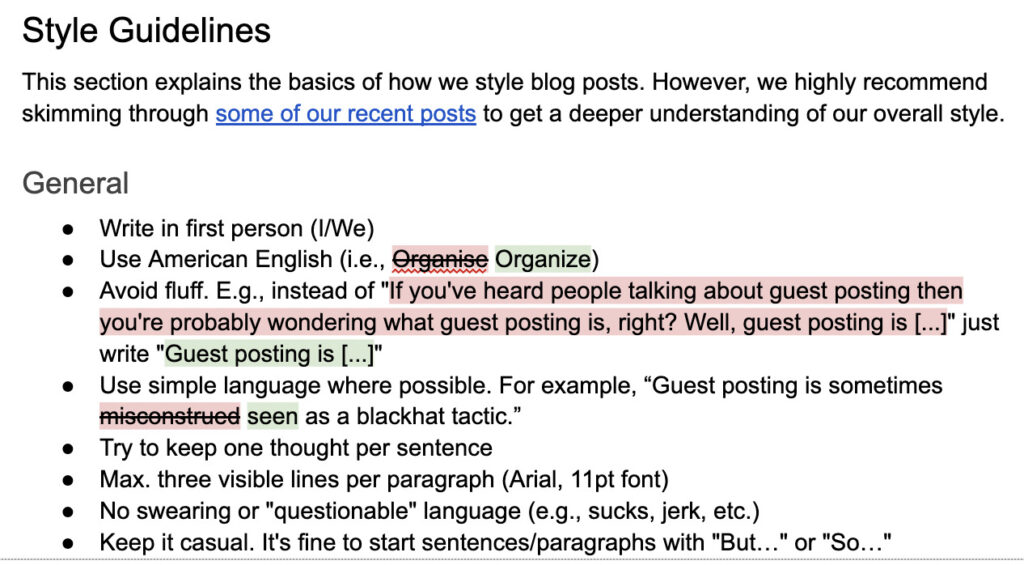
Pro Tip: Use Video SOPs. Recording your screen while performing tasks provides context that text documents often lack. It drastically reduces onboarding time and clarifies technical “whys.”
The Link Building SOP Framework
- Prospecting: Criteria for “Acceptable” vs “Spam” sites.
- Vetting: Minimum traffic thresholds and manual site checks.
- Outreach: Email frequency, follow-up schedule, and personalization rules.
- Toolbox: Logins and usage guides for Ahrefs, Hunter.io, and Trello.
Prospecting
Focus your SOP on identifying high-quality opportunities while avoiding link farms. If a site looks like “heavenarticle” (shown below), it should be immediately disqualified.
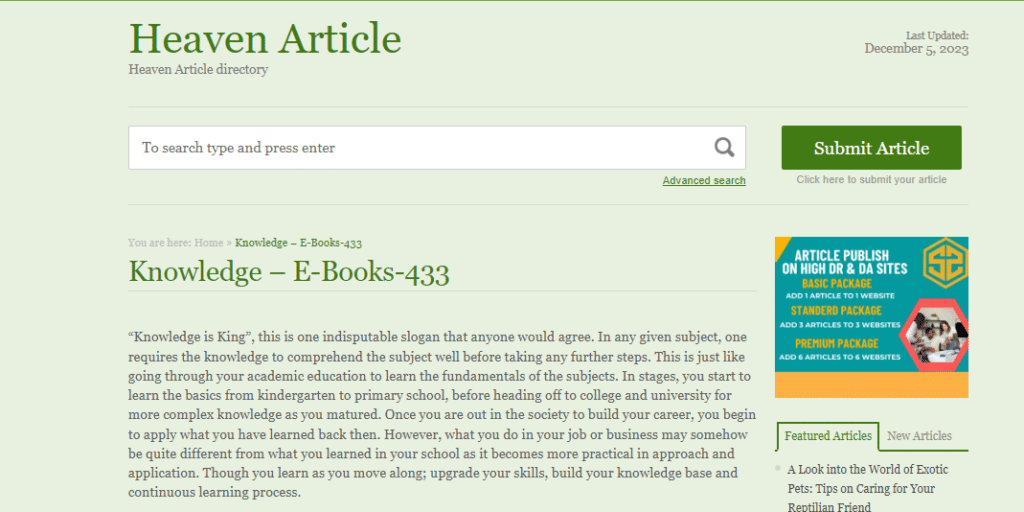
Avoid sites with irrelevant anchors or generic content footprints that signal a link farm.

Vetting
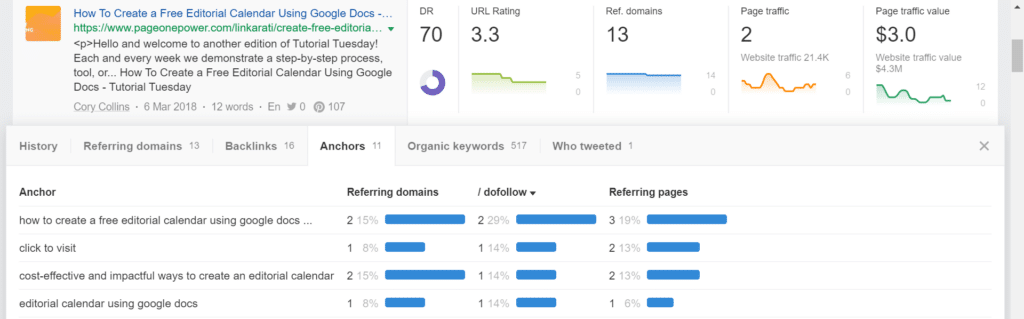
Your vetters must use Ahrefs’ “Anchor” and “Content Explorer” features to verify the legitimacy of a prospect. They should confirm that the site has actual organic traffic and isn’t just a high-DR shell.
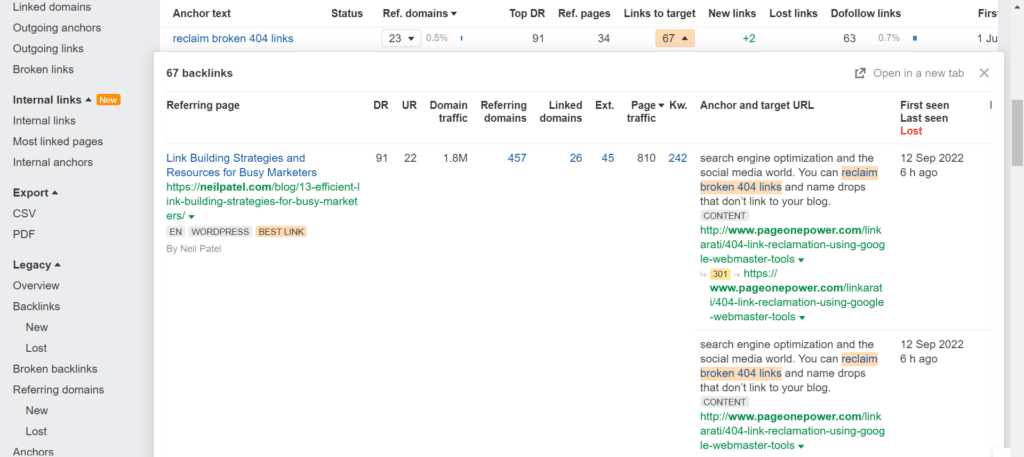
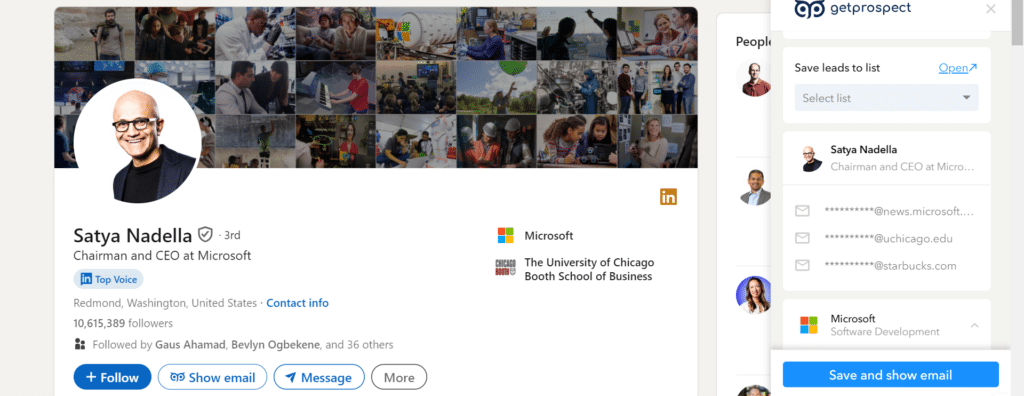
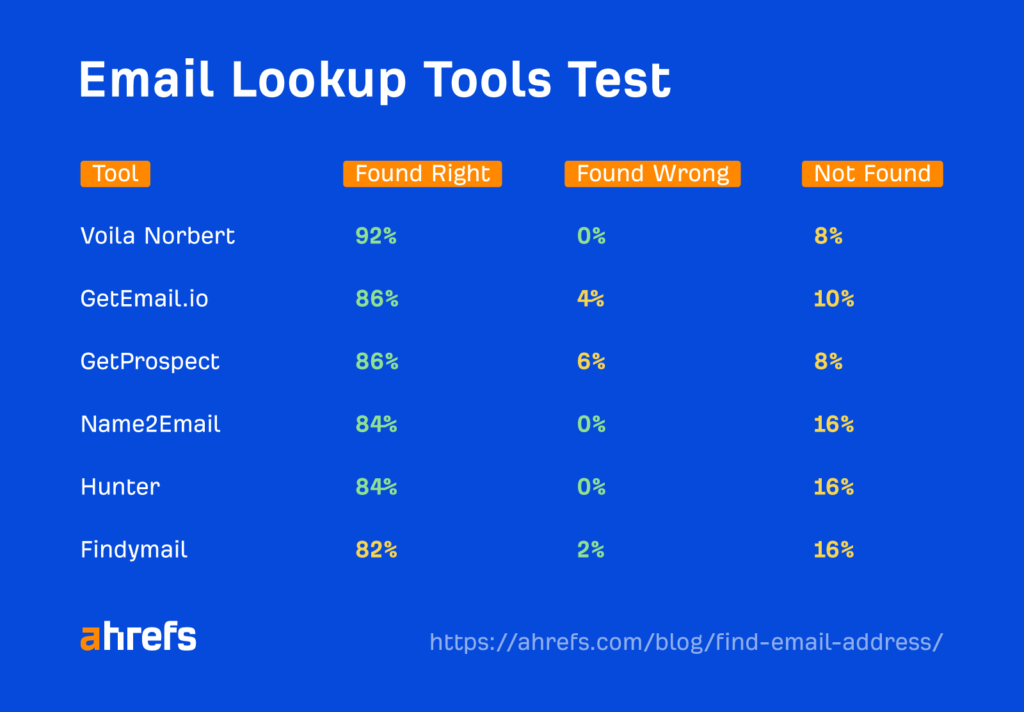
Once vetted, tools like GetProspect or Voila Norbert are used to secure the correct editor’s contact information.
Outreach
Outreach managers should focus on high-touch personalization. Use Trello or Google Workspace to track every conversation and ensure no lead falls through the cracks.
AI Integration in Team Workflows
Modern teams leverage AI to accelerate the boring parts of the job. Use ChatGPT for drafting personalized intro lines and AI-driven vetting tools to filter out obvious spam domains before manual review.
Hire the team and train them
Case Study: Scaling SERPReach to 50+ Links/Month
The Problem: As our agency grew, manual outreach by generalists led to a 2% conversion rate and high team burnout.
The Solution: We moved to a decentralized model. We hired two dedicated Prospectors and one Outreach specialist with a sales background. We implemented Video SOPs for every tool we used (Ahrefs, Respona, Trello).
The Result: Outreach conversion rates jumped to 7.5%, and we scaled from 10 to over 50 high-quality links per month for clients without increasing the CEO’s workload.
What to look out for when hiring for your link building team
- Prospectors: Analytical SEO knowledge. They must love data and technical research.
- Vetters: Extreme attention to detail. These candidates don’t need SEO experience—they need quality control experience.
- Outreach Managers: High empathy, creative writing skills, and resilience. Look for former sales reps or journalists.
Where to find the right candidate for your team
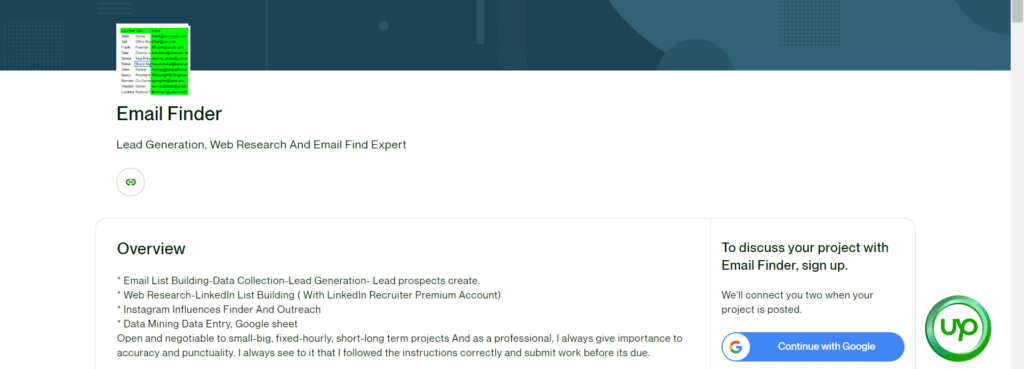
- Freelance Marketplaces: Upwork is excellent for finding specific specialists like email finders or data miners.
- AI-Vetted Platforms: MarketerHire or Contra for high-level strategists.
- Communities: Slack channels (e.g., Superpath) and niche Reddit threads (r/SEO).
- Referrals: Ask partners who they use. This is often the most reliable source for high-quality talent.
Key Takeaways
- 📌 Build a team only if you need consistent, high-volume, and high-quality links.
- 📌 The decentralized model is the most scalable and cost-effective structure for growth.
- 📌 Success is driven by Video SOPs that explain the “why” behind every task.
- 📌 Hire for specific traits (Analytical for prospecting, Persuasive for outreach) rather than just “SEO experience.”
- 📌 Start lean with a 3-person core and scale as revenue permits.
Not ready to build a team? See our outsourcing guide and white label options. For costs, check our pricing breakdown.
Disclosure
SERPreach is an alternative to building an in-house team. We offer managed niche edits and guest posting campaigns.
References
- Respona / ZipRecruiter. Link Building Specialist Salary Data. respona.com
- Editorial.Link. (2025). Link Building Team Guide. editorial.link
- Editorial.Link. (2025). 518 Expert Survey. editorial.link
- BuzzStream. (2025). Link Building Statistics. buzzstream.com
- Authority Hacker. (2025). 755 Link Builder Survey. authorityhacker.com
- SAASY Links. (2026). Outsource Link Building Guide. saasylinks.com

