
By Sabahat Ali – Link building expert since 2009 – 668+ clients served
KEY STATISTICS
- Average landing page conversion. The average landing page conversion rate is 6.6% across all industries [Unbounce, Q4 2024]. Conversion rate: 6.6% across all industries [Unbounce, Q4 2024 data]
- Organic search landing pages convert at 1.5-4% [Genesys Growth]
- Pages loading in 1 second convert 3x more than pages taking 5 seconds [Involve.me]
- 53% of mobile users abandon pages taking over 3 seconds to load [Involve.me]
- 48% of top-performing landing pages appear in organic Google listings [Backlinko]
- Companies see major organic lead increases growing from 10 to 40+ landing pages [Backlinko]
Can landing pages be SEO-optimized without sacrificing conversion design?
The average landing page conversion rate is 6.6% across all industries [Unbounce, Q4 2024 data from 41,000 pages]. Organic search landing pages convert at 1.5-4%, and pages loading in 1 second convert 3x more than those taking 5 seconds [Involve.me].
High-performance landing pages don’t need to be text-heavy to rank. By applying strategic SEO for landing pages, you can capture organic traffic without diluting your brand message.
Brands like Apple master this by balancing minimalist copy with high-intent technical optimization.
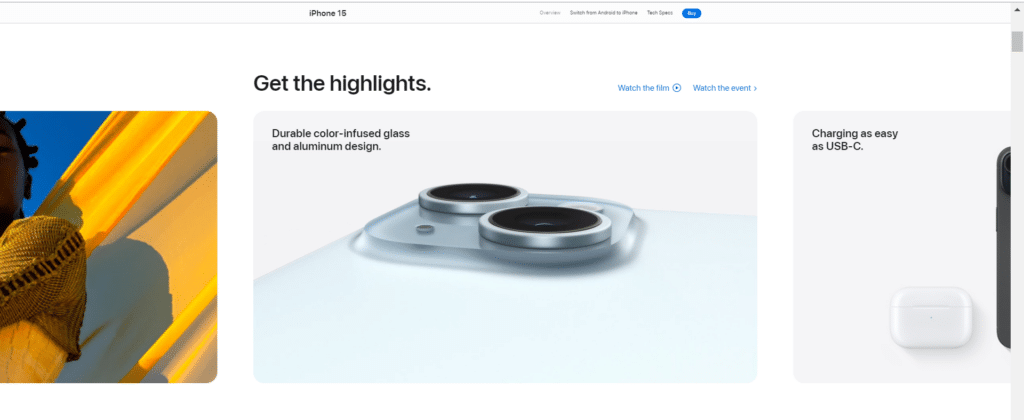
If your brand lacks Apple’s inherent authority, you must strike a precise balance between search visibility and user persuasion. This guide outlines 12 actionable steps to master seo for landing pages.
Core elements of an SEO landing Page
SEO for landing pages is the practice of optimizing a high-converting page to rank on search engines. It involves targeting transactional keywords, ensuring fast load times, and satisfying search intent through structured copy, enabling the page to capture organic traffic while maintaining its primary goal of driving conversions.
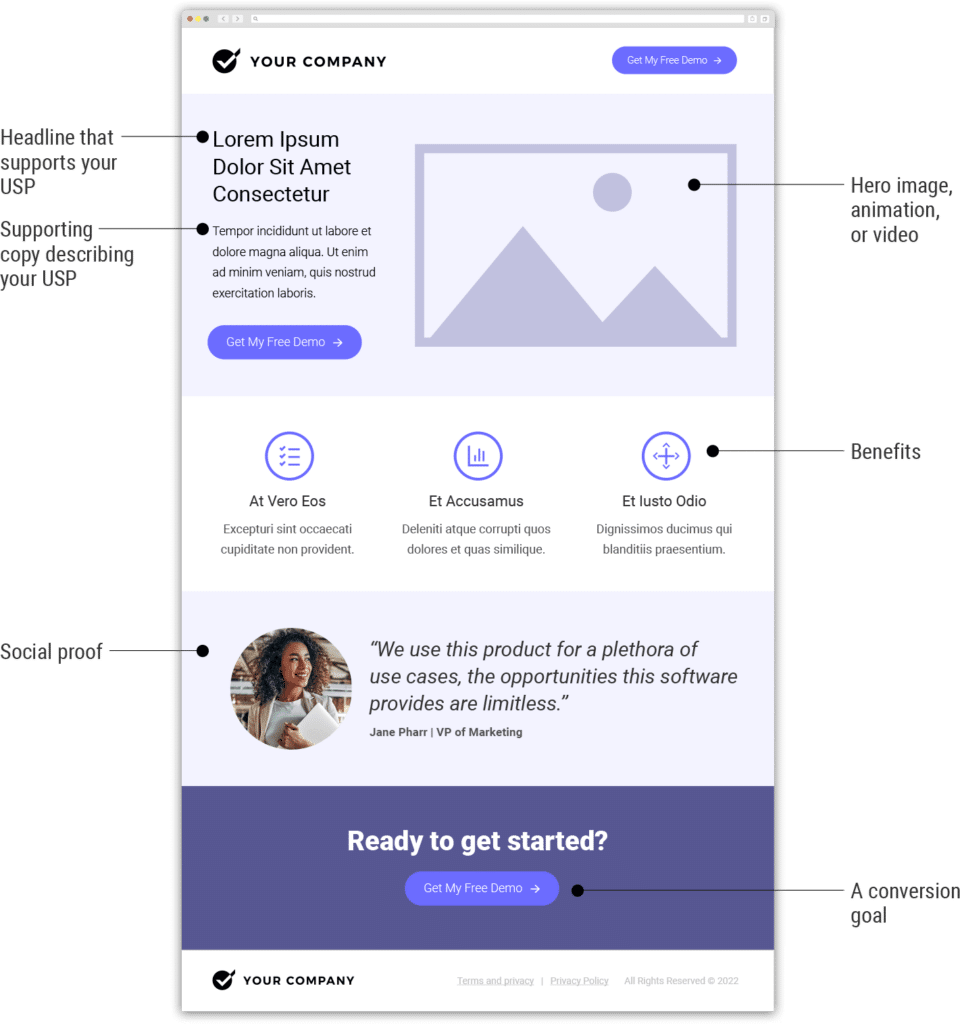
An effective SEO landing page merges search visibility with lead generation. Success isn’t measured by word count, but by how effectively you satisfy both Google’s algorithms and your visitor’s needs. The core components include:
- Logical Structure: A hierarchy that guides users from awareness to action.
- Persuasive Copy: Content that addresses pain points and presents your product as the definitive solution.
- Clear CTAs: Direct prompts that eliminate friction in the conversion path.
- Optimized Forms: Minimalist data collection points designed for high completion rates.
Structure
The design must mirror the user’s psychological journey. A well-structured layout ensures that both crawlers and humans can navigate your value proposition effortlessly.
Copy
Words are your primary conversion tool. In landing pages, copy must be concise, benefit-driven, and infused with semantic keywords to signal relevance to search engines.
CTA
Your Call To Action is the bridge between interest and conversion. It should be visually distinct and use action-oriented language.
Form
The form is your conversion engine. Optimize it by reducing fields to the absolute essentials, ensuring a seamless mobile experience.
12 steps to optimize SEO landing pages
Follow this systematic framework to ensure your landing pages are discoverable and high-converting.
- Precision Keyword Research
- Deep Search Intent Satisfaction
- E-E-A-T Signal Integration
- On-Page SEO Technicals
- Media Asset Optimization
- AI and LLM Visibility Prep
- Core Web Vitals Performance
- Social Proof and Sharing
- Concise Content Editing
- Root Domain Publishing
- Strategic Backlink Acquisition
- Uptime and Maintenance
Keyword research
Success in SEO for landing pages depends on selecting keywords with high commercial intent. While blog posts target informational queries, landing pages must focus on Bottom-of-the-Funnel (BoFu) terms.
| Keyword Type | Intent | Landing Page Fit |
|---|---|---|
| Informational | “How to build a site” | Low (Better for Blogs) |
| Commercial | “Best website builders” | Medium (Comparison Pages) |
| Transactional | “Buy website builder” | High (SEO Landing Pages) |
Fresh research
Using Semrush, you can isolate transactional opportunities. Focus on “phrase match” keywords that include your core service and a purchase-intent modifier.
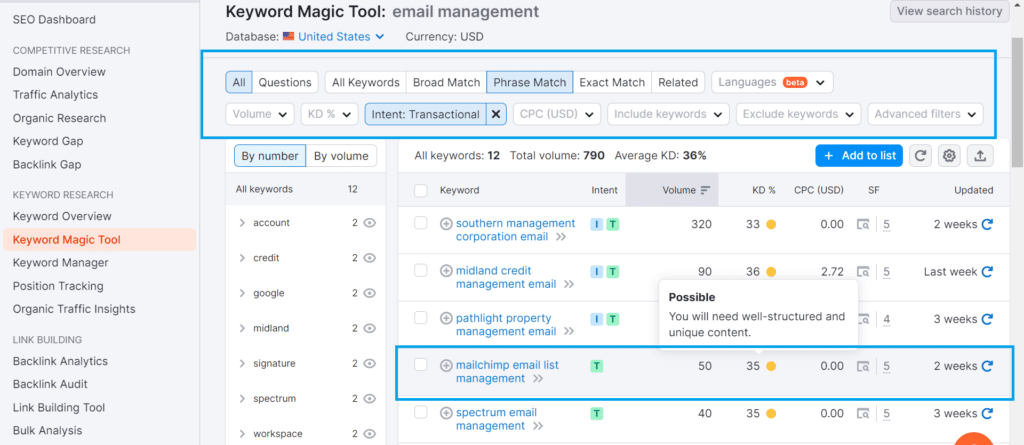
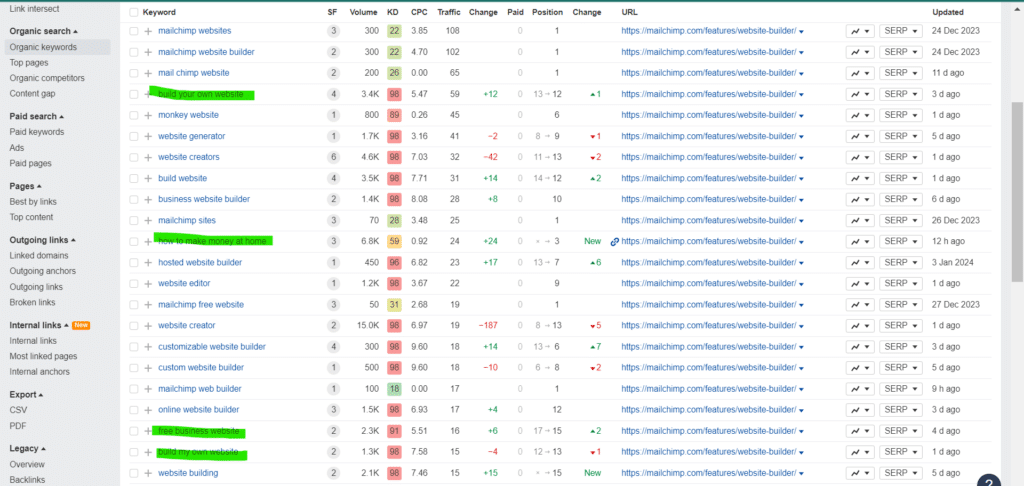
Identify low-difficulty terms like “MailChimp email list management” to gain traction quickly against established competitors.
Leverage your competitors
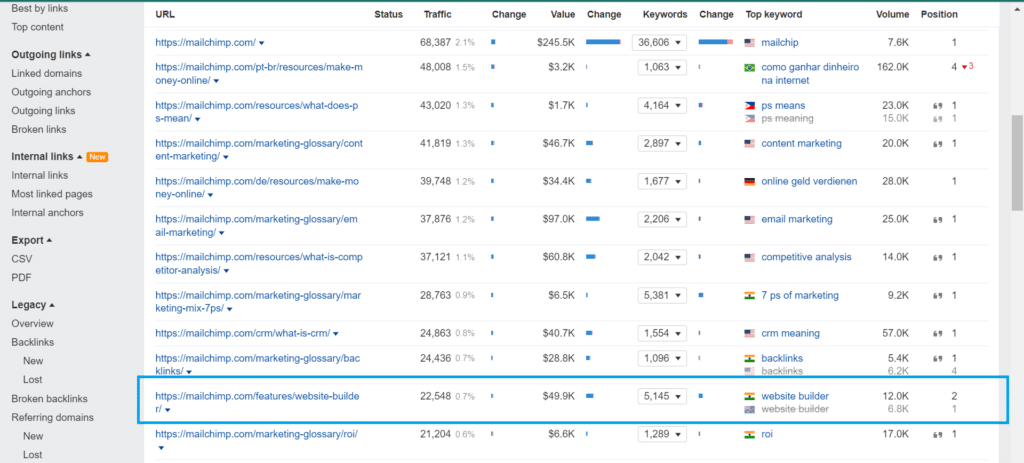
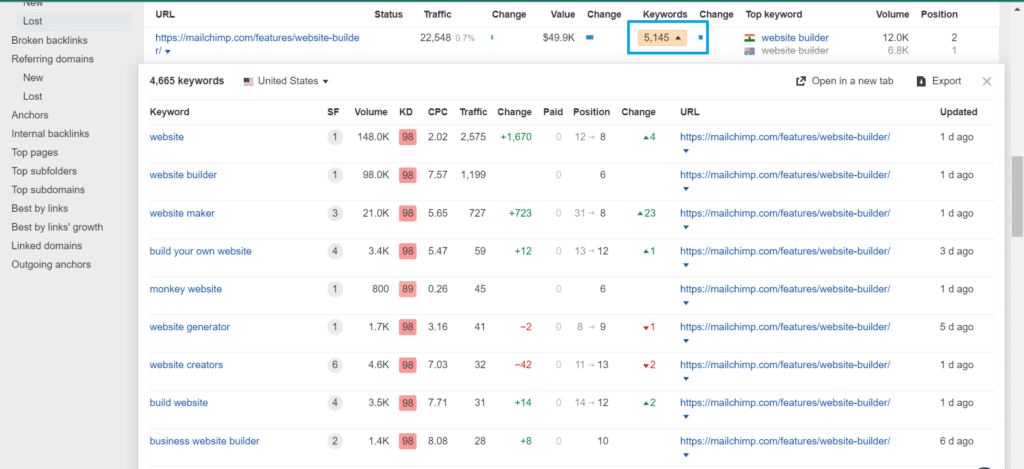
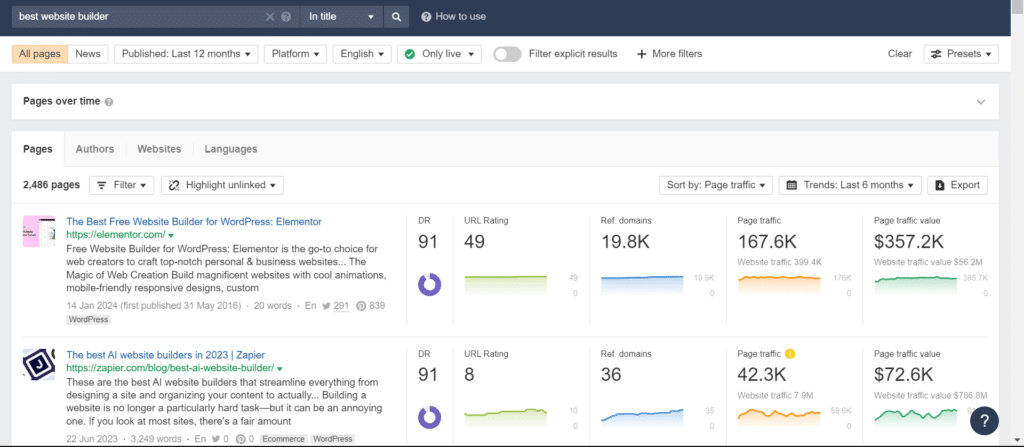
Analyzing competitor landing pages reveals high-traffic keywords you might have missed. Ahrefs is the industry standard for this analysis.
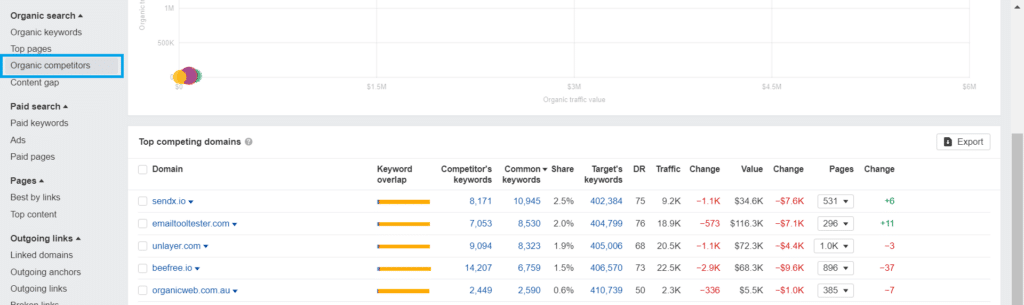
Filter out branded terms to find generic service keywords that drive non-branded organic leads.

Identify specific feature-based pages that competitors are using to dominate the SERPs.
Verdict: Which method is better?
The optimal strategy involves combining fresh research with competitor analysis. This ensures you cover both untapped “blue ocean” keywords and established “red ocean” terms with proven traffic.
Satisfy search intent
Ranking high requires more than just keywords; you must provide the exact solution the user expects. Analyze the top-ranking results to decode the “content recipe” Google prefers for your target term.
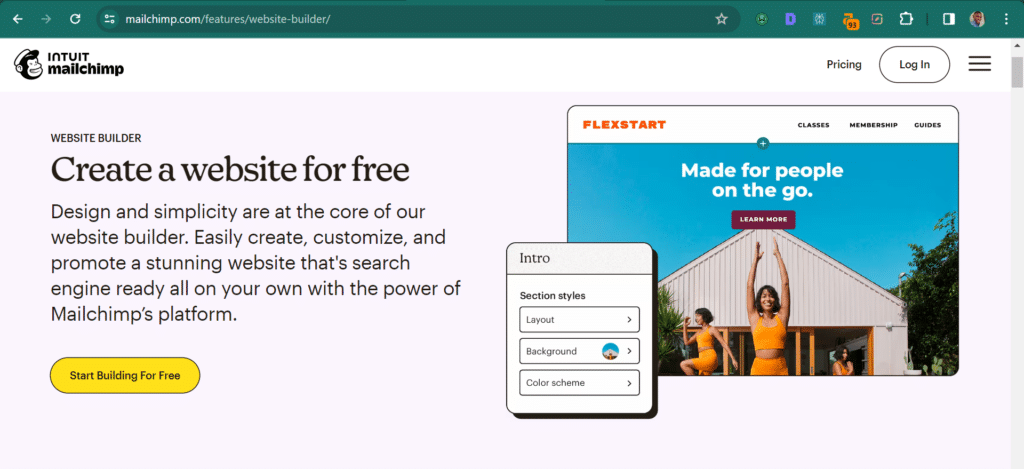
If competitors use FAQs, comparison tables, and demo videos, your landing page must incorporate these elements to be considered relevant.
Include E-E-A-T principle
Google evaluates landing pages based on Experience, Expertise, Authoritativeness, and Trustworthiness. To satisfy these, include:
- Experience: Use “we” and “our” to describe hands-on service delivery.
- Expertise: Highlight certifications or specialized proprietary processes.
- Authoritativeness: Display logos of publications where your brand has been featured.
- Trustworthiness: Embed verified third-party reviews (G2, Trustpilot) and secure payment badges.
Perfect your on-page SEO
For effective SEO for landing pages, technical precision is non-negotiable. Optimize these five key areas:
Title Tag
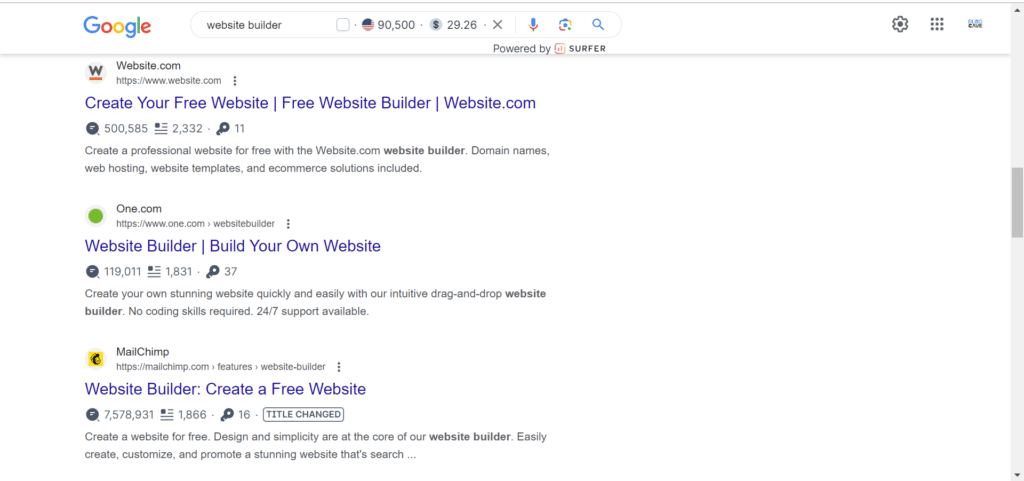
Place your primary keyword at the beginning of the title tag. Keep it under 60 characters to avoid truncation in SERPs.
Meta description
Write a compelling summary that answers “What is this?” and “Why choose us?” Include your target keyword to trigger bolding in search results.
Headings
Use a single H1 for your headline. Distribute H2 and H3 tags to organize features and benefits, ensuring secondary keywords are included naturally.
Internal links
Link to your landing page from relevant blog posts using exact-match anchor text. This passes “link juice” and signals the page’s importance to crawlers.
URL
Keep URLs short and keyword-rich (e.g., serpreach.com/seo-landing-pages/). Avoid long strings of numbers or dates.
Add & optimize images and videos
Visuals increase “Time on Page,” a positive UX signal. Use GIFs for software demos and high-quality images for physical products.
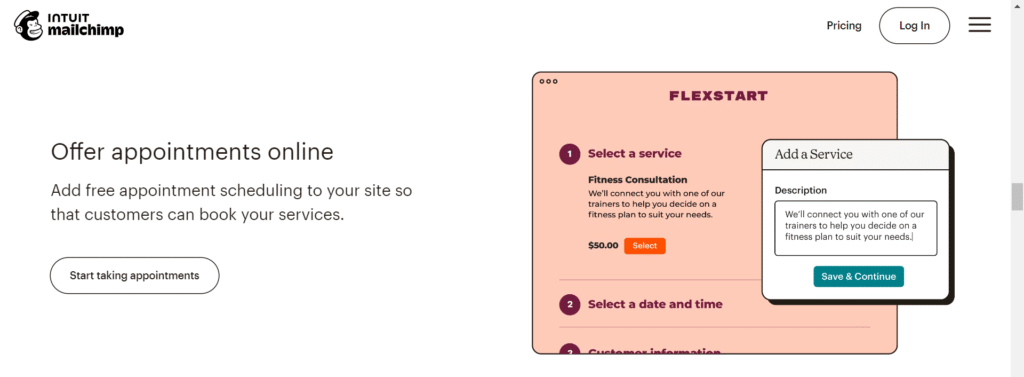
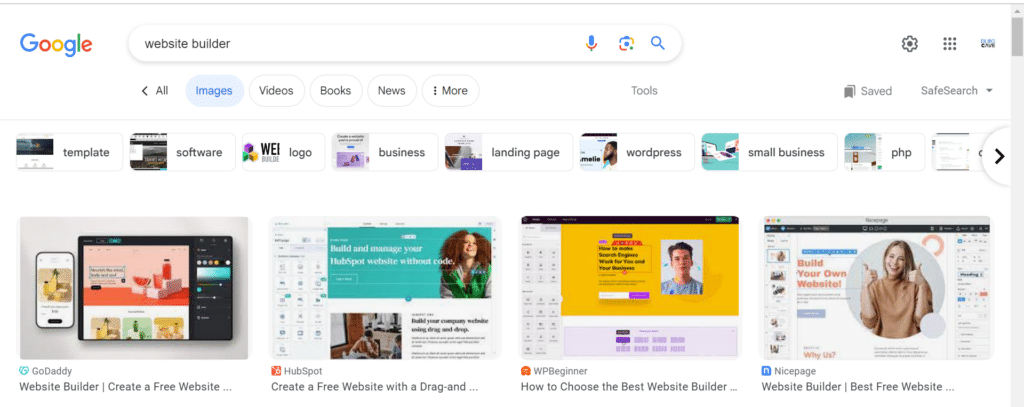
Optimize images with descriptive alt text to ensure they appear in Image Search results, providing an additional traffic source.
Integrate AI and LLM optimization
Search is evolving toward AI Overviews (SGE). To ensure your brand is cited by LLMs, use structured data (Schema) and provide clear, “snippet-ready” definitions of your services.


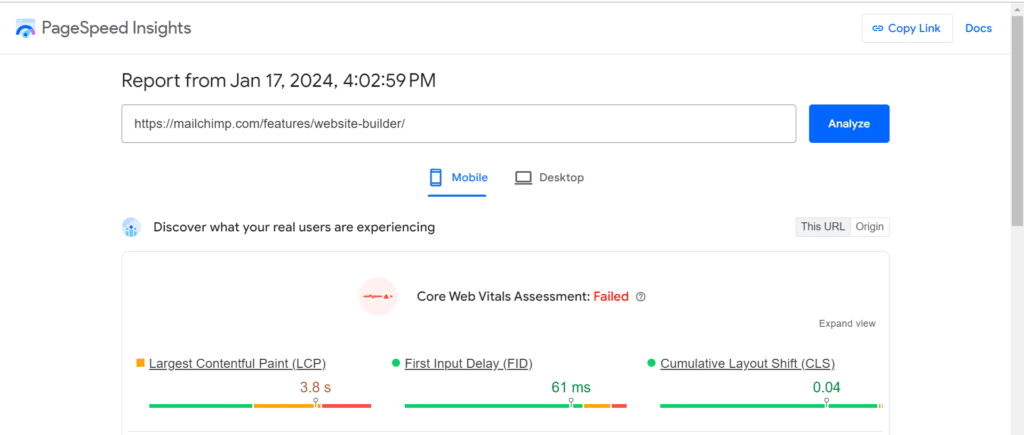
Optimize page speed. Pages loading in 1 second convert 3x more than pages taking 5 seconds [Involve.me]. Page speed and core web vitals
Slow landing pages kill conversions. Use tools like Google PageSpeed Insights to identify bottlenecks like unoptimized scripts or oversized images.
Add social share buttons
While social signals aren’t direct ranking factors, they drive referral traffic and improve brand visibility. Place share buttons on “Thank You” pages to encourage customers to share their purchase with their network.

Edit the page for conciseness
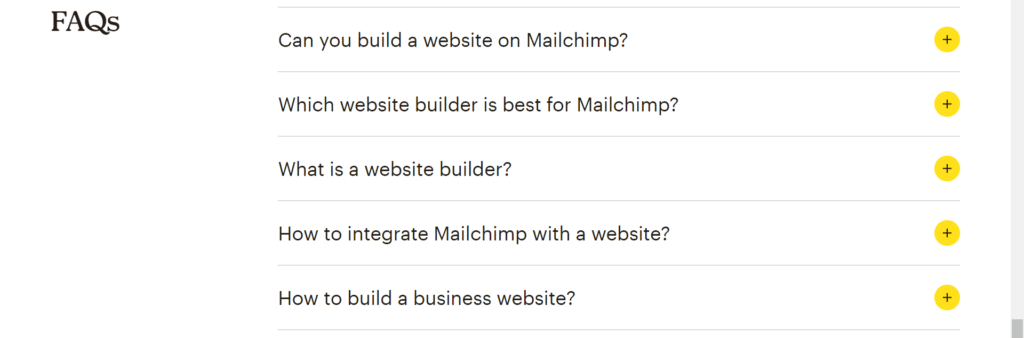
Avoid the fluff of long-form blogs. For landing pages, value density is king. Use collapsible FAQ sections to provide depth without cluttering the primary conversion path.
Landing Page SEO Checklist (Interactive Asset)
Copy-Paste Checklist:
□ Primary keyword in H1, Title Tag, and URL?
□ Page loads in under 2.5 seconds (LCP)?
□ At least 3 high-quality customer testimonials included?
□ Mobile-responsive form with <3 fields? □ Alt text optimized for all images?
Publish the landing page on your site
Always host landing pages on your root domain (e.g., yoursite.com/landing-page) rather than a subdomain or a third-party tool. This ensures the page inherits your site’s existing authority and contributes to its future growth.
Build backlinks to your landing page
Backlinks are “votes of confidence.” Because landing pages are commercial, you must be creative to earn links.
Target the sources of competitors’ backlinks
Identify sites linking to your competitors’ service pages. Offer a superior resource or a more compelling tool to “steal” those link placements.
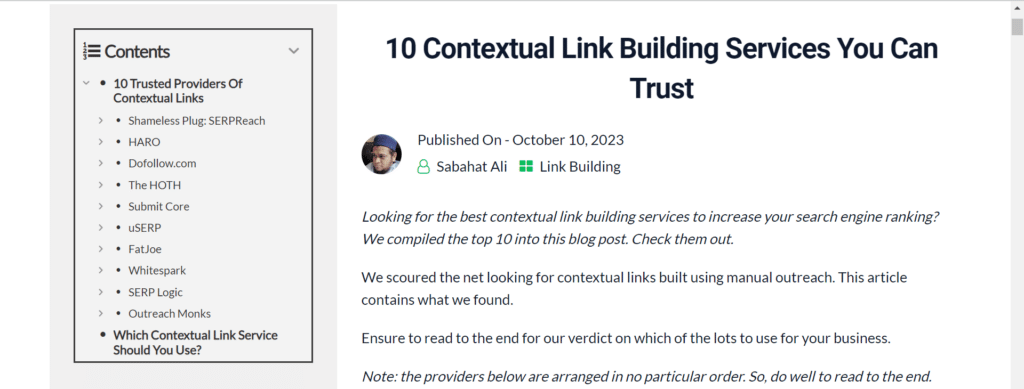
Get listed on “best of” articles
Reach out to publishers of “Top 10” lists. Being included in these curated guides provides high-intent referral traffic and a powerful backlink.
Join a podcast
Appear as a guest expert. Podcast show notes are excellent sources of high-authority, relevant backlinks.
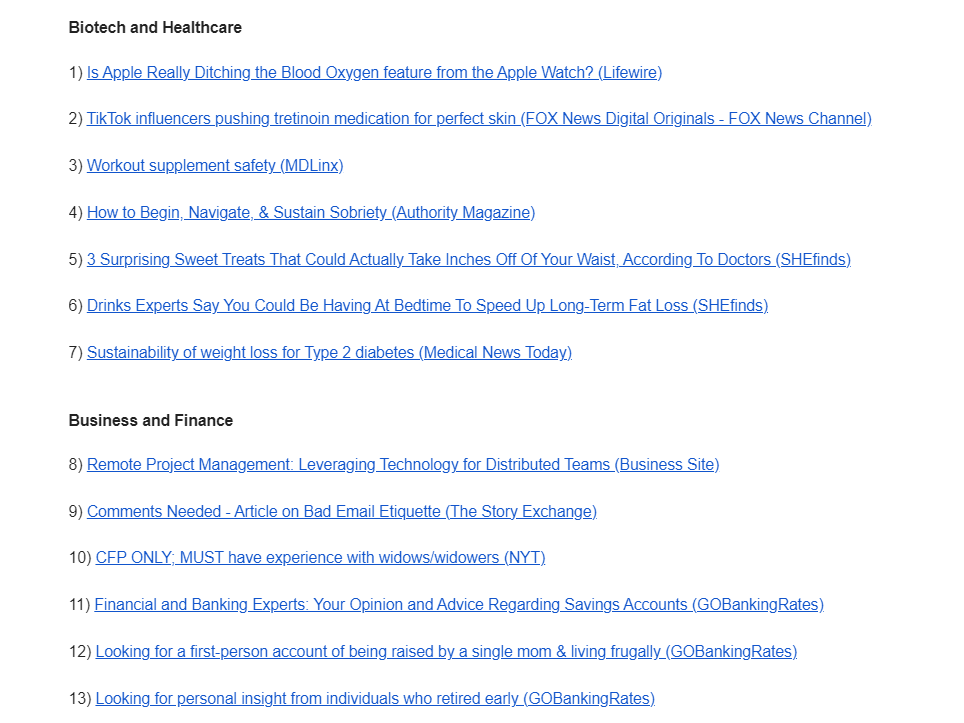
HARO/Connectively link building
Provide expert quotes to journalists. A mention in a major news outlet like Forbes or TechCrunch can skyrocket a landing page’s rankings.
PR link building
Launch proprietary data studies or host niche events. Newsworthy content naturally attracts links from media organizations.
Ensure that the page is always live
Never delete expired promo pages. Instead, update them for the next cycle or implement a 301 redirect to a relevant live offer. This preserves accumulated SEO authority.
Case Study: Boosting SaaS Landing Page Rank by 40%
The Problem: A project management tool’s landing page was stuck on page 3 for “agile workflow software.”
The Solution: We implemented schema markup, added a comparison table against competitors, and optimized for Core Web Vitals to reduce load time by 1.8s.
The Result: Within 60 days, the page moved to #4, resulting in a 40% increase in organic trial sign-ups.
3 examples of SEO landing pages
Semrush’s keyword magic tool
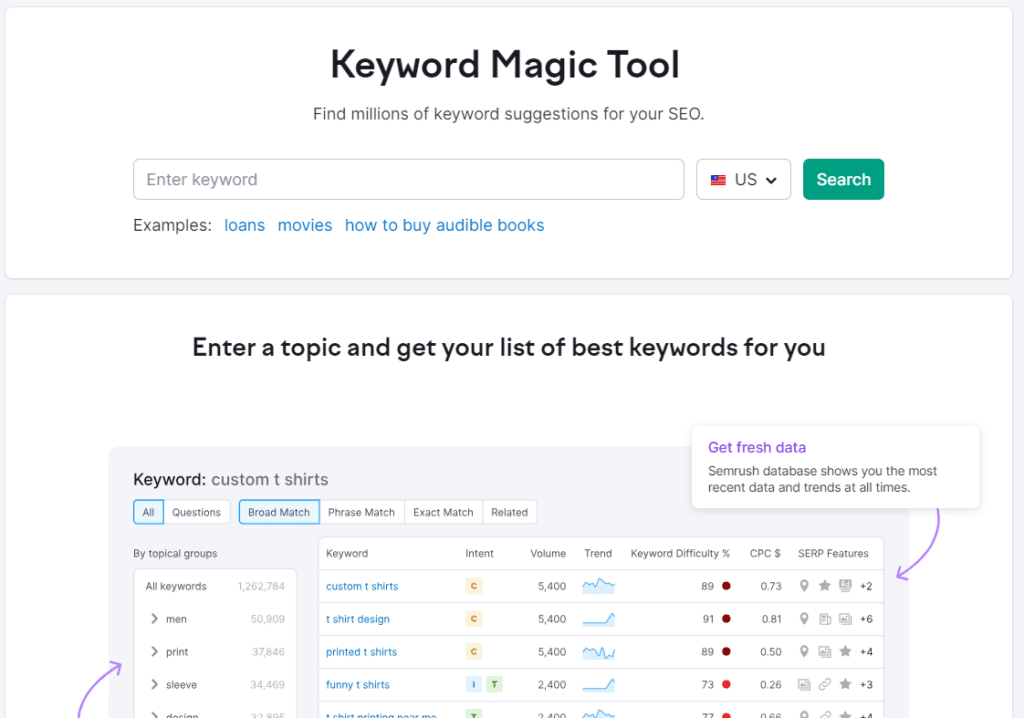
This page excels by using simple infographics to explain complex features, keeping users engaged without overwhelming them with text.
Ahrefs’ backlink checker
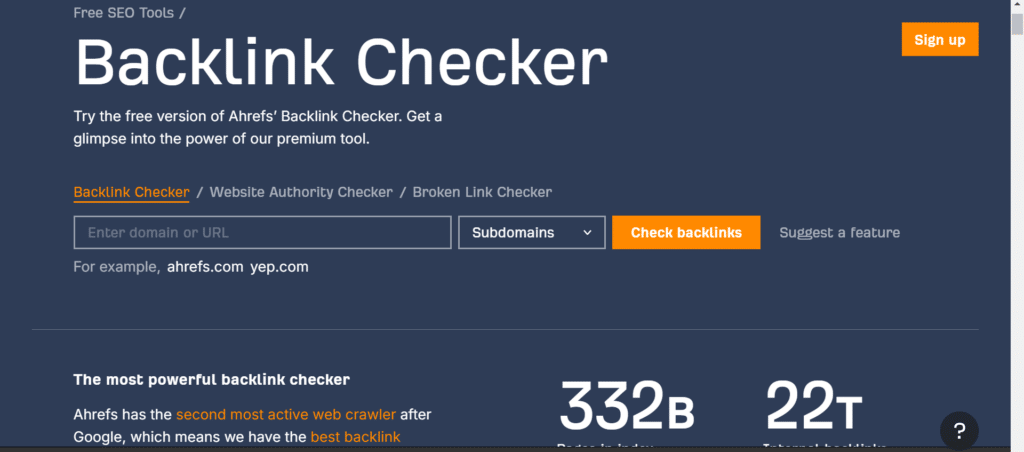
Ahrefs uses data-driven credibility (live counts) and a sticky CTA to maintain conversion focus throughout a detailed feature breakdown.
HubSpot’s email signature generator
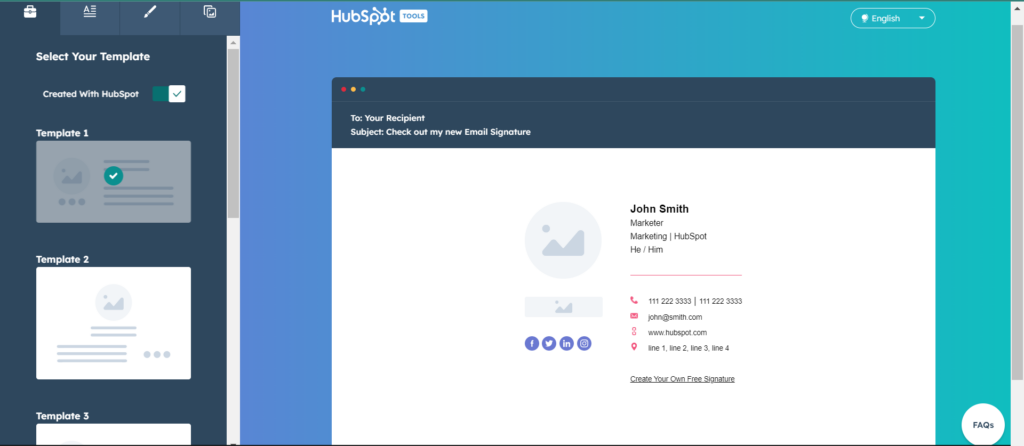
HubSpot places the interactive tool above the fold, while hiding SEO-rich keyword content in the FAQs below to satisfy both users and crawlers.
Summary: SEO-optimized landing pages are more than lengthy copy
Effective SEO for landing pages requires a surgical approach to optimization. Focus on intent, speed, and trust signals to build a page that ranks in 2026 and beyond.
FAQs
How do I choose keywords for my landing page?
Focus on transactional keywords using Semrush and analyze competitor pages via Ahrefs to find terms with high commercial value and manageable difficulty.
How many keywords should I use in a landing page?
Focus on one primary transactional keyword. Use 3-5 secondary/semantic variations in H2s and H3s to build topical relevance without stuffing.
How long should an SEO landing page be?
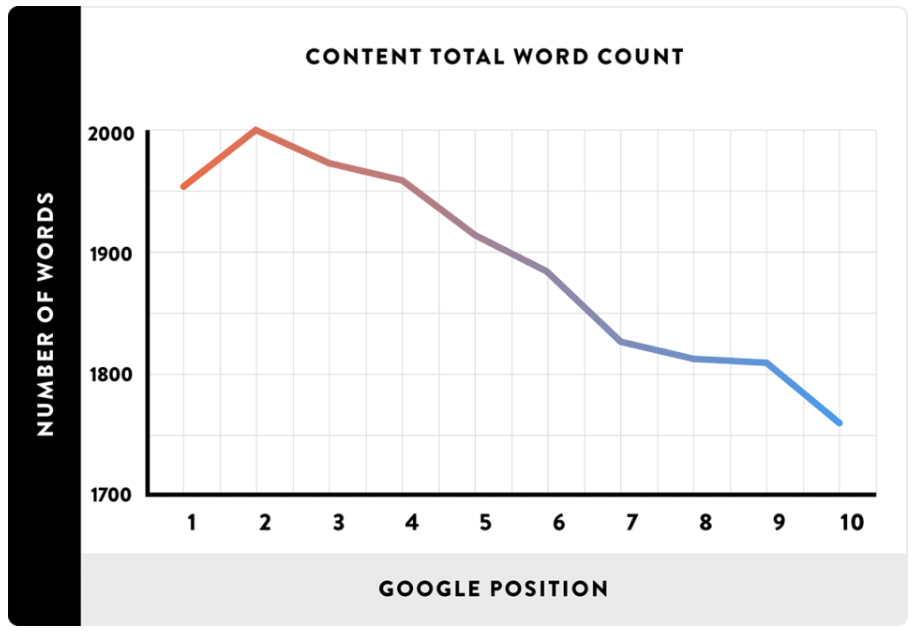
There is no fixed length. Aim for “comprehensive conciseness”—provide enough information to convert the user and satisfy search intent, typically between 500 and 1,500 words depending on niche complexity.
For driving backlinks to your landing pages, see our link building pricing guide and beginner checklist.
Disclosure
SERPreach offers link building services that can drive authority to your landing pages through relevant backlinks.
References
- Unbounce. (2024). Average Conversion Rates: Q4 2024 Data from 41,000 Landing Pages. unbounce.com
- Genesys Growth. (2026). 40 Landing Page Conversion Statistics. genesysgrowth.com
- Involve.me. (2026). 100+ Landing Page Statistics. involve.me
- Backlinko. (2026). 12 Essential Landing Page Statistics. backlinko.com

