
By Sabahat Ali – Link building expert since 2009 – 668+ clients served
KEY STATISTICS
- Restaurant group: 160% organic traffic growth in 3 months [Malou]
- 247% traffic increase for US restaurant in 7 months [ThirdSlash]
- Local backlinks = 4 positions higher in local search [MiroMind]
- 46% of Google searches have local intent [BrightLocal, 2025]
- 80% of webmasters who respond to outreach demand payment [Our data, 100K+ emails]
According to Datassential’s 2025 Foodservice Economic Forecast, consumer spending on prepared food and non-alcoholic beverages will reach $921.7 billion in 2025, up from $895.1 billion in 2024.
I did the math, that’s a 2.97% increase. At this rate, the industry could hit $949.1 billion in 2026.
But here’s where it gets interesting:
Gitnux reports that 50% of restaurant sales now happen through digital channels, and 60% of customers prefer ordering food online via mobile apps.
In short, the restaurant business has gone online. And if your restaurant isn’t showing up in search results, you’re missing out on customers who are actively searching for their next meal.
So, yes, you need SEO and link building for restaurants.
But beyond that, you should also know how to do it… That’s where I come in.
Now, let’s start from the top.
Effective restaurant SEO strategies: Getting started
To attract local diners online, focus on practical SEO moves that directly improve visibility and conversions.
Make your restaurant’s website mobile-friendly
Most diners search for food on their phones. If your site loads slowly or looks awkward on mobile, diners will bounce to a competitor.
The solution? Use responsive design, compress large images, and test your site on different devices.
Create a crawlable menu page
Your menu is the star attraction, but hiding it in a PDF makes it invisible to Google. Instead, publish it as a dedicated HTML page with clear categories, such as Starters, Mains, Desserts, and update it regularly.
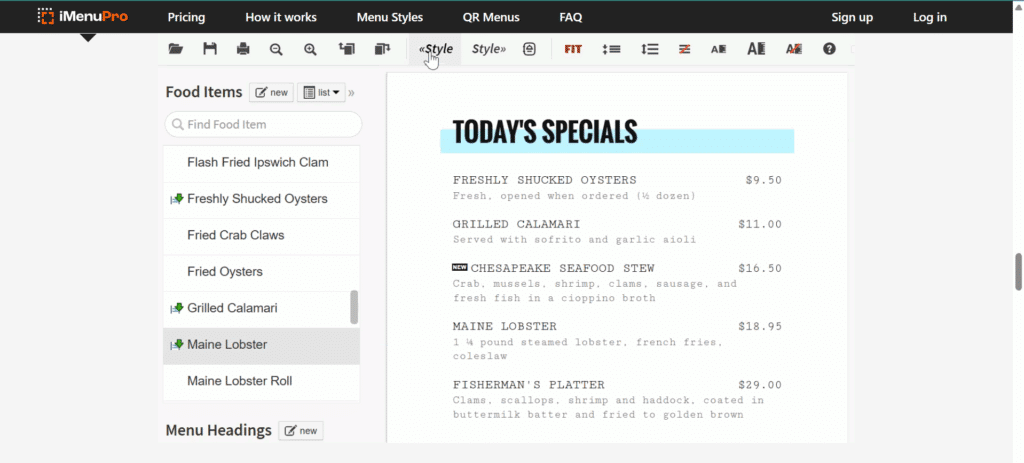
Tip: Use tools like iMenuPro to create your menu pages.
Add schema markup for online visibility
Schema markup helps search engines display your menu items, prices, and reviews as rich snippets. This makes your restaurant stand out with extras like star ratings in search results.
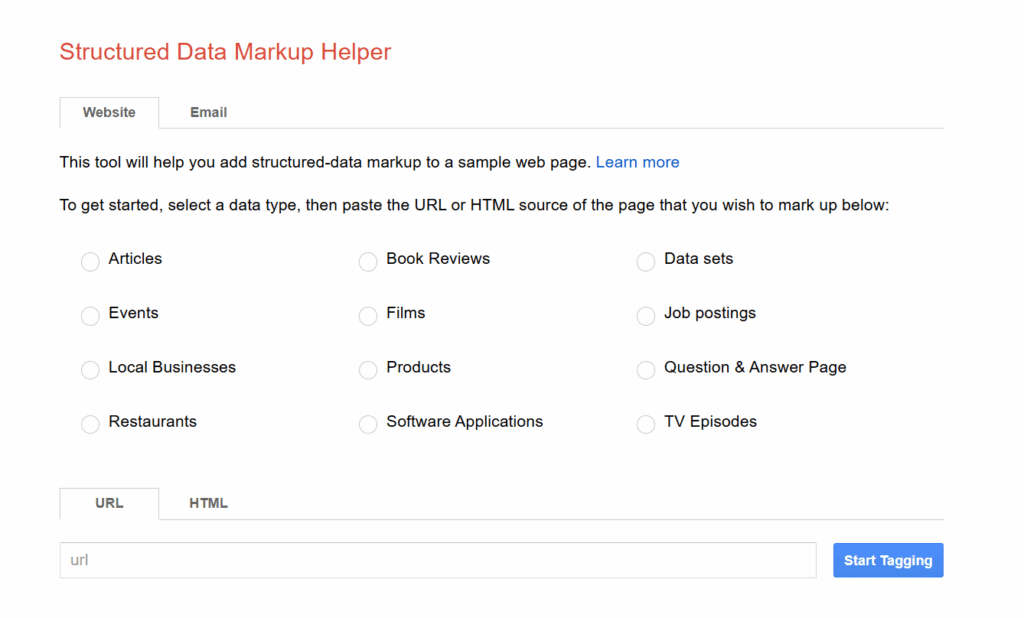
Tip: Tools like Google’s Structured Data Markup Helper can help.
Encourage regular customer reviews
Online reviews boost both credibility and rankings. So, encourage satisfied diners to leave feedback with gentle prompts such as:
- A note on receipts
- A QR code on tables
- A short follow-up email
The steadier the flow of reviews, the stronger your local SEO presence.
Keyword research for restaurants
Once you nail your restaurant search engine optimization strategy, search for what customers are actually searching for. This is called keyword research. SEOs use it to match their intent and position your restaurant where it matters most.
So, how do you do it?
Use keyword research tools like Google Keyword Planner, Ahrefs, or Semrush
These tools reveal search volumes, trends, and the exact phrases people type when looking for food options.
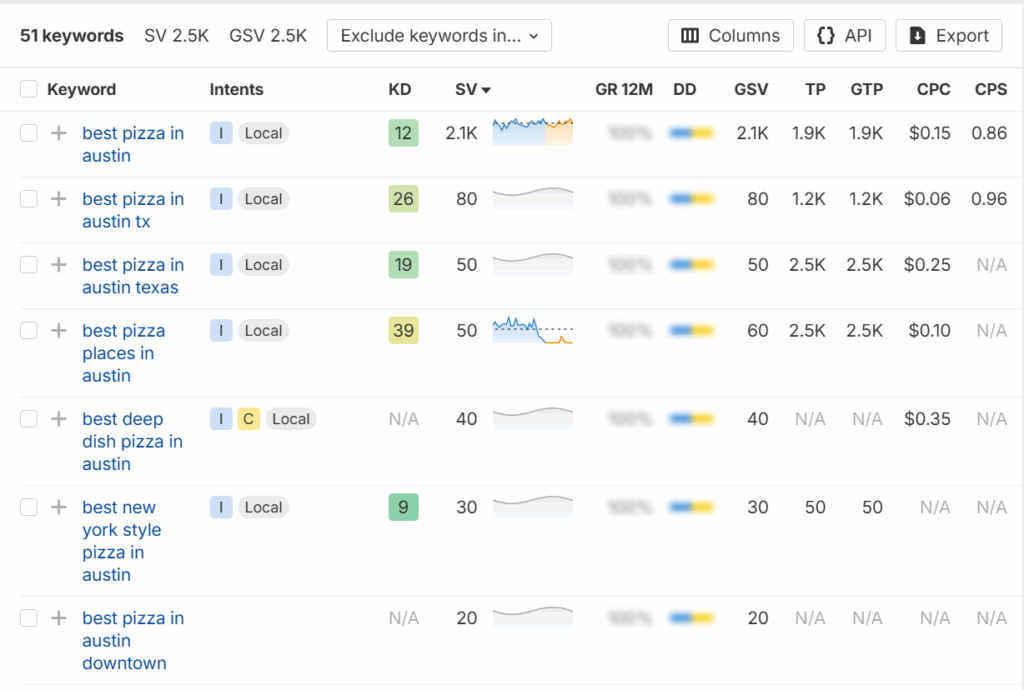
Next, focus on local keywords
Generic searches like “pizza” are too broad, but “best pizza in Austin” or “Italian restaurant in Las Vegas” attract diners who are ready to order nearby.
Lastly, map these keywords to your local business in three ways:
- Menu items: “vegan burger in Austin”
- Cuisine categories: “Italian restaurant in Las Vegas”
- Customer intent: “restaurants open late near me”
Overall, keep a simple keyword sheet to track these phrases and update it monthly. Add columns for search volume, competition, and the page you’ll target (homepage, menu page, or blog).
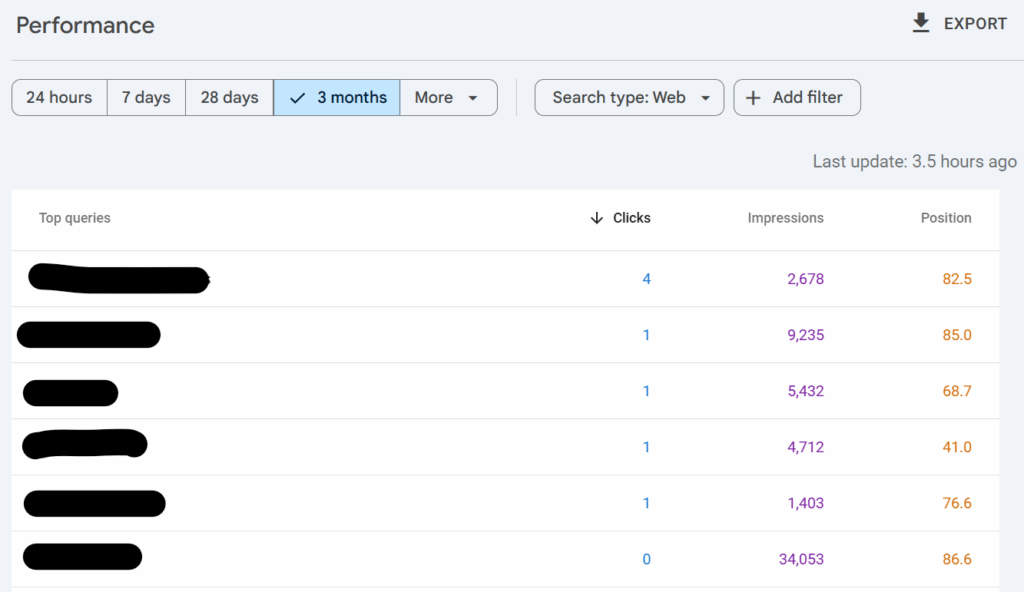
Tip: Use Google Search Console, Ahrefs, or Semrush to track your keyword rankings.
Local SEO for local customers looking for restaurants
Local SEO ensures your restaurant shows up when hungry customers search nearby. It makes your business easy to find (on Google’s local pack) and trust, both by search engines and by diners.
Here’s a quick guide on how to do it:
- Start with NAP consistency. Your Name, Address, and Phone number must appear the same everywhere, from Google Business Profile to Yelp, TripAdvisor, and your website. Even minute differences (e.g., “St.” vs. “Street”) can confuse search engines and hurt your rankings on search engine results pages.
- Branding consistency matters too. Use the same logo, color scheme, and updated menu across all online platforms. If your website lists new hours but Google shows old ones, you risk losing frustrated customers.
- Don’t forget to optimize page titles and meta descriptions with local keywords. Instead of “Family Friendly Restaurant,” try “Family Restaurant in Austin – Fresh Local Cuisine.” This helps you appear in local searches tied directly to your location.
- Finally, encourage local engagement on social media. Ask diners to check in on Facebook or tag your restaurant on Instagram. These local mentions boost your local search rankings, creating valuable social proof that search engines and potential customers notice.
Together, these steps make your restaurant more discoverable, trustworthy, and appealing to the exact target audience most likely to visit: people searching nearby with an appetite.
Optimize your Google Business Profile listing
As a restaurant owner, your GBP is essential to your SEO and link building efforts. In fact, it is one of your most powerful tools.
And the good part is, it is FREE!
Google provided this feature so you can show key details about your business online.
Now:
When potential customers search for restaurants nearby, Google often shows GBP listings first. So, you need to optimize your GBP to have a better chance of appearing at the top of SERPs.
Why?
Doing this makes it easier for diners to find, trust, and choose your restaurant over others.
Here’s a step-by-step guide to optimize your restaurant’s GBP:
Step 1: Claim your listing
- Sign in to your Google account and go to “Google Business Profile Manager.”
- Click on “start now”
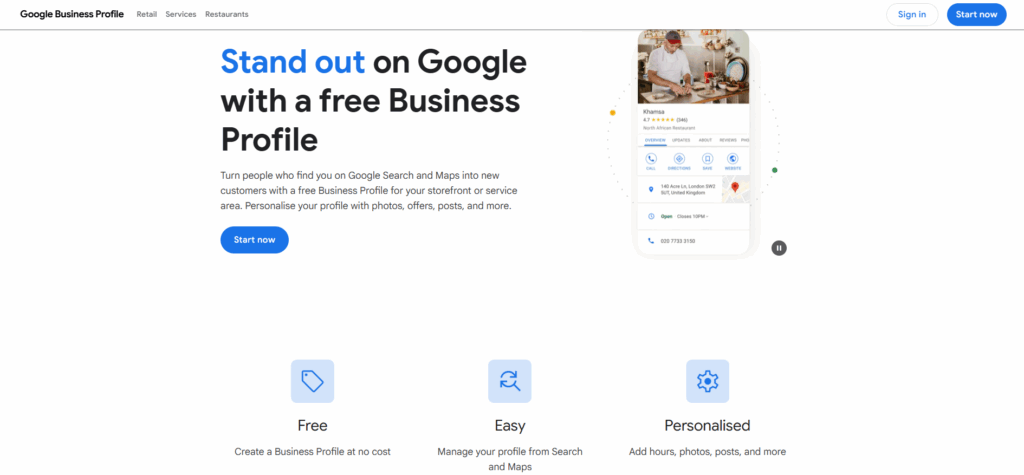
Note: You can only do this for a business with a physical location. So online businesses are not eligible to claim GBP.
Step 2: Fill out every detail
- Don’t leave any sections blank. First, add your business name, then continue.

- Choose your business type from the options provided. You can choose as many services as your restaurant offers. Then click “next”

- Add other required details: Your website, business category, address, location, and contact.
- The next thing is to verify your Google business profile. As shown in the image below, click “continue.”
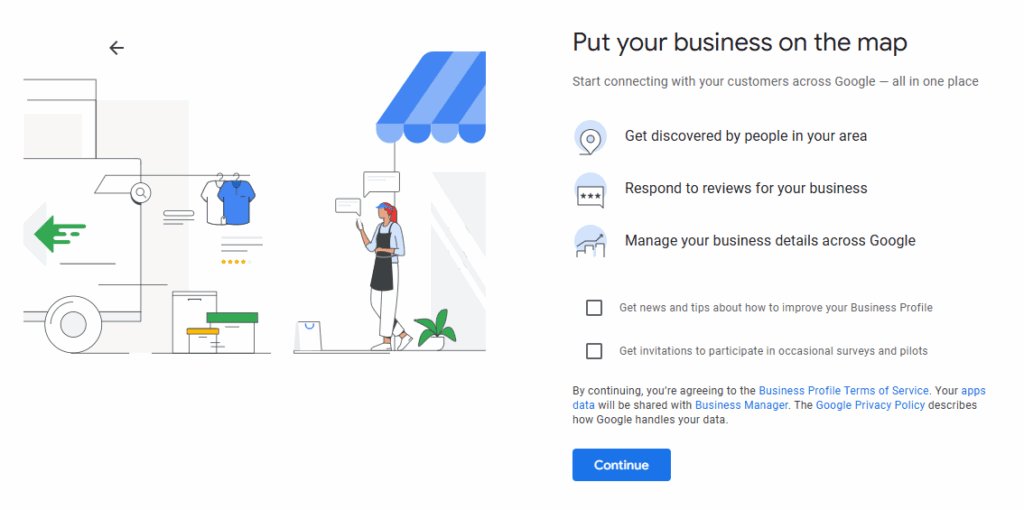
Step 3: Start your business verification
- To start verification, enter your phone number and provide videos of your restaurant
- Then, record and upload your restaurant details. This includes professional photos of your food, dining area, and exterior. Visuals often influence diners’ decisions, so make your first impression count.
- Then wait for Google to verify your restaurant.

Step 4: Post regular updates
- Highlight specials, new dishes, or upcoming events. Frequent updates signal to Google that your business is active and engaging.
Step 5: Encourage and respond to reviews
- Ask local customers for reviews and reply to them. Positive reviews will improve your visibility and credibility.
- Ask happy customers to leave feedback, and always respond.
Step 6: Use the Q&A feature
- Answer common questions about parking, dietary options, or reservations. This reduces confusion and builds trust.
Using local directories to boost your visibility
This tactic is another effective way to strengthen your online presence. It is a local SEO strategy that helps improve your search rankings and build backlinks. It also enhances trust and credibility with diners looking for local restaurants.
You can leverage local directories in the following ways:
Submit your listings on local directories:
People search for places to eat online through popular local sites many times. These sites include Google My Business, Yelp, TripAdvisor, Zomato, and OpenTable.
To increase your chance of new customers finding you, submit and maintain your restaurant’s listing on these sites.
Check and update your details regularly
Keep your details (name, address, contact, etc.) consistent across every platform. Inaccurate or outdated information can confuse diners and hurt your local search rankings.
My advice:
Review and update your directory listings at least once every quarter.
Earn backlinks from local directories
An added benefit of using local directories to list your restaurant is that many of them will link back to you. These backlinks, in turn, boost your SEO performance and your site’s authority in Google’s eyes.
This way, Google is more likely to rank your restaurant in local searches.
Tip: Feature in local food blogs and lifestyle websites to drive more attention to your restaurant. You will usually gain high-quality backlinks from these features.
That said, let’s discuss how your restaurant can rank higher in local searches.
How to rank high in local search results
Appearing at the top of local search results can mean more foot traffic and reservations. So, to improve your visibility, you’ll need to focus on local search optimization. Google uses this to determine ranking using proximity, relevance, and prominence.
So, what can you do to catch Google’s attention:
- Start with “near me” searches
These are very popular among searchers, especially diners. So improve your proximity ranking by providing correct and consistent restaurant address and contact info on your website, GBP, and directories. This helps Google confirm your location and show your business when someone nearby searches for food.
- Next, use relevant keywords
Include detailed menu items and cuisine-related keywords on your website and business listings. For example:
Instead of “noodles restaurant”, use “spicy indomie restaurant in (city or neighborhood)”.
- Boost prominence with regular reviews and engagement
Use active engagement to increase trust with your diners (both old and new). Also, encourage them to leave reviews and respond to them regularly. Doing this signals Google that your restaurant is popular in the community.
- Finally, track your performance via Google Search Console and Insights
You can do this via Google Search Console and Google Business Insights. Track metrics like clicks, impressions, and search queries. This way, you can refine your strategy and keep climbing the local search rankings.
How you can build high-quality backlinks for your restaurant
Getting high-quality backlinks from reputable sites aids your Google rankings. It also exposes your restaurant to new people who may become local customers.
And there are several ways to get these backlinks for your restaurant.
Collaborate with food bloggers
Food bloggers are people who write about food online. If they visit your restaurant and like it, they’ll write about it and link to your site. This serves as a recommendation from the blogger, especially if people trust them.
You can also invite them to review or feature your restaurant in their blog. They will naturally link back to you and can influence readers to patronise you.
Tip: This tactic is guest posting, only rebranded to suit your business.
Leverage partnerships and sponsorships
Team up with nearby businesses like coffee shops or bakeries for link swaps. Doing this will help you build both visibility and community ties. For instance, if you mention their business on your website and they do the same, you both get more attention.
Note: Team up with businesses that are relevant to you for better results.
Another idea is to sponsor local events or a charity. You can give free food for these events and charity. In return, Local news sites can write about these events and will link to your restaurant’s website.
Run creative campaigns
Host a food challenge or contest to attract media attention and social sharing. People love sharing these, and local news sites may write about them. That’s more visibility. Also, these types of campaigns can earn your restaurant organic PR backlinks.
Avoid spammy backlinks
Google frowns at unnatural links or links from shady websites. And this can harm your SEO instead of helping it. So be careful when doing link building. Focus on earning good, honest backlinks from trusted sites.
Using restaurant SEO to attract local customers
The ultimate goal for you as a restaurant owner is to bring in foot traffic, and SEO is your way forward. Customers are more likely to find optimized restaurant websites.
Aside from your GBP, here are other tips to optimize your restaurant for SEO:
- Use social proof
Positive reviews and user-generated content (e.g, diners posting and tagging your restaurant) build trust. When potential customers see others enjoying your food, they’re more likely to visit.
- Integrate reservation tools
Tools like OpenTable or Google Reserve make it easier for people to book your restaurant. Using them lets people book a table directly from search results. This can increase your bookings and reduce customers’ stress.
- Add local ads to your organic SEO effort
Paid ads on Google or social media can target people nearby looking for places to eat. Combined with strong SEO, this tactic helps your restaurant stay top of mind for more local customers.
Real Results: Restaurant SEO Case Studies
Restaurant Group — 160% Organic Traffic in 3 Months: A restaurant group multiplied their organic traffic by 160% in just 3 months through optimized Google Business Profiles, local keyword targeting, and strategic content creation [Malou, 2025].
US Restaurant — 247% Traffic Increase in 7 Months: A US restaurant website achieved 247% organic traffic growth through comprehensive keyword research, on-page SEO optimization, and targeted link building from food blogs and local directories [ThirdSlash, 2025].
Local Restaurant — 4 Positions Higher With Backlinks: Research shows that pages with quality local backlinks appear about 4 positions higher in local search results than those without. Backlinks rank among the top factors for local restaurant SEO [MiroMind, 2025].
2025 Instagram SEO shift: Since July 2025, Google now indexes public Instagram posts from professional accounts. This means your restaurant’s Instagram photos can appear in Google search results — making social media an indirect link building and visibility channel [Malou, 2025].
Summary: 7-step SEO and link building for restaurants checklist
To wrap up, follow this checklist when in doubt.
- Do keyword research monthly.
- Optimize local SEO (NAP, schema, titles).
- Claim and enhance Google Business Profile.
- List on local directories.
- Monitor performance in Google Search.
- Build high-quality backlinks from food bloggers + events.
- Drive foot traffic from local customers.
And if you need a pro help, check out our SEO services. We offer curated SEO and link building for restaurants like yours.
For more, see our pricing guide and beginner checklist.
Disclosure
SERPreach provides niche edit and guest posting services for restaurant businesses.
References
- BrightLocal. (2025). Local Consumer Review Survey. brightlocal.com
- Malou. (2025). 30 Restaurant SEO Tips. malou.io
- ThirdSlash. (2025). Restaurant SEO Case Study: 247% Traffic. thirdslash.com
- MiroMind. (2025). Local SEO Case Studies. miromind.com

