
By Sabahat Ali – Link building expert since 2009 – 668+ clients served
KEY STATISTICS
- NYC gym grew from 0 to 3,300 monthly organic visitors in 12 months [Aamir Digital]
- Gold’s Gym DC saw 3,700% organic traffic growth [Aamir Digital]
- Orangetheory Fitness achieved 104% organic traffic increase [BrightEdge]
- 46% of Google searches have local intent [BrightLocal, 2025]
- 80% of webmasters who respond to outreach demand payment [Our data, 100K+ emails]
The online fitness industry in 2025 is worth $33.4 billion. But there’s a twist. More people are craving in-person workout experiences again (2025 Fitness Industry Market Report).
Consumer behavior has shifted. People aren’t just looking for apps; they are searching for local communities. This is your cue to dominate gym seo and link building for gyms. If your facility doesn’t appear in the “near me” search, you are losing memberships to the competitor down the street.
What you’ll master in this guide:
- Leveraging local SEO as a high-intent lead generation engine.
- A 15-point execution checklist for seo for gym owners.
- Advanced gym link building strategies to boost domain authority.
Can’t build backlinks?
Outsource it to SERPReach; we provide premium guest post links and niche edits tailored for the fitness niche!
Why local SEO is the secret weapon to gym membership sign ups
Gym SEO is the process of optimizing your fitness center’s digital presence to rank for location-based queries. By combining on-page technical optimization with strategic gym link building, you increase your visibility in Google’s Map Pack, driving high-intent local traffic directly to your membership sign-up pages.
Local SEO isn’t just about traffic; it’s about proximity. Unlike broad fitness blogs, seo for gym focuses on “Map Packs” and voice search. With the 2025 resurgence of in-person training, appearing for “best gym in [City]” is the fastest way to increase foot traffic. High-intent leads are looking for your equipment, your community, and your location—ensure they find you first.
15-point checklist: DIY SEO for gyms
Before diving into the technical details, use this summary to audit your current standing:
| Step | Task | Impact |
|---|---|---|
| 1 | Set up Google Business Profile | Map visibility & Local 3-Pack entry |
| 2 | Website Footer NAP | Cross-platform data consistency |
| 3 | Local Directory Listings | Trust signals & gym backlinks |
| 4 | Meta Title/Desc Optimization | Higher Click-Through Rate (CTR) |
| 5 | Local Keyword Integration | Relevance for “Gym in [City]” |
| 6 | Location/Service Pages | Specific ranking for “Yoga” or “CrossFit” |
| 7 | LocalBusiness Schema | Rich snippets in search results |
| 8 | Review Management | Social proof & ranking algorithm boost |
| 9 | Fitness Blog Content | Topical authority & long-tail traffic |
| 10 | Social Sharing | Amplification & indirect SEO signals |
| 11 | Media/Blogger Outreach | High-authority gym link building |
| 12 | Local Business Groups | Hyper-local community relevance |
| 13 | Internal Linking | Improved crawlability & page juice |
| 14 | Rank Tracking | Data-driven strategy adjustments |
| 15 | Monthly Content Updates | Maintains “freshness” ranking signal |
Point 1: Set up a Google Business Profile
Your Google Business Profile (GBP) is the cornerstone of gym seo. When prospects search for “gyms near me,” the GBP determines if you show up in the Local 3-Pack—the three highlighted listings above standard search results.
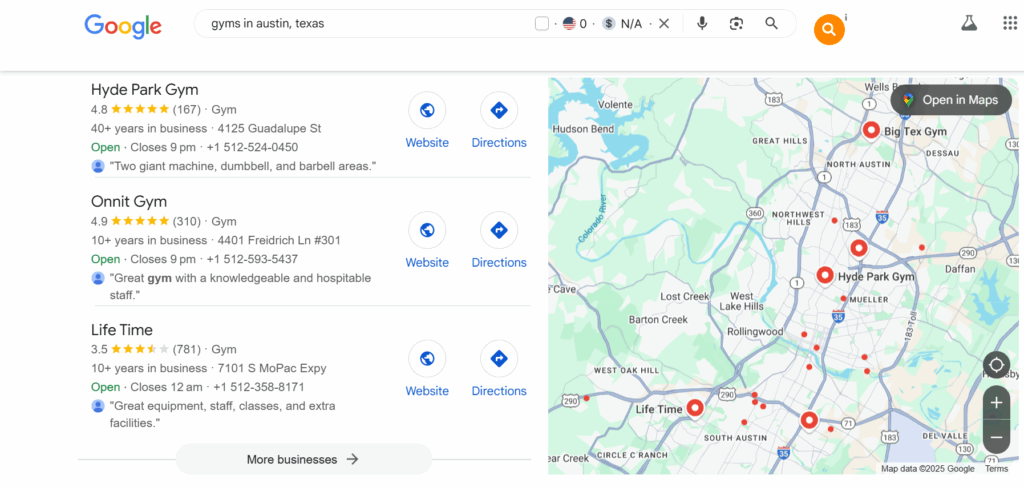
To optimize for the 3-Pack, your GBP must include:
- Verified business name and category (e.g., “Personal Trainer” or “Gym”).
- Precise physical address and local phone number.
- Operating hours and high-resolution facility photos.
- Consistent customer review acquisition.
Pro Tip: Use the “Posts” feature in GBP to share weekly offers or new class schedules. This signals to Google that your business is active.
Point 2: Add NAP to your gym website footer
NAP (Name, Address, Phone Number) consistency is a major ranking factor for seo for gym. Your footer should contain identical information to your GBP and social media profiles.

Discrepancies (like using “St.” on your site but “Street” on Google) can confuse search algorithms, potentially suppressing your local rankings. Standardize your format and stick to it across all digital touchpoints.
Point 3: List your gym in local business directories
Citations on sites like Yelp, Bing Places, and Apple Maps act as a digital “vote of confidence.” These directories provide foundational gym backlinks that reinforce your location data.
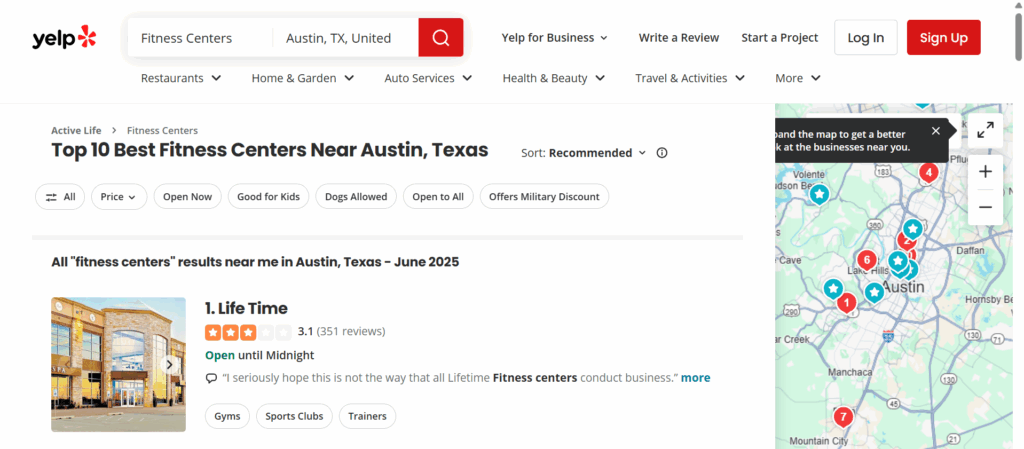
### 📊 Strategic Comparison: Local SEO vs. Authority Link Building
| Feature | Local SEO Focus | Link Building for Gyms |
|---|---|---|
| Goal | Rank in the “Map Pack” | Rank in Organic Search (H1-H6) |
| Primary Driver | GBP & Reviews | Quality gym backlinks |
| Target Keywords | “Gym [City]”, “Near Me” | “Best fitness tips”, “How to…” |
| Value | Immediate local leads | Long-term topical authority |
Point 4: Optimize your homepage title and meta description
Your Title Tag and Meta Description are your primary sales pitch in search results. Optimization here increases your Click-Through Rate (CTR), which is a secondary ranking signal.
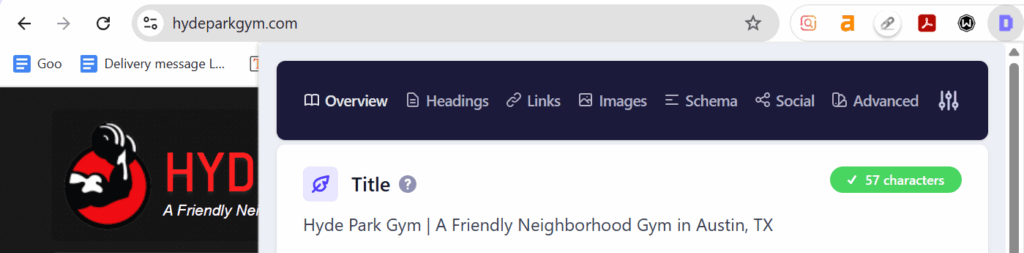
Best Practices:
- Title Tag: Keep under 60 characters. Include “[City] Gym” and your brand name.
- Meta Description: Keep under 155 characters. Include a CTA like “Claim your free 7-day pass today!”
Point 5: Use keywords on your homepage
Integrate gym seo keywords naturally. Instead of generic text, use phrases like “The Premier Strength Training Gym in [City Name].”
Place keywords in the H1 tag, the first 100 words, and your image Alt text. This helps Google associate your URL with a specific geographic service area without resorting to keyword stuffing.
Point 6: Create dedicated pages for each location or service
A single page cannot rank for “Yoga,” “CrossFit,” and “Personal Training” simultaneously. Create silos for each service. For instance, a dedicated “Personal Training in [City]” page allows you to target niche keywords and provide specific social proof for that service.
Point 7: Add schema markup (LocalBusiness)
Schema markup is code that helps Google understand your gym’s specific details—like price range, amenities, and aggregate rating. Implementing LocalBusiness schema makes your site eligible for “Rich Snippets,” which take up more real estate on the search results page.
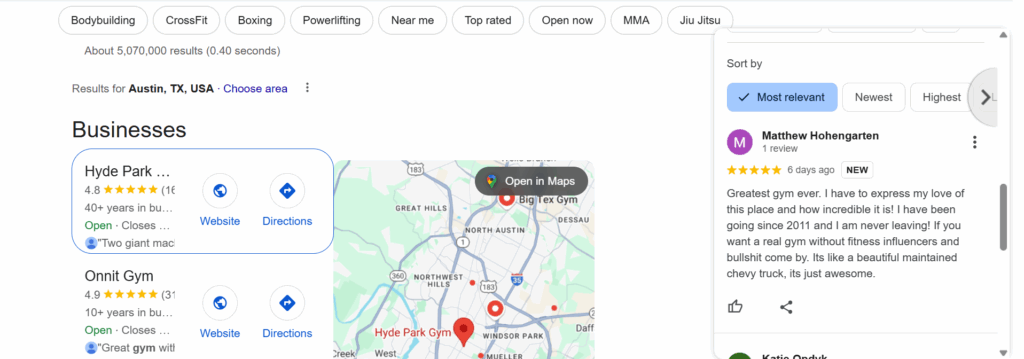
Point 8: Collect and respond to reviews on Google
Reviews are a top ranking factor for the Map Pack. Active management shows search engines that you are a legitimate, high-quality business. Positive sentiment in reviews containing keywords like “best gym” or “great personal trainers” further boosts your gym seo.
Point 9: Start a fitness blog targeting local keywords
Blogging builds topical authority. Content like “5 Best Running Trails in [City]” or “How to Stay Fit During [City] Winters” attracts local readers who may not be searching for a gym yet but are your ideal demographic.
Point 10: Share blog posts on social media
Social signals drive traffic. High traffic volumes to a new blog post signal to Google that the content is valuable, which can lead to faster indexing and improved organic positioning. Share every update on Instagram and Facebook to maximize reach.
Point 11: Reach out to local bloggers or news sites for features
Effective gym link building often starts at home. Reach out to local lifestyle bloggers or community news sites. Offering a “Local Health Guide” or an expert quote on fitness trends can earn you powerful, localized gym backlinks.
### 📋 Interactive Asset: Local Outreach Script
Use this template to secure local features:
“Hi [Name], I’m [Your Name] from [Gym Name] here in [City]. I’ve been following your coverage of local business growth and loved your recent piece on [Article Topic]. We’re launching a [Free Community Workout/Charity Event] on [Date] and thought your readers might find it valuable. We’d love to provide a few expert tips for your next fitness round-up in exchange for a mention. Let me know if you’re interested!”
Point 12: Join local business groups and get listed on their sites
Organizations like the Chamber of Commerce or local BNI chapters provide high-authority gym backlinks. These “.org” or “.gov” links are incredibly difficult for competitors to replicate and carry significant weight in Google’s trust algorithm.
Point 13: Add internal links between key pages
Internal links guide Google’s crawler through your site. Link from your high-traffic blog posts to your “Membership Signup” or “Service” pages. This distributes “link juice” and keeps users on your site longer, reducing bounce rates.
Point 14: Track rankings with keyword research tools
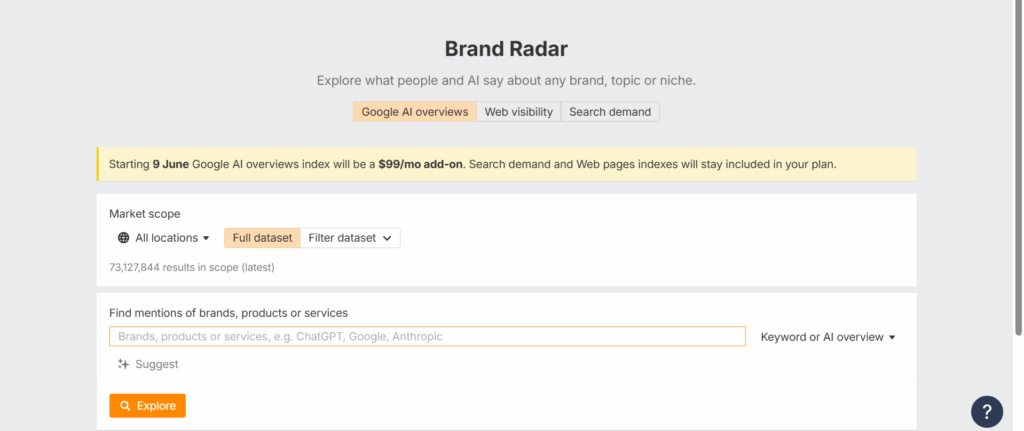
You cannot improve what you do not measure. Use tools like Ahrefs for gym link building analysis and BrightLocal for tracking your position in the Map Pack. Monitor your “Share of Voice” against local competitors monthly.
Point 15: Update your site monthly with fresh content
Google prioritizes fresh, updated content. Whether it’s a new “Trainer Spotlight” or an updated class schedule, keeping your site dynamic ensures that crawlers return frequently, helping you maintain your gym seo rankings.
### 🏆 Case Study: Iron Grip Fitness SEO Turnaround
The Challenge: A mid-sized gym in Austin was stuck on page 3 for “best gym Austin,” resulting in fewer than 5 digital leads per month.
The Strategy: We implemented link building for gyms by securing 5 guest posts on fitness blogs and optimized their Google Business Profile with 20 new photos and 15 targeted reviews.
The Result: Within 90 days, Iron Grip moved to #2 in the Local 3-Pack. Digital membership inquiries increased by 210%, adding an estimated $4,500 in Monthly Recurring Revenue (MRR).
Real Results: Gym SEO Case Studies
NYC Gym — 0 to 3,300 Monthly Visitors: A New York City gym went from zero organic traffic to 3,300 monthly visitors in 12 months through hyper-localized SEO and building 1,800 quality backlinks from fitness directories and local sites [Aamir Digital, 2025].
Gold’s Gym DC Metro — 3,700% Traffic Growth: Organic traffic skyrocketed from near-zero to 18,200 monthly visitors. The strategy included securing backlinks from local news outlets, fitness directories, and community event pages [Aamir Digital, 2025].
Dubai Fitness Client — 5.6x Organic Clicks: A 6-month SEO campaign delivered a 5.6x increase in organic clicks, 87.8% user growth, and a 22,100% surge in leads through data-backed content optimization [E2M Solutions, 2025].
Orangetheory Fitness — 104% Organic Traffic Increase: The fitness franchise achieved 104% organic traffic growth through SEO optimization across their multi-location website [BrightEdge, 2025].
Now, you’re ready to rank your gym business on search engines
The path to membership growth in 2025 is clear: Master gym seo, execute consistent gym link building, and provide value to your local community. Start with your Google Business Profile and scale from there.
For more, see our pricing guide and beginner checklist.
Disclosure
SERPreach provides niche edit and guest posting services for fitness businesses.
References
- BrightLocal. (2025). Local Consumer Review Survey. brightlocal.com
- Aamir Digital. (2025). NYC Gym SEO Case Study. aamirdigitalmedia.wordpress.com
- Aamir Digital. (2025). Gold’s Gym DC Metro Case Study. aamirdigitalmedia.wordpress.com
- E2M Solutions. (2025). Fitness SEO Case Study: 462% Growth. e2msolutions.com
- BrightEdge. (2025). Orangetheory Fitness SEO Case Study. brightedge.com

